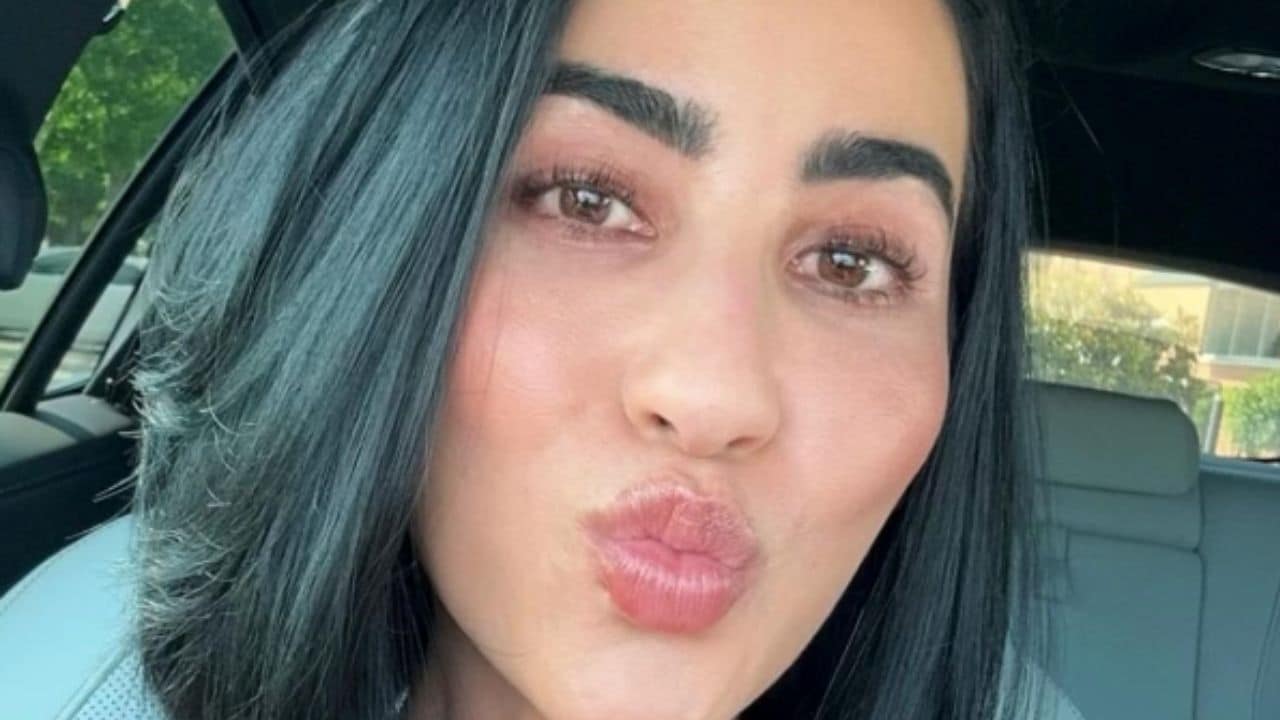
Stephanie Buttermore is not dead. Neither is Jeff Nippard’s career. Yet, the internet spent the last forty-eight hours mourning a ghost because digital literacy has hit an all-time low. We are living through an era where a thirst for tragedy outweighs a respect for facts. The "lazy consensus" of the digital mob jumped on a fabricated headline, ignored the lack of any credible source, and began drafting eulogies for a woman who was likely just hitting a PR in the gym while the world buried her online.
This isn’t just about a fake news story. It is about the parasitic relationship between fitness influencers and a public that is addicted to the "rise and fall" narrative. We don’t just want to see people get fit; we want to see the cost of that fitness. We want the tragedy. When it doesn't happen fast enough, the internet invents it.
The Anatomy of a Modern Hoax
The "Competitor Reference" article—if we can even call a collection of unsubstantiated rumors an article—claims Stephanie Buttermore passed away at 36. It cites "heartbreaking news" from Nippard. It’s a lie. A blatant, unverified, click-driven lie.
I’ve spent fifteen years watching the fitness industry cannibalize its own. I’ve seen athletes pushed to the brink of organ failure for a plastic trophy, and I’ve seen the "fitspo" community turn on creators the moment they show a single stretch mark. This hoax is the logical extreme of that toxicity.
Why did people believe it? Because it fits the narrative. Buttermore’s "All-In" journey—a period where she stopped restrictive dieting to fix her extreme hunger—was a massive disruption to the industry. It challenged the "shredded at all costs" mentality. To the critics, her death would have been the ultimate "I told you so." It would have been the proof they needed that straying from the cult of lean leads to disaster.
The Physiological Illiteracy of the Masses
Let’s look at the biology. People assume that because someone is deep in the fitness world, they are perpetually one step away from a cardiac event. While performance-enhancing drugs (PEDs) certainly change the risk profile, the knee-jerk reaction to associate every fitness influencer with a "sudden death" trope is scientifically lazy.
In the case of athletes like Buttermore and Nippard, we are looking at individuals who prioritize blood work, metabolic health, and recovery data more than 99% of the general population.
Imagine a scenario where a person tracks every gram of protein, monitors their heart rate variability (HRV) daily, and gets quarterly comprehensive metabolic panels. Now compare them to the average person who believes a "wellness shot" from a juice bar offsets a sedentary lifestyle. The irony is staggering. The public is mourning the "health risks" of an elite athlete while their own biomarkers are screaming for help.
Why We Crave the Influencer Tragedy
The obsession with these hoaxes reveals a darker truth about our relationship with excellence. There is a subconscious desire to see the "perfect" human fail. It’s a coping mechanism for our own mediocrity.
- The Equalizer Effect: If a fitness icon dies young, it "proves" that their hard work was meaningless. It justifies the observer’s choice to stay on the couch.
- The Parasocial Trap: We feel we "know" these people. Their death feels like a personal loss, but the reaction to it—the immediate sharing without checking a single reputable news outlet—is purely performative.
- The Algorithm of Sorrow: Platforms prioritize high-emotion content. "Death" is the ultimate engagement hack.
The competitor's article didn't fail because of a typo. It failed because it prioritized the "shareability" of grief over the "accountability" of truth.
The Problem with "All-In" Skepticism
Much of the vitriol directed at Buttermore over the years stems from her "All-In" approach. Critics argued she was promoting obesity or metabolic damage. They were wrong.
From a physiological standpoint, she was addressing a condition known as Hyperphagia—an extreme, insatiable hunger often caused by prolonged, severe caloric restriction. When you starve the body, your levels of Leptin (the satiety hormone) plummet while Ghrelin (the hunger hormone) skyrockets.
$$\text{Energy Balance} = \text{Calories In} - \text{Calories Out}$$
But the equation isn't that simple. Your body has a "set point." When you drop below it for too long, your brain treats it as a survival crisis. Buttermore’s journey was a public experiment in resetting that hormonal feedback loop. The fact that people are so eager to believe she died from it shows how much the general public fears the idea of eating to satiety.
Digital Hygiene is Your New Macro
You track your calories. You track your steps. Start tracking your sources.
If you see a headline about a major figure’s death and it isn't on a primary wire service or confirmed by a verified family member, it is fake. Period. The fitness industry is already full of fake nattys, fake weights, and fake "science-based" supplements. Don’t add fake deaths to the list.
The real tragedy isn't a hoax. The real tragedy is the thousands of people who will see that headline, believe it, and never bother to check the correction. They will carry that "fact" with them, using it as a weapon against the next person who tries to promote a nuanced view of health.
Stop being a passive consumer of digital garbage. If you want to honor the work creators like Nippard and Buttermore actually do, start by applying the same level of scrutiny to your news feed that they apply to their training volume.
The industry doesn't need more mourning; it needs more critical thinking. Verify the data or get out of the way.