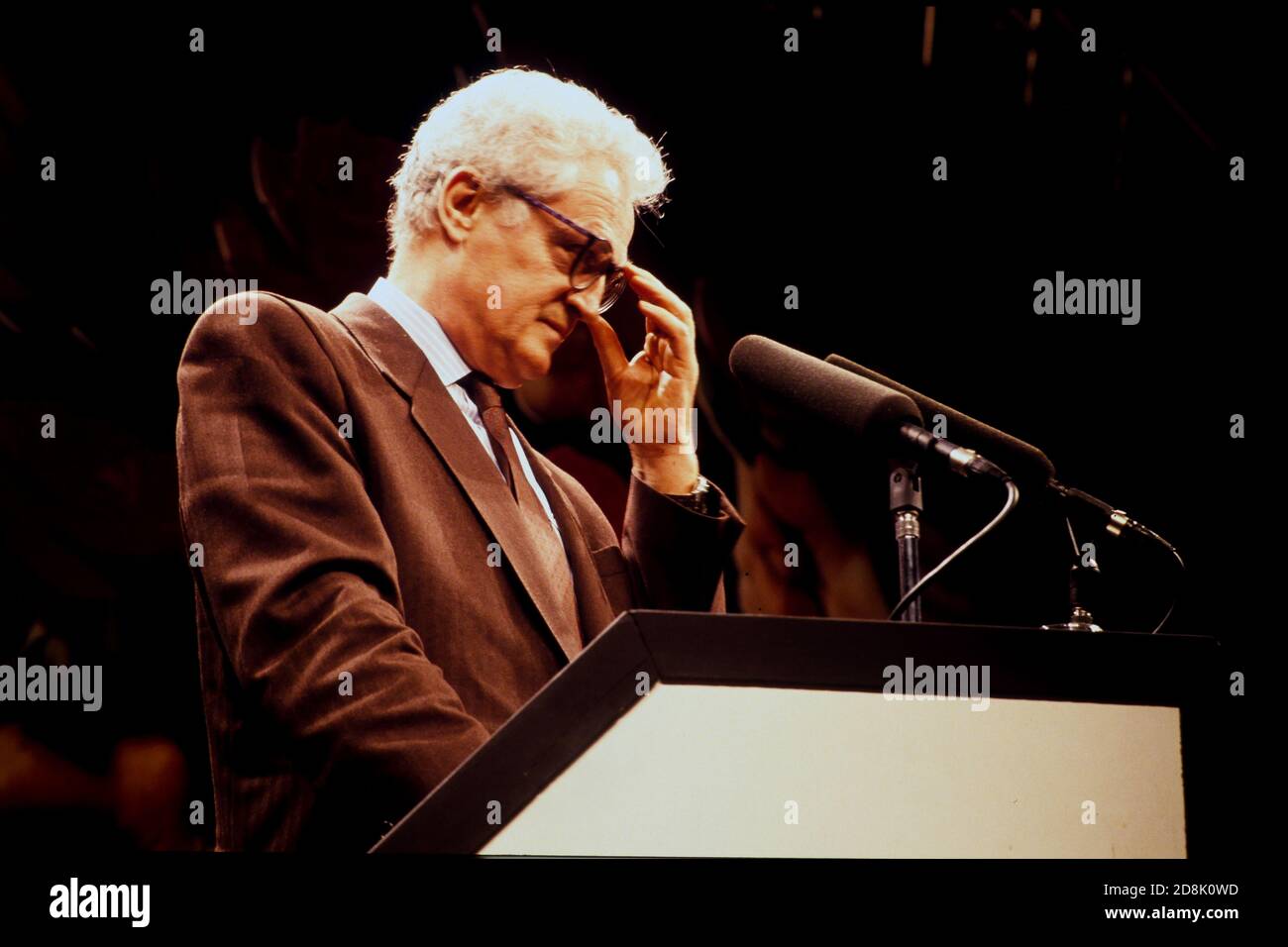
Lionel Jospin didn't just leave behind a political legacy; he left behind a cautionary tale that modern neoliberalism refuses to read correctly. The obituaries flooding the wires right now are predictable. They paint a picture of a "principled" statesman who balanced the books while keeping the red flag flying. They talk about the 35-hour workweek as a humanitarian triumph. They frame his 2002 defeat as a fluke of a fractured left.
They are wrong.
Jospin’s tenure from 1997 to 2002 wasn't a blueprint for successful democratic socialism. It was the moment the French Left signed its own death warrant by trying to manage capitalism better than the capitalists, while simultaneously handicapping the very labor market they claimed to protect. If you want to understand why the European center-left is currently a hollowed-out shell, stop looking at current polling. Look at the "plural left" experiment that died with Jospin.
The 35-Hour Workweek Was an Economic Trojan Horse
The "lazy consensus" among historians is that Jospin’s signature 35-hour workweek policy was a bold social leap. In reality, it was a mathematical disaster that backfired on the workers it intended to liberate.
The logic was simple: share the work to reduce unemployment. It’s a theory called the "lump of labor fallacy." It assumes there is a fixed amount of work to go around. Economists like Jean Tirole have spent careers debunking this. By making labor more expensive and rigid, Jospin didn't create a paradise of leisure. He created a two-tier society.
Large corporations with deep pockets automated or shifted production. Small businesses—the actual backbone of the French economy—suffered under the administrative nightmare of tracking "RTT" (Reduction of Working Time) days. Workers didn't get more "life"; they got frozen wages. Because the cost of labor spiked, employers stopped giving raises. The trade-off was invisible but devastating. You got Friday afternoon off, but you couldn't afford the gas to drive anywhere.
The Great Privatization Paradox
The most stinging irony of the Jospin era—one his eulogizers are conveniently ignoring—is that this "Socialist" prime minister oversaw more privatizations than the right-wing governments of Alain Juppé or Jacques Chirac combined.
Under Jospin, the state sold off or opened up capital in:
- Air France
- France Télécom
- Aérospatiale
- Crédit Lyonnais
I have sat in boardrooms where the "Jospin Method" is still whispered about as a masterclass in political camouflage. He managed to sell the family silver while keeping the unions quiet by tossing them the 35-hour bone. It was corporate raiding with a human face. He talked like a Trotskyist and acted like a McKinsey consultant. This cognitive dissonance is what eventually broke the trust of the working class. When the "Socialist" sells your national airline, who exactly are you supposed to vote for to protect the public sector?
The 2002 "Shock" Was Not an Accident
The media still treats the 2002 election—where Jospin was knocked out in the first round by Jean-Marie Le Pen—as a "trauma" or a freak occurrence. It wasn't. It was the market's reaction to a product that no longer did what it said on the tin.
Jospin’s infamous line during the campaign, "My program is not socialist," was the ultimate "mask off" moment. He thought he was being pragmatic, appealing to the center. Instead, he signaled to his base that he had no conviction.
People ask: "How could the Left lose to a far-right populist back then?"
The answer is brutally honest: Because Jospin ignored "la France d'en bas" (the France from below). While he was busy fine-tuning the mechanics of the Euro and managing the Parisian elite's expectations, the suburbs were simmering with insecurity and the deindustrialized north was watching their jobs evaporate. He offered them "method" and "integrity" when they wanted protection and identity.
The Myth of "Principled Retirement"
Jospin is praised for his "dignified" exit from politics after his 2002 loss. "I take full responsibility," he said, before vanishing.
In the world of high-stakes leadership, this isn't dignity. It’s desertion. By walking away, he left the Socialist Party (PS) in a leadership vacuum that led directly to the rise of the ego-driven politics of Ségolène Royal and the eventual total collapse of the party under François Hollande. A leader's job isn't just to win; it's to build a succession that survives their defeat. Jospin built a cult of "Protestant rigor" that could only be inhabited by himself. When he left, the house burned down.
Stop Asking if He Was "Right" and Start Asking if He Was Relevant
The "People Also Ask" section of history wants to know: Was Jospin a good Prime Minister?
It’s the wrong question. He was an effective administrator of a declining empire. He managed the transition to the Euro with technical precision. He kept the GDP growth steady at around 3% for a few years. But he failed the only test that matters for a leftist leader: he failed to make the case for why the state should exist as anything other than a cleanup crew for the market.
He proved that you could have "Socialism" without socialists. He gave us the framework of a modern, sterile France that is technically proficient but spiritually bankrupt. He treated the citizens like employees in a firm called France SA.
If you’re looking for a blueprint for the future of governance, Jospin is a graveyard of ideas. He tried to bridge the gap between Marx and Goldman Sachs and ended up falling into the canyon. His death marks the end of an era where we believed "competence" was a substitute for "vision."
The next time a politician promises you "rigor" and "social progress" in the same breath, check your wallet. Jospin did it better than anyone, and the French working class is still paying the bill.
Don't mourn the man; study the failure of his compromise.