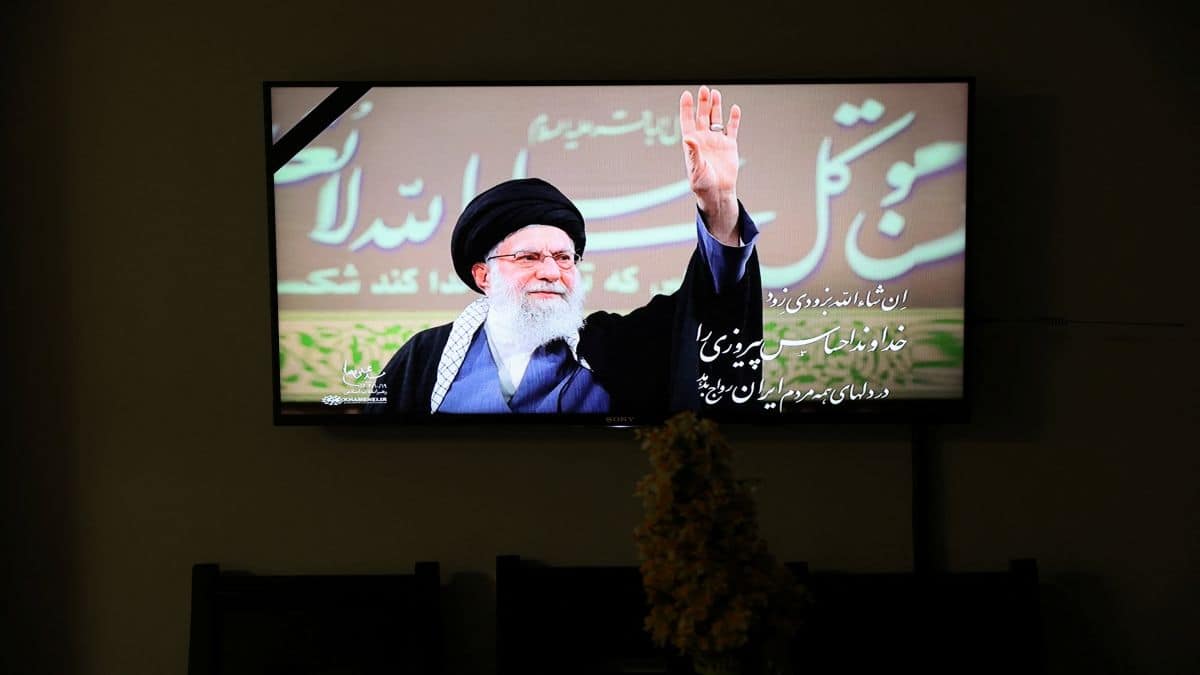
The headlines are screaming. Thirty bombs. A leveled compound. The Supreme Leader is dead. The internet is currently a fever dream of "mission accomplished" rhetoric and "regime change" fantasies. But if you think a few dozen precision-guided munitions just flipped the script on the Middle East, you aren't paying attention to how power actually functions in the 21st century.
I have spent years watching intelligence agencies and defense contractors chase the "decapitation strike" ghost. It is the ultimate military vanity project. It sells books. It gets funding. It almost never achieves the strategic outcome promised on the PowerPoint slides.
The report that Ali Khamenei has been neutralized by an Israeli-American joint operation is catnip for the 24-hour news cycle. It feels final. It feels like a climax. In reality, it is a tactical event being mistaken for a structural shift. If the report is true, we haven't witnessed the end of an era; we’ve witnessed the start of a much more chaotic, decentralized, and dangerous version of the same machine.
The Decapitation Myth
Western military doctrine is obsessed with the "head of the snake." The logic is simple: remove the central node, and the network collapses. This is a 19th-century solution to a 21st-century problem. Iran is not a monarchy, regardless of the "Supreme Leader" title. It is a deep-state bureaucracy reinforced by a paramilitary corporate conglomerate known as the Islamic Revolutionary Guard Corps (IRGC).
When you kill a figurehead, you don't kill the system. You just remove the person whose job it was to balance the competing factions within that system. Khamenei was the ultimate arbiter. He spent decades keeping the "pragmatists" from getting executed and the "hardliners" from starting a nuclear war on a Tuesday.
By removing him, the attackers haven't "liberated" Iran. They have removed the safety on a very complex, very loaded gun.
The Succession Vacuum is a Feature, Not a Bug
People also ask: "Who is next in line?" The question itself reveals a fundamental misunderstanding of the Assembly of Experts.
The Iranian constitution has a roadmap for this. They don't panic. They have a committee. But the real power struggle won't happen in a voting booth; it will happen in the boardrooms of the IRGC’s engineering firms and the barracks of the Quds Force.
- The IRGC’s Total Takeover: Without a senior cleric with Khamenei’s specific religious "street cred" to check them, the IRGC will stop pretending they answer to the clergy. They will move from being a "state within a state" to being the state itself.
- The Martyrdom Multiplier: In the logic of the Middle East, a leader killed by foreign bombs is worth ten times more than a leader who dies of old age. Khamenei alive was a target for domestic protesters. Khamenei dead is a nationalist rallying cry.
- The Proxy Autonomy: Hezbollah, the Houthis, and the PMF in Iraq do not need a daily phone call from Tehran to operate. They are franchised. They have their own budgets, their own local grievances, and now, they have a massive incentive to prove they are still relevant by escalating.
The Failure of "Thirty Bombs"
Let’s talk about the hardware. Dropping thirty bombs on a compound in Tehran is a massive logistical feat. It requires total air superiority or a catastrophic failure of Iranian air defenses. It’s a "flex."
But tactical brilliance is often the mask for strategic bankruptcy.
I’ve seen this play out in corporate warfare and literal warfare: the bigger the explosion, the smaller the long-term impact on the underlying business model. Iran’s "business model" is regional influence through asymmetric friction. You cannot bomb a philosophy of resistance. You cannot bomb a supply chain of drone components that are being manufactured in basement workshops across three different countries.
If the US and Israel actually did this, they didn't do it to "win." They did it because they ran out of other ideas. It is an admission that sanctions failed, diplomacy failed, and cyber-warfare (the Stuxnet era) reached its limit. This is the kinetic equivalent of a "Hail Mary" pass.
Why the "Regime Change" Fantasy is Dangerous
The "lazy consensus" among pundits right now is that this is the "Berlin Wall moment" for the Islamic Republic. It isn't.
The Berlin Wall fell because the central authority in Moscow decided it wasn't worth the cost of holding it up anymore. The IRGC, conversely, has nowhere to go. They own the ports. They own the oil. They own the telecommunications. If the regime falls, they go to the Hague or to a firing squad. People with their backs against the wall do not surrender because their boss got hit by a JDAM. They double down.
Imagine a scenario where the IRGC realizes the "clerical" shield is gone. They don't move toward democracy. They move toward a North Korean model. Faster enrichment. More secrecy. Total isolation.
The Intelligence Trap
We also need to look at the "report" itself. In the world of high-stakes intelligence, a "confirmed kill" is often a psychological operation (PSYOPS).
If I wanted to flush out the communication patterns of the Iranian high command, I would leak a credible report of the leader's death. I would watch who picks up the phone, which bunkers get activated, and which generals start moving troops.
The rush to celebrate a headline is a sign of an amateur. The pros are looking at the SIGINT (Signals Intelligence) and the movement on the ground. If the IRGC hasn't declared a state of emergency and started mass arrests of "spies," Khamenei is either alive or the transition was planned months ago.
Stop Asking if He’s Dead; Start Asking Who Gains
In business, we call this "cui bono."
- Israel: Gains a temporary reprieve and a massive morale boost for a domestic population weary of war.
- The US: Gains a massive headache as they try to prevent a total regional conflagration during an election cycle.
- The Iranian Hardliners: Gain the perfect excuse to purge any remaining moderates under the guise of "national security."
The "Supreme Leader" was a stabilizer. A brutal, repressive, and adversarial one, but a stabilizer nonetheless. By removing the pivot point, you don't stop the machine from spinning; you cause it to fly apart in unpredictable directions.
The Brutal Reality of Modern Warfare
We are obsessed with the "cinematic" version of war—the single strike that ends the conflict. It’s a narrative we’ve been fed since the first Gulf War. It is almost entirely false.
True power is liquid. It flows around obstacles. It fills the gaps. Khamenei was the vessel, not the liquid. The liquid is a toxic mix of religious fervor, anti-imperialist sentiment, and the basic survival instinct of a massive military-industrial complex.
You can break the vessel. The liquid just spills and soaks into the ground, making the entire floor a slipping hazard for everyone involved.
If you are waiting for a democratic uprising to bloom out of the crater left by thirty bombs, you are hallucinating. History shows us that vacuum-sealed power structures don't breathe when you crack them open; they explode.
The mission wasn't to "bring peace." The mission was to kill a man. If the reports are true, that mission succeeded. But don't confuse a successful assassination with a successful foreign policy. One is a feat of engineering; the other requires an understanding of human systems that currently seems entirely absent from the rooms where these decisions are made.
The bombs have dropped. The dust is settling. The "Supreme Leader" might be gone. But the "Supreme Leadership" is already loading the next magazine.
Go back to the headlines if you want to feel good. Stay here if you want to be ready for what happens when the "snake" grows three new heads to replace the one you just cut off.