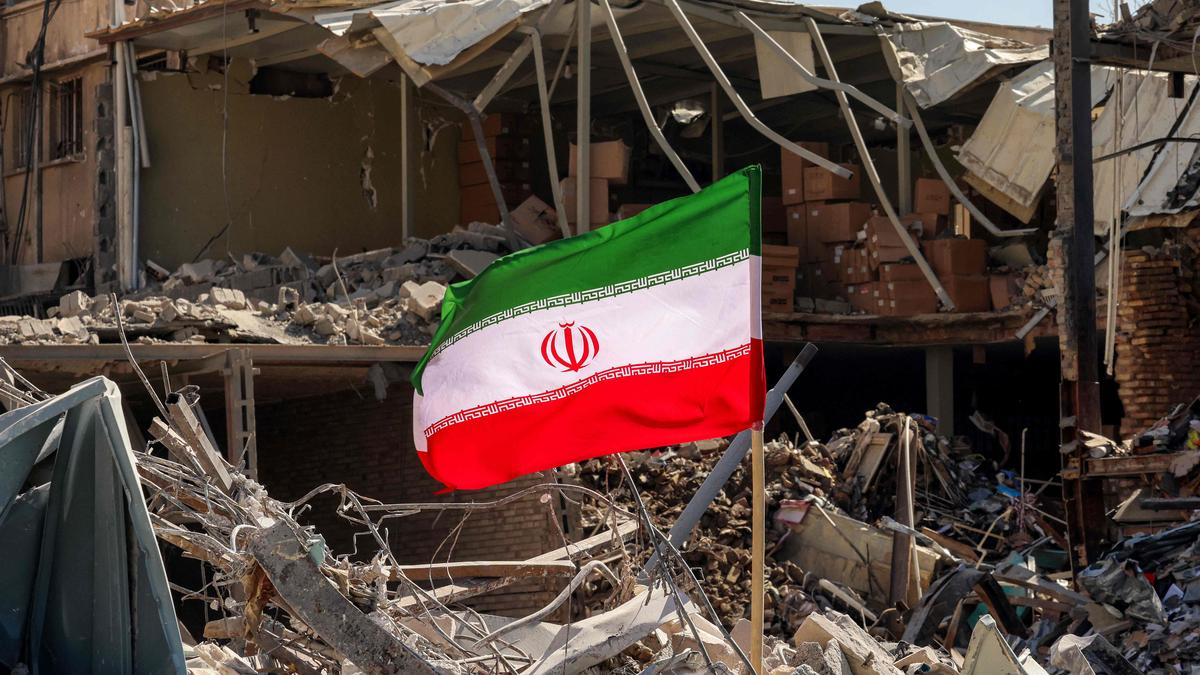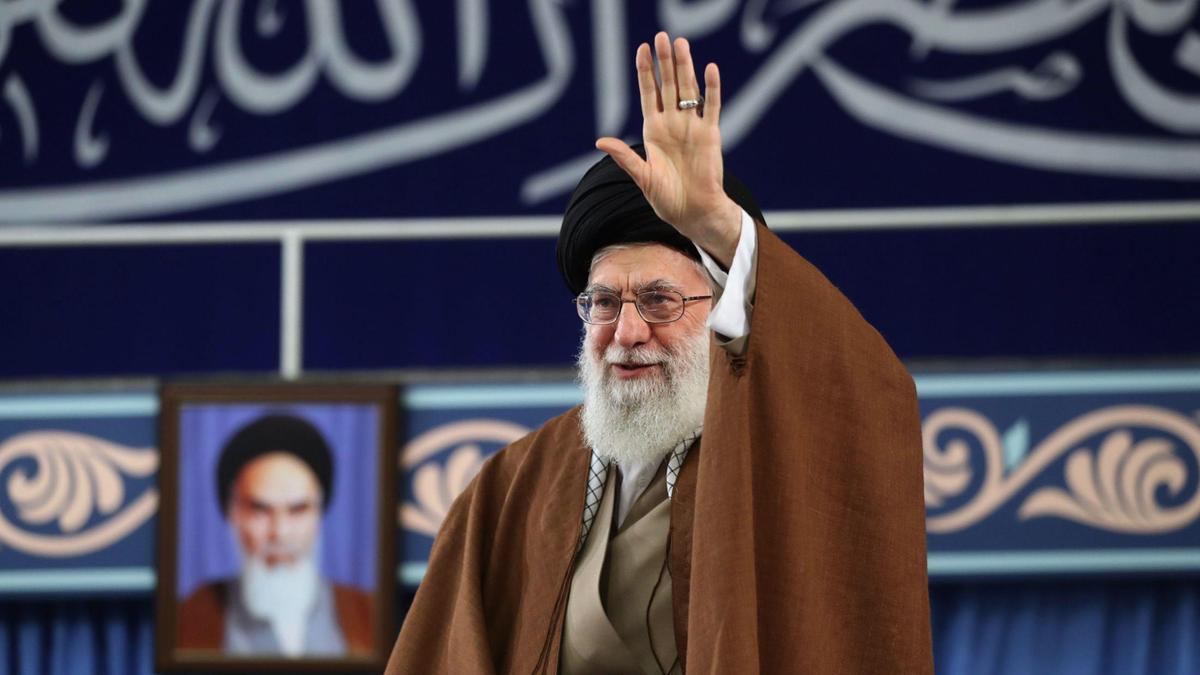
The smoke rising over the Alborz Mountains this week marks more than just the physical destruction of Iranian military infrastructure. It signals the total collapse of a fifty-year geopolitical experiment. By Sunday morning, the news was undeniable: Ayatollah Ali Khamenei, the man who steered the Islamic Republic through decades of defiance, was dead in a joint U.S.-Israeli strike. This was not a "surgical" operation in the way the Pentagon usually describes them. It was a decapitation of the state, an ending that few in Washington or Tehran truly believed would come to pass despite the escalations of the last two years.
The current conflict is the brutal result of a failed diplomatic cycle that began in early 2025. After Donald Trump returned to the White House, the administration attempted a high-stakes "maximum pressure" redux, coupled with an unexpected offer for a "grand bargain." But the internal mechanics of the Iranian regime, increasingly dominated by the Islamic Revolutionary Guard Corps (IRGC), couldn't or wouldn't bend. When talks in Geneva and Oman collapsed last month, the path to war became a straight line. The U.S. and Israel moved from containing a nuclear threat to dismantling the very entity that created it.
The Nuclear Red Line That Finally Snapped
For years, the "breakout time"—the period needed for Iran to produce enough weapons-grade uranium for a single bomb—was the primary metric of Western anxiety. By late 2025, that metric had become irrelevant. Following the "12-Day War" in June 2025, where Israeli strikes severely damaged the Natanz and Fordow facilities, Tehran moved its remaining centrifuges deeper into the mountains and accelerated enrichment to 60 percent.
The U.S. Intelligence Community had assessed that Khamenei had not yet given the order to weaponize, but the technical barrier had vanished. The administration's demand in February was absolute: a total cessation of all enrichment and the dismantling of the ballistic missile program. Tehran’s counter-offer—limited enrichment in exchange for the removal of the "snapback" sanctions triggered by Europe—was seen in Washington as a stalling tactic.
On February 28, 2026, the strategy changed from "delay" to "destroy." Operation Epic Fury, as the Pentagon dubbed it, targeted 2,000 sites across Iran. While the International Atomic Energy Agency (IAEA) initially reported no direct hits on known nuclear cores, the peripheral infrastructure—the power grids, the command-and-control bunkers, and the transportation networks—was systematically leveled. The goal was to make the nuclear program a stranded asset, a high-tech project with no brain to run it and no hands to build it.
The Succession Crisis and the Ghost of 1979
The death of Khamenei has thrown the Islamic Republic into its most profound internal crisis since its founding. The Assembly of Experts, the 88-member body of clerics responsible for choosing a successor, is currently meeting under heavy guard, but their authority is being challenged by the streets and the barracks.
There are three primary factions now fighting for the remains of the state:
- The Dynasts: Led by Mojtaba Khamenei, the late leader’s son. He has spent years cultivating ties within the IRGC's intelligence apparatus. His claim is one of continuity, but it faces a hurdle: the revolution was built on the rejection of hereditary monarchy.
- The Pragmatists: A coalition of sidelined "reformists" and technocrats like Masoud Pezeshkian and Hassan Rouhani. They are betting that a desperate population will support anyone who can negotiate an end to the bombing and the sanctions.
- The IRGC Command: Hardline generals who see the current chaos as an opportunity to discard the clerical "vaneer" and transition Iran into a pure military autocracy. They believe that only a "scorched earth" retaliation against U.S. bases in Qatar and the UAE can restore the regime's honor.
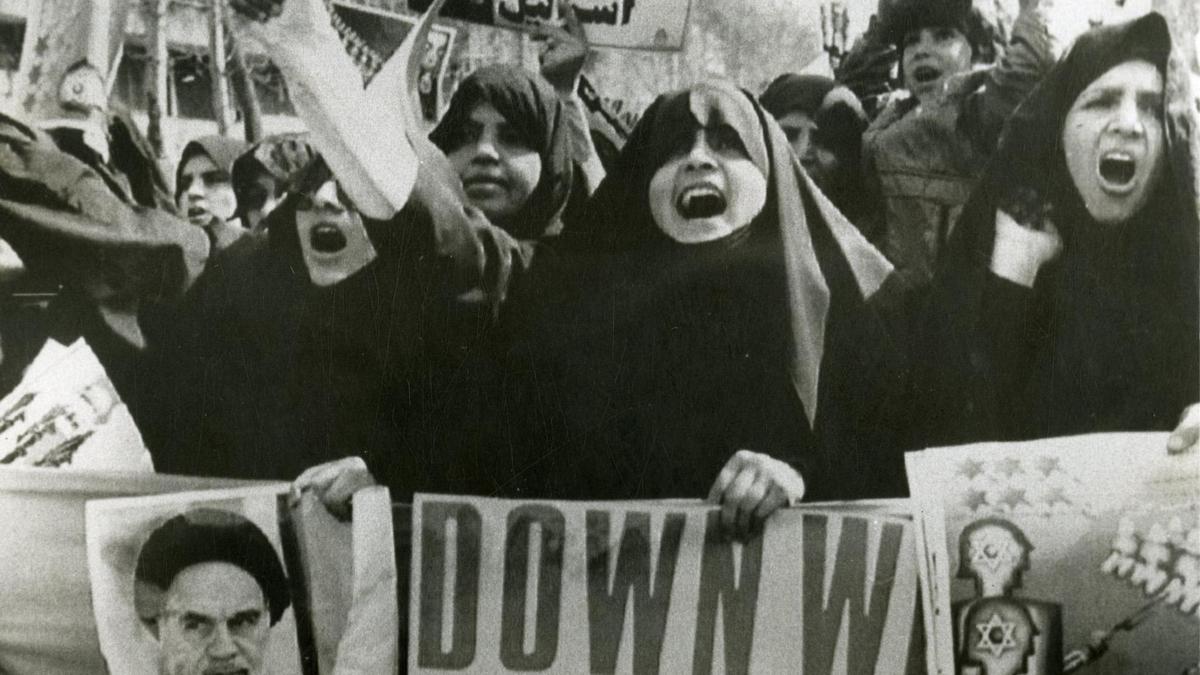
As these groups bicker, the "Woman, Life, Freedom" movement has returned to the streets of Tehran, Isfahan, and Tabriz. But this time, they aren't just chanting. In the chaos following the airstrikes, several police armories were breached. The regime's legitimacy isn't just "weakened"—it has evaporated. The rial has hit 1.5 million to the dollar, and the basic functions of the state, from bread subsidies to internet censorship, are failing.
The Regional Firestorm
The Iranian response was not the measured, "calibrated" retaliation seen in 2020 or 2024. It was a desperate, wide-spectrum assault. Within 48 hours of the first U.S. strikes, Iran launched hundreds of drones and missiles not just at Israel, but at civilian and energy targets in Saudi Arabia, the UAE, and Kuwait.
This was a calculated move to force a global economic crisis and pressure the West into a ceasefire. It failed. While some drones reached airports in Abu Dhabi and Doha, the regional air defense umbrella—built on U.S. technology and shared intelligence—intercepted the vast majority of the incoming fire.
The most significant casualty of this "all-out" strategy was Iran’s regional standing. By targeting its neighbors' oil infrastructure, Tehran effectively ended its recent rapprochement with Riyadh. The Gulf states, which once feared being caught in the middle, have now opened their airspace and bases for U.S. operations. The "Axis of Resistance" is also crumbling; with Assad overthrown in Syria by rebel forces and Hezbollah decapitated in Lebanon, the IRGC's "forward defense" is gone.
The Cost of Victory
While the military campaign has been successful in its immediate goals, the price for the United States is climbing. Time-sensitive reports indicate that the U.S. is burning through its stockpile of sophisticated interceptors—the SM-3 and SM-6 missiles—at an unsustainable rate. This depletion is causing visible anxiety in the Pentagon regarding other theaters, specifically the Pacific.
The Trump administration has signaled it wants a quick exit, but "regime change" is rarely quick or clean. There is no plan for what happens if the IRGC fractures into competing warlords. There is no plan for a humanitarian crisis involving 85 million people. And most importantly, there is no plan for the 440 kilograms of 60-percent enriched uranium that may still be buried under the rubble of Isfahan.
The Islamic Republic as we knew it ended on February 28. What replaces it will likely be determined not by a new "Supreme Leader," but by whether the Iranian people can seize the gap before the military fills it. The era of strategic patience is over, replaced by a much more dangerous era of total consequence.
Check the latest declassified damage assessments from the Pentagon to see the current status of Iran's "shadow fleet" and its ability to export oil during the blockade.