The Grand Illusion of Parallel Lines
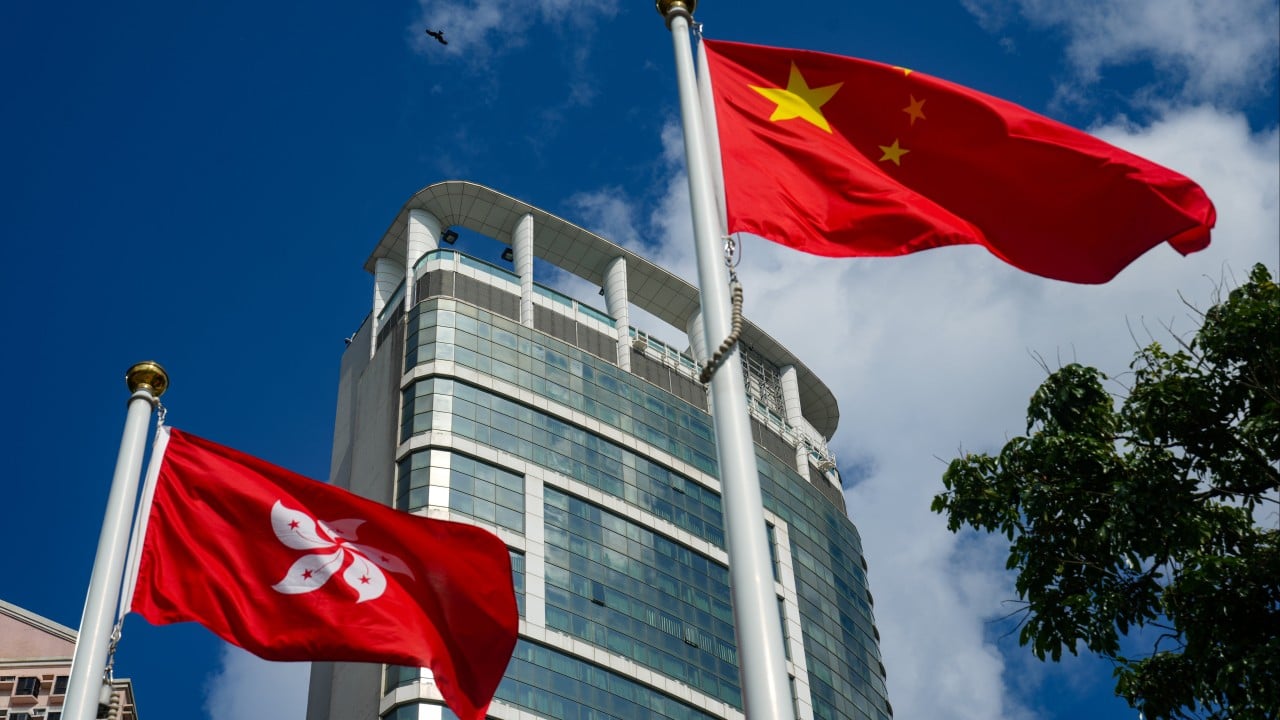
Political pundits love the "hand in hand" metaphor. It suggests a graceful dance between two distinct entities—national security and a high degree of autonomy—moving in perfect synchronization. It is a comforting lie. In reality, these two concepts are not partners; they are competitors in a zero-sum game. When a state decides that "security" is the absolute priority, the legal and social friction required for "autonomy" to exist is the first thing to be smoothed over.
The competitor's narrative suggests that the 2020 National Security Law (NSL) and the subsequent Article 23 legislation are merely "safety nets" that allow the "One Country, Two Systems" (1C2S) framework to function better. This is logically bankrupt. Autonomy, by its very definition, requires the space to be different, to dissent, and to maintain a legal boundary that the central power cannot easily cross. Once you introduce a security apparatus that answers directly to the sovereign and bypasses local checks, the boundary doesn't just move. It vanishes.
I have watched analysts try to bridge this gap for years. They argue that a stable environment is good for business. Sure, cemeteries are stable too. The "lazy consensus" here is that security brings stability, and stability brings prosperity. But the specific kind of prosperity Hong Kong was built on—the "Middleman" premium—was predicated on its difference from the mainland, not its assimilation into it.
The Jurisdictional Collision Course
Let’s talk about the legal mechanics. Under the original 1C2S vision, Hong Kong’s Common Law system was supposed to be an isolated biosphere.
When you layer national security legislation over a Common Law jurisdiction, you create a "Dual State." On one hand, you have the ordinary legal system for contract disputes and traffic tickets. On the other, you have a specialized, opaque track for anything deemed a threat to the state. The problem is that the definition of "national security" in a centralized system is infinitely elastic. It expands to cover economics, culture, and even private conversation.
If the sovereign can decide what constitutes a security risk without transparent judicial review, the "Two Systems" part of the equation becomes a branding exercise. It’s like having a computer with two operating systems, but one has "Admin" rights to delete the other's files at any time. You don't really have two systems; you have one system with a legacy interface.
The Myth of the Business Haven
The standard argument goes: "Global investors want stability. Protests are bad for the stock market. Therefore, the NSL is pro-business."
This misses the nuance of why capital stayed in Hong Kong in the first place. Investors didn't come for "stability" alone; they could get that in Singapore or Tokyo. They came for the predictability of the exit. They came because they knew that if a dispute arose with a powerful state-owned enterprise, the courts would rule based on the letter of the law, not the political needs of the moment.
By prioritizing national security above all else, the authorities have shifted the risk profile.
- Data Sovereignty: If "security" involves the state’s right to access any data it deems sensitive, the wall between corporate secrets and state surveillance thins.
- Personnel Risk: Compliance is no longer just about financial regulations; it’s about political vetting.
- Information Flow: Markets thrive on accurate, sometimes ugly, information. When the line between "negative economic reporting" and "sedition" becomes blurry, the quality of data drops.
Imagine a scenario where a financial analyst writes a report suggesting that a major state-linked project is failing. In a "Two Systems" world, that’s market intelligence. In a "National Security" world, that could be construed as undermining the economic stability of the nation. When analysts start self-censoring to avoid the "security" label, the market loses its edge.
Dismantling the Sovereignty Argument
The competitor's piece argues that no country would allow a loophole in its national security. This is a classic "false equivalence" fallacy. Most federal or autonomous systems—think Quebec in Canada or the states in the US—operate under a national security umbrella. However, they do so within a framework of separation of powers.
In Hong Kong, the new reality is the concentration of power. The Chief Executive now has the authority to certify whether an act involves national security, and that certificate is binding on the courts. This isn't "hand in hand." This is a hierarchy where the "One Country" hand has a permanent grip on the "Two Systems" throat.
The "One Country" aspect was always the foundation, but the "Two Systems" was the value-add. If you strengthen the foundation by demolishing the house built on top of it, you’re left with a very secure, very empty lot.
The Cost of Compliance
We are told that the new laws bring Hong Kong in line with international standards. This is a half-truth that ignores the context of implementation. While the UK or Australia have robust security laws, they also have independent legislatures, a free press to investigate abuses, and a history of challenging the executive branch.
When Hong Kong adopts similar language without those same counter-weights, the result is fundamentally different. It’s the difference between a scalpel in the hands of a surgeon and a scalpel in the hands of a street fighter. The tool looks the same, but the intent and the outcome are not.
The New Reality for Global Players
Stop asking "Is Hong Kong still a global financial center?" That’s the wrong question. It is clearly still a massive hub for capital.
The real question is: "What kind of capital is it a hub for?"
The shift is away from the "Bridge between East and West" and toward the "Offshore Wealth Manager for the East." The diversity of the ecosystem is shrinking. You are seeing a replacement of international institutional players with mainland-aligned entities. This isn't necessarily a "failure," but it is a total transformation. It’s no longer an international city that happens to be in China; it’s a Chinese city that happens to have a convertible currency.
The Intelligence Trap
The most counter-intuitive part of this shift is that by "securing" the territory, the state may have actually increased its long-term vulnerability.
True security for a financial hub comes from its legitimacy and the voluntary participation of global actors. When you pivot to a "command and control" security model, you alienate the very people who provide the city’s unique value. You trade soft power for hard control.
I’ve seen this play out in corporate takeovers. A founder-led company is "integrated" into a massive conglomerate. The conglomerate wants to "secure" the assets and standardize the processes. They succeed. But in the process, they kill the "magic" that made the company worth buying in the first place. The talent leaves. The innovation stops. The shell remains, but the soul is gone.
The Final Calculation
The "hand in hand" narrative is a PR strategy designed to mask a structural takeover. National security didn't come to save One Country, Two Systems; it came to replace it with a more manageable, less "troublesome" version.
For the person on the ground or the investor in the boardroom, the advice is simple: Stop waiting for the old Hong Kong to return. The tension that defined the city—that productive, chaotic friction between two different ways of being—has been resolved in favor of the sovereign.
Don't buy the "harmonious" rhetoric. The price of this new security is the very autonomy that made the city indispensable. You can have a fortress, or you can have a marketplace. You cannot have both at the same scale. The choice has been made.
Act accordingly.