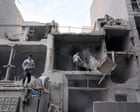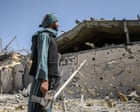
The American constitutional order is currently facing a silent liquidation. Senator Cory Booker’s recent condemnation of both political parties as "feckless" for surrendering war-making authority to President Trump is not merely a piece of Sunday morning political theater; it is a late-stage autopsy of congressional relevance. As the United States deepens its military engagement in Iran—marked by the February 28 strike that killed Ayatollah Ali Khamenei—the legislative branch has effectively transitioned from a co-equal branch of government into a high-end debating society with no actual power to stop a war.
The primary query at the heart of this crisis is simple: Why has Congress stopped functioning as a check on executive military ambition? The answer lies in a decades-long erosion of political will, accelerated by a hyper-partisan environment where the fear of being labeled "anti-military" or "weak" has paralyzed the majority of lawmakers. By failing to pass war powers resolutions and allowing the White House to operate under archaic or invented legal justifications, Congress has handed the keys to the most powerful military in history to a single individual, regardless of who sits in the Oval Office.
The Mechanics of Abdication
To understand how we arrived at this point, one must look at the specific legal mechanisms that have been hollowed out. The War Powers Resolution of 1973 was designed to prevent exactly what is happening today: long-term, high-stakes military engagements without a formal declaration of war or specific statutory authorization.
Under the current administration, the White House has utilized a expansive interpretation of Article II "Commander in Chief" powers to bypass the 60-day clock mandated by the 1973 Act. By framing the strikes in Iran and the previous incursions into Venezuela as "defensive" or "preemptive" measures to protect American assets and allies, the executive branch effectively resets the legal timer with every new engagement.
Congress, meanwhile, has defaulted to a state of institutional inertia. On March 4, 2026, the Senate rejected a war powers resolution in a 47-53 vote. A similar effort failed in the House. These weren't just votes on a specific conflict; they were formal acknowledgments that the "People’s House" no longer possesses the collective courage to assert its authority over the treasury or the troops.
The Economic Fallout of Unchecked Conflict
This isn't just a matter of constitutional theory. The real-world consequences are hitting the American pocketbook with brutal precision. The closure of the Strait of Hormuz, a direct result of the escalating conflict with Iran, has caused the most significant disruption to global oil markets in modern history.
| Economic Indicator | Pre-Conflict (Jan 2026) | Current (March 2026) |
|---|---|---|
| Crude Oil Price (per barrel) | $78.00 | $124.00 |
| Average U.S. Gas Price | $3.45 | $5.12 |
| Global Shipping Insurance Premiums | Standard | 400% Increase |
The administration’s "Operation Epic Fury" is costing billions of dollars per week. These are funds that were never debated in an open budget hearing for the purpose of a new war. Instead, they are drawn from existing defense appropriations and emergency reallocations, further shielding the true cost of the conflict from public scrutiny. When Senator Booker refers to the "gumming up of the oil markets," he is highlighting a strategic vulnerability that Congress has allowed the President to create without a single public hearing from the Secretaries of State or Defense.
The Myth of Bipartisan Accountability
Booker’s use of the word "feckless" is directed at his own party as much as his rivals. It exposes a grim reality: when Democrats held the majority in various capacities over the last decade, they often balked at stripping away the very executive powers they now find terrifying in the hands of a Republican. Conversely, Republicans who once championed "constitutional originalism" have largely abandoned the "Declare War" clause of Article I, Section 8, in favor of total executive deference.
This creates a ratchet effect. Every president inherits the expanded powers of their predecessor and adds their own layer of precedent. We are now at a point where the President can order the assassination of a foreign head of state—a move traditionally considered an act of war—and the legislative response is a series of non-binding tweets and failed procedural votes.
Technology and the Velocity of Modern War
The speed of modern warfare has further marginalized Congress. When military action consists of hypersonic missile strikes and cyber-operations coordinated by AI-driven command structures, the "deliberative process" of a 535-member body feels like a relic of the 18th century.
The administration has leveraged this technological gap. By the time a Congressional committee can even schedule a briefing, the tactical objectives have often already been achieved, making any subsequent "authorization" or "protest" look like an after-the-fact formality. This creates a dangerous feedback loop: the faster the war, the less time for oversight; the less oversight, the more the executive is emboldened to use high-velocity force.
The Precedent of Venezuela and the Future of Cuba
The current Iran campaign did not emerge from a vacuum. It was preceded by the January 2026 operation in Venezuela, where the capture of Nicolás Maduro was hailed as a tactical success by the White House but decried as a "legal shipwreck" by constitutional scholars.
Booker’s warning is clear: if the capture of a head of state in the Western Hemisphere and the killing of a supreme leader in the Middle East go unchecked, there is no logical stopping point. The administration has already made suggestive comments regarding North Korea and Cuba. Without a functional War Powers Resolution, the decision to engage these nations rests solely on the temperament of the President and the advice of a hand-picked National Security Council, rather than the collective judgment of the people's representatives.
The High Cost of Silence
The 13 American service members killed since the start of the Iran conflict represent a human toll that is often obscured by the grandiosity of "decisive power" rhetoric. When a nation goes to war, the Constitution demands that the burden of that decision be shared by the legislature. This is not for the sake of bureaucracy, but to ensure that the blood and treasure of the citizenry are not spent on the whim of a single person.
The current "fecklessness" is a choice. Congress still possesses the "power of the purse." It has the ability to defund unauthorized operations and the subpoena power to force administration officials to testify in the light of day. The fact that it refuses to use these tools is a testament to the collapse of institutional identity in favor of partisan survival.
The American presidency has become a monarchical office in the realm of foreign policy. Unless a bipartisan coalition finds the intestinal fortitude to reclaim the authorities they have spent half a century giving away, the concept of a co-equal government will remain a historical footnote. The crisis isn't just that the President is overreaching; it's that the branch of government designed to stop him has forgotten how to stand up.
Would you like me to analyze the specific voting patterns of the recent War Powers Resolution to see which swing-state lawmakers broke from their party lines?