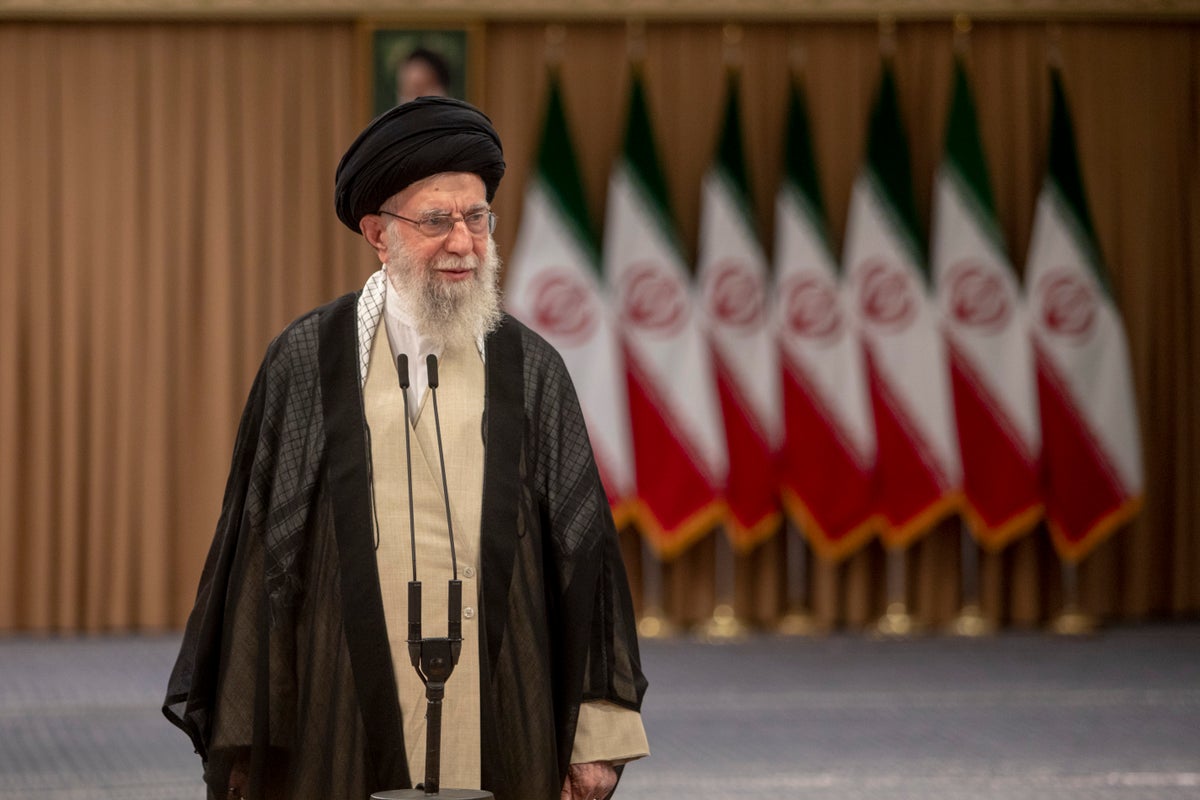
The Middle East just hit a breaking point that's been decades in the making. On February 28, 2026, a massive joint US-Israeli airstrike in Tehran ended the 36-year reign of Ayatollah Ali Khamenei. While some Iranians are literally dancing in the streets of Tehran, a violent wave of pro-regime fury is tearing through diplomatic hubs across the globe. This isn't just another protest. It's a coordinated, lethal explosion of anger targeting American symbols of power, specifically US consulates in regions where pro-Iran sentiment runs deep.
If you're wondering why a consulate in Karachi or a compound in Baghdad is suddenly a war zone, it's because the "head of the snake"—as critics called Khamenei—is gone. To his followers, he was a divinely appointed leader. To his enemies, he was a dictator who suppressed his people for nearly four decades. Now, that tension is spilling over borders and costing lives.
The Karachi consulate siege and the rising body count
The most violent escalation happened in Pakistan's financial hub, Karachi. Hundreds of pro-regime protesters, many belonging to Shia organizations, converged on the US consulate on Mai Kolachi Road. This wasn't a peaceful sit-in. Video footage confirmed by major news outlets shows young men scaling the main gates and smashing windows of the consular building.
The response was immediate and bloody. At least 10 people are dead and over 70 wounded after security forces opened fire to prevent a total breach of the compound. Reports indicate that US Marine security personnel inside were placed on high alert as the perimeter wall was compromised.
- Deadly Clashes: Most of the deceased suffered bullet wounds during the attempt to storm the consulate.
- Widespread Sabotage: Protesters didn't stop at the consulate; they also burned down a United Nations office in Skardu, located in the Shia-majority Gilgit-Baltistan region.
- Gridlock: Police have completely blocked the "Red Zone" in Islamabad to prevent a similar catastrophe at the US Embassy.
Baghdad and the Green Zone under fire
In Iraq, the situation is predictably volatile. Hundreds of protesters dressed in black marched toward the Green Zone in Baghdad, the heavily fortified area housing the US Embassy. For many Iraqis aligned with Tehran, Khamenei’s "martyrdom" is a personal blow. They see the airstrike as a violation of sovereignty and a direct act of war.
Security forces have been using heavy amounts of tear gas to keep the mobs back from the bridges leading to the embassy. The air is thick with smoke and the rhythmic chanting of anti-American slogans. While the Iraqi government is trying to maintain order, the sheer volume of protesters makes the Green Zone look more like a front line than a diplomatic district.
Why the world is reacting this way
You've got to understand the duality of this moment. Khamenei wasn't just a politician; he was the spiritual lynchpin of the Islamic Republic. His death creates a massive power vacuum that the world hasn't seen since 1989.
In the West, and among many segments of the Iranian diaspora, this is seen as a "once-in-a-generation" chance for democracy. President Trump’s social media posts calling it the "greatest chance for the Iranian people to take back their country" have only added fuel to the fire.
On the flip side, pro-regime loyalists in Lebanon, Iraq, and Pakistan view this as a "cynical murder"—a term used by Vladimir Putin to describe the assassination. They aren't just mourning a man; they're fighting for the survival of an ideology that Khamenei spent 37 years building.
What happens next for US security
The threat isn't over. The Islamic Revolutionary Guard Corps (IRGC) has already pledged "fierce retaliation" across the region. We’re likely looking at a prolonged period of instability for any US asset in the Middle East and South Asia.
- Security Alerts: The State Department has issued "Worldwide Caution" alerts. If you're an American citizen in these regions, you're being told to keep a low profile and avoid any large gatherings.
- Succession Crisis: Inside Iran, the Assembly of Experts is now tasked with finding a successor. Until a new leader is named, the IRGC will likely double down on external aggression to prove they haven't lost their grip.
- Travel Disruptions: Flight paths across 11 countries, including Iraq and Jordan, are being rerouted as the "Twelve-Day War" threatens to expand into a full-scale regional conflict.
Keep your eyes on the diplomatic cables. The next few days will determine if these consulate attacks are isolated incidents of grief or the start of a coordinated campaign to drive the US out of the region for good. If you have travel plans or business interests in the Gulf, now is the time to trigger your contingency plans. Stay away from government buildings and monitor local news feeds every hour.