The Atlantic Ocean doesn't care about politics. It doesn't care about borders or the "push and pull" factors debated in cozy European offices. When a wooden boat built for coastal fishing hits the open swells of the Canary Islands route, the ocean just does what it always does. It swallows the unprepared.
Search and rescue teams off the coast of El Hierro just recovered nine bodies. That's the official count for now. The unofficial number is much worse. Forty-five people are still missing. If you've ever spent time near the coast of the Canary Islands, you know those 45 people aren't coming back. They’re gone. This wasn't a "mishap" or a "technical failure." It was a predictable tragedy on the most dangerous migration route in the world. Don't miss our earlier article on this related article.
People often ask why they don't just stay. Or why they don't take a plane. These questions ignore the desperation driving someone to step onto a crowded boat with 80 other people in the middle of the night. You don't do that because you want a better TV. You do it because the alternative feels like a slow death.
Why the El Hierro Route is a Death Trap
The Canary Islands route isn't like the Mediterranean crossing to Italy or Greece. It’s the open Atlantic. The currents are brutal. The winds are unpredictable. If a boat misses its target, there’s nothing but thousands of miles of empty water between Africa and the Americas. To read more about the context here, BBC News offers an informative summary.
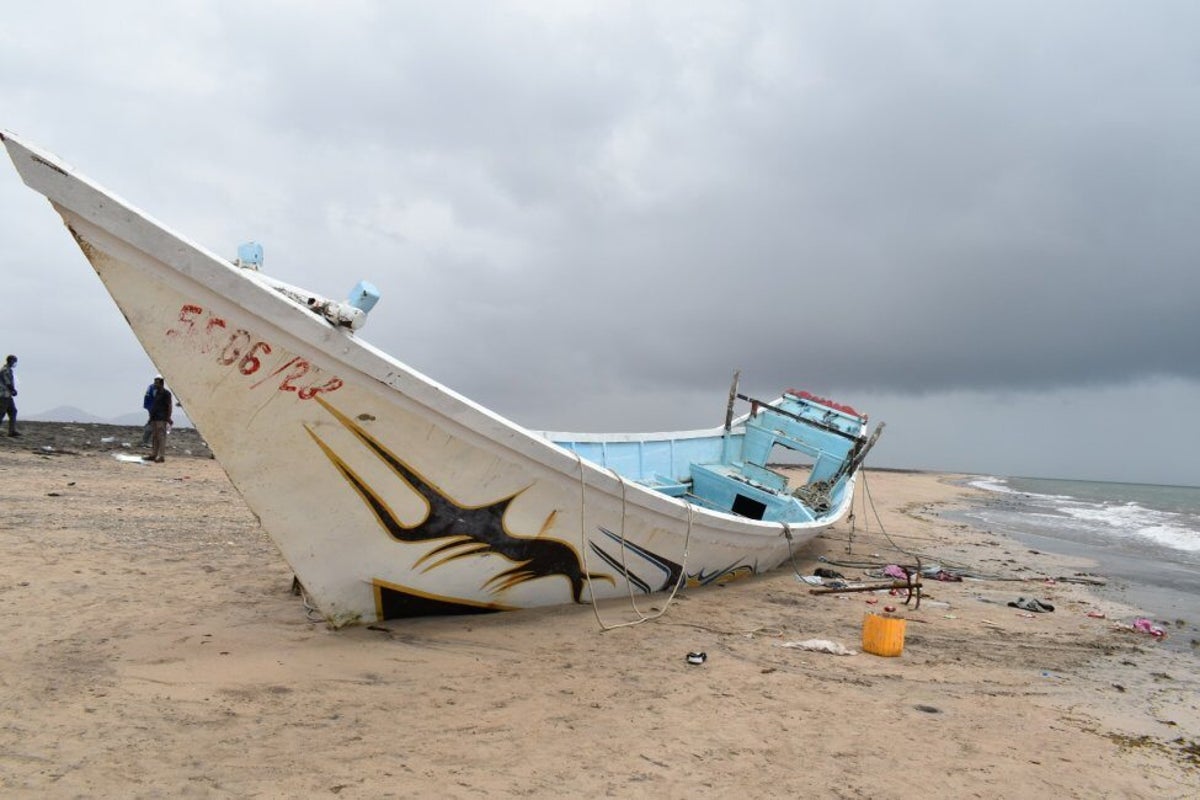
Rescue workers from the Spanish Maritime Safety and Rescue Society (Salvamento Marítimo) are seeing more of these cases every week. The boat that capsized near El Hierro was overloaded. Most of them are. These vessels, often called cayucos, aren't meant for the deep ocean. When the wind picks up, they tip. When they tip, people die.
The stats from organizations like Walking Borders (Caminando Fronteras) are staggering. They estimate that thousands of people disappear on this route every year. We only hear about the ones where the bodies are found near the shore. The 45 people missing from this latest tragedy will likely become part of those silent statistics.
The Logistics of Desperation
I've looked at the reports from these landings. It’s not just young men. It’s families. It’s children. It’s people carrying their entire lives in a plastic bag.
Spain has been struggling to manage the influx. El Hierro is a small island. Its resources are stretched thin. When a boat capsizes, the local hospital and morgue are immediately overwhelmed. It’s a recurring nightmare for the locals and the migrants alike.
- Over 30,000 people have reached the Canaries so far this year.
- The death rate on the Atlantic route is significantly higher than the Mediterranean route.
- Most boats depart from Mauritania or Senegal, journeys that can take over a week.
Think about that. A week on a wooden boat with no cover, limited water, and no navigation tools. By the time they get near El Hierro, they’re dehydrated and exhausted. If the boat flips then, they don't have the strength to swim. They just sink.
The Failure of Current Border Policies
We keep seeing the same headlines because the "fortress Europe" approach isn't working. You can’t build a wall in the middle of the Atlantic. The European Union has poured millions into border security in Senegal and Mauritania. They’ve sent Frontex planes. They’ve signed deals with local governments.
None of it stops the boats. It just pushes them further out.
When you block the easy routes, people take the hard ones. The route to El Hierro is the "hard one." It’s a longer journey. It’s a more dangerous journey. But as long as the conditions in West Africa remain unstable and legal pathways remain closed, people will keep taking the risk.
What Actually Happens During a Rescue
A rescue isn't a clean, organized event. It’s chaos.
Imagine it’s 3:00 AM. The waves are six feet high. The rescue boat is trying to pull alongside a fragile wooden craft that’s already taking on water. Everyone on that boat is terrified. They all rush to one side to grab the ladder. That’s usually when the boat capsizes.
That seems to be what happened in this latest incident. In the dark, in the cold water, it’s nearly impossible to find everyone. The nine people found dead were the "lucky" ones because their families will at least get closure. The 45 missing will haunt their relatives for years.
Spanish authorities and NGOs like the Red Cross do what they can. They provide blankets, food, and medical care. But they can’t fix the trauma. And they certainly can’t fix the systemic issues that put those people on the boat in the first place.
The Role of Human Smugglers
Smugglers aren't some organized crime syndicate from a movie. Often, they’re just people who own a boat and see an opportunity. Sometimes the "smuggler" is just one of the migrants who was given a free passage in exchange for steering the boat.
They don't provide life jackets. They don't provide GPS. They provide a promise. And for that promise, people pay thousands of dollars—money they’ve spent years saving or borrowed from their entire extended family. When the boat goes down, the smuggler isn't the one who pays the price.
The Numbers Nobody Wants to Face
We focus on the nine dead today. But we should be focusing on the thousands who came before them. According to data from the International Organization for Migration (IOM), the "Missing Migrants Project" has recorded a sharp increase in deaths over the last 24 months.
It’s easy to get numb to the numbers. But each one of those 45 missing people has a mother, a father, or a child waiting for a phone call that will never come.
The political response is usually a mix of "thoughts and prayers" and calls for more patrols. It’s a band-aid on a gunshot wound. More patrols might pick up more people, but they don't change the math of the ocean.
Moving Toward a Real Solution
If we want to stop seeing these headlines, we have to change the strategy. It’s not about more fences. It’s about more options.
- Create functional legal migration channels so people don't have to risk their lives.
- Invest in the stability of the departure countries instead of just paying them to act as jailers.
- Establish a permanent, well-funded European search and rescue operation that prioritizes saving lives over border enforcement.
Stop looking at this as a "migrant crisis." It’s a humanitarian disaster. The nine people who died near El Hierro didn't die because they were "migrants." They died because we've created a world where the only way for them to seek a future was to get on a boat that shouldn't have been in the ocean.
Pay attention to the 45 missing. Their names might never be known, but their disappearance is a direct result of our collective failure to address the reality of global inequality. If you want to help, support organizations like the Red Cross or Doctors Without Borders who are actually on the ground—and the water—doing the work that governments refuse to do. Demand that your representatives prioritize human life over political optics. The ocean won't stop taking lives until we stop forcing people into its path.