The air in a secure briefing room doesn’t circulate like the air in a living room. It feels heavy, recycled, and stripped of all scent except for the faint, metallic tang of electronics and the unspoken weight of consequence. In these spaces, maps aren't just paper and pixels; they are grids of human life, where a single red dot represents a person, a history, and a potential spark for a global conflagration.
For Donald Trump, that red dot is often centered directly on himself.
We rarely talk about the psychological toll of a permanent bounty. Most of us worry about mortgage payments or a nagging cough. We don't wake up to intelligence briefings detailing how a foreign power is actively scouring our periphery, looking for a seam in the armor, a moment of distraction, or a lapse in a Secret Service agent’s focus. But for the former president, the threat from Tehran isn't a headline. It is a shadow that follows him into every gold-leafed ballroom and onto every manicured fairway.
The Iranian government’s desire for "blood for blood" following the 2020 elimination of Qasem Soleimani—a man who was, for all intents and purposes, the architect of Iran’s regional shadow wars—is not a secret. It is a published policy.
The Mathematics of Deterrence
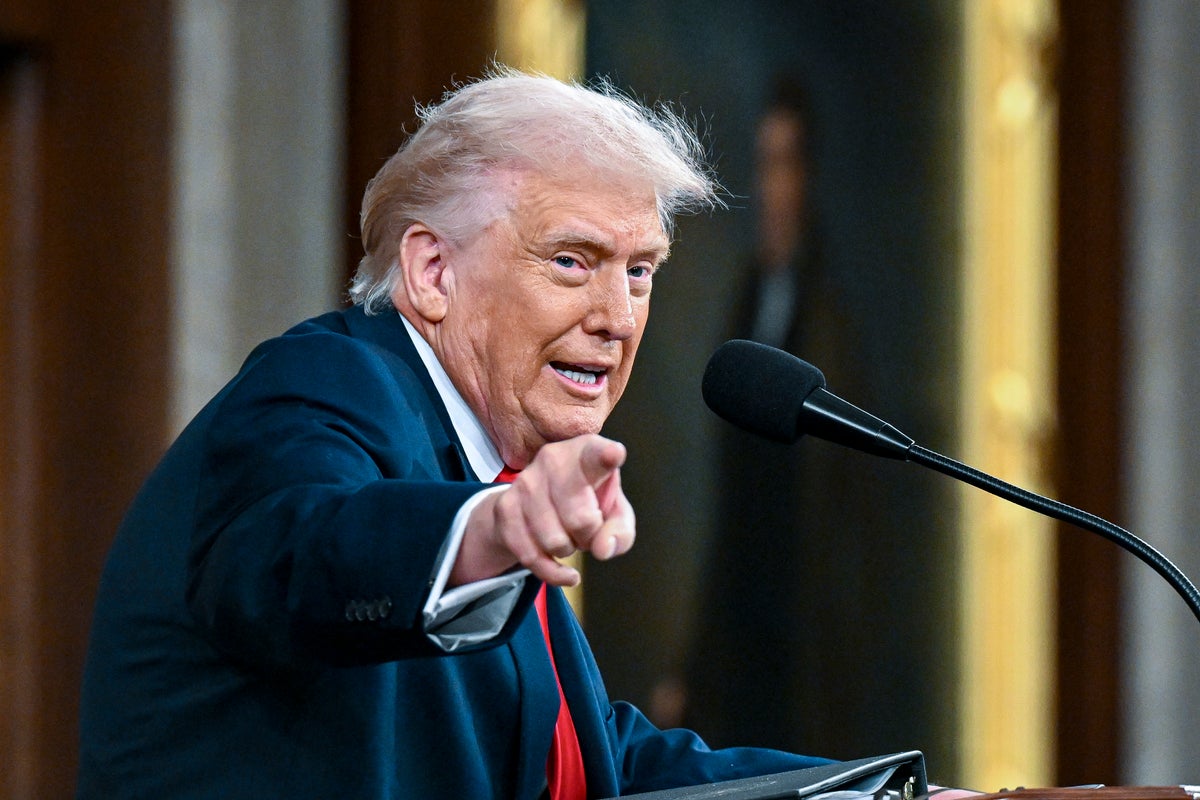
When Trump stands before a crowd and declares that an assassination attempt by Iran would result in the total obliteration of the Iranian state, he isn't just blustering. He is engaging in the oldest, grimmest form of diplomacy: the MAD (Mutually Assured Destruction) principle, applied to a single human life.
Consider a hypothetical scenario. A cell, directed by the Quds Force, successfully navigates the layers of American domestic security. They find their window. The news breaks. Within seconds, the global financial markets don't just dip; they vanish. The geopolitical order, already frayed by conflicts in Eastern Europe and the Levant, snaps.
In that moment, the response is no longer about one man. It becomes about the viability of the United States as a sovereign entity. If a foreign power can strike down a former head of state and a current leading candidate on American soil without a catastrophic response, the concept of a "superpower" becomes an historical footnote.
Trump’s rhetoric—"there will be nothing left"—is a verbal dead man’s switch. He is telling the leadership in Tehran that his life is tethered to their entire infrastructure. Their refineries, their command centers, their ancient cities. Everything.
The Invisible Stakes of the Secret Service
Behind the scenes, the men and women in dark suits and earpieces are living in a state of perpetual high-alert that the average citizen cannot comprehend. Their job has shifted from protecting a dignitary to preventing a world war.
Every time a suspicious drone is spotted near a rally, or an encrypted message is intercepted in a digital backwater of the dark web, the machinery of the state grinds into gear. The cost of this protection is staggering, reaching into the tens of millions of dollars. Yet, the cost of failure is unquantifiable.
Imagine the American psyche if the news cycle shifted from campaign polls to a state funeral necessitated by a foreign hit squad. The domestic unrest would be instantaneous. The demand for retribution would be a roar that no politician, regardless of party, could ignore. We are talking about a cascade of events that leads, with terrifying logic, to the deployment of carrier strike groups and the launch of missiles that cannot be recalled.
The Human Core of the Hardline
It is easy to view these figures as caricatures. Trump, the defiant brawler. The Ayatollahs, the vengeful clerics. But if we peel back the layers of political theater, we find a much more primitive and dangerous reality.
This is a blood feud.
In the Middle East, the concept of "restitution" is often viewed through a lens that spans decades, if not centuries. To the Iranian leadership, the killing of Soleimani was a desecration of their national pride. To Trump, their subsequent threats are a violation of his existence as a citizen and a leader.
The danger lies in a fundamental misunderstanding of American psychology. If the Iranian regime thinks a strike on Trump would weaken the U.S. or force it into a retreat, they are ignoring two centuries of American history. An assassination of this magnitude would be Pearl Harbor and September 11th compressed into a single, devastating moment.
We are not just talking about a political rivalry. We are talking about the soul of a nation’s sovereign response.
The Geography of a Counterstrike
If the red line is crossed, the response Trump alludes to is a total war scenario. This isn't just about surgical strikes on airfields or the sinking of a few patrol boats in the Strait of Hormuz.
We are talking about a systemic dismantling of the Iranian energy sector. If their oil can't flow, their economy dies in a week. If their power grid goes dark, the modern Iranian state collapses into a pre-industrial struggle. This is the "nothing left" that he promises.
It is a terrifying, binary choice. A world where the former president is alive, and the status quo remains a simmering tension. Or a world where he is gone, and the map of the Middle East is rewritten in fire.
There is no middle ground in this standoff. There are only two paths. One is a peace of mutual hatred, and the other is a silence that follows the roar of a thousand missiles.
When the sun sets on Mar-a-Lago, and the lights of the Secret Service vehicles pulse in the Florida humidity, it is easy to forget that this one man’s survival is the only thing standing between a fragile peace and a world that may never look the same again.
The shadow is long. The stakes are absolute. And the clock is always ticking.