Phil Woolas didn't just lose an election. He lost a high-stakes staring contest with a national treasure, and in doing so, he became a permanent fixture in the history of British political PR disasters. The former Labour minister has died at 66, leaving behind a career that was defined as much by a single, blistering television moment as it was by his decades in the halls of Westminster.
If you weren't following the news in 2009, it’s hard to describe the sheer cultural weight of the Gurkha Justice Campaign. It wasn't just a policy debate. It was a moral crusade led by Joanna Lumley, an actress with the kind of public trust most politicians would sell their souls to achieve. Woolas was the man standing on the other side of the desk, representing a Home Office that seemed cold, bureaucratic, and deeply out of touch.
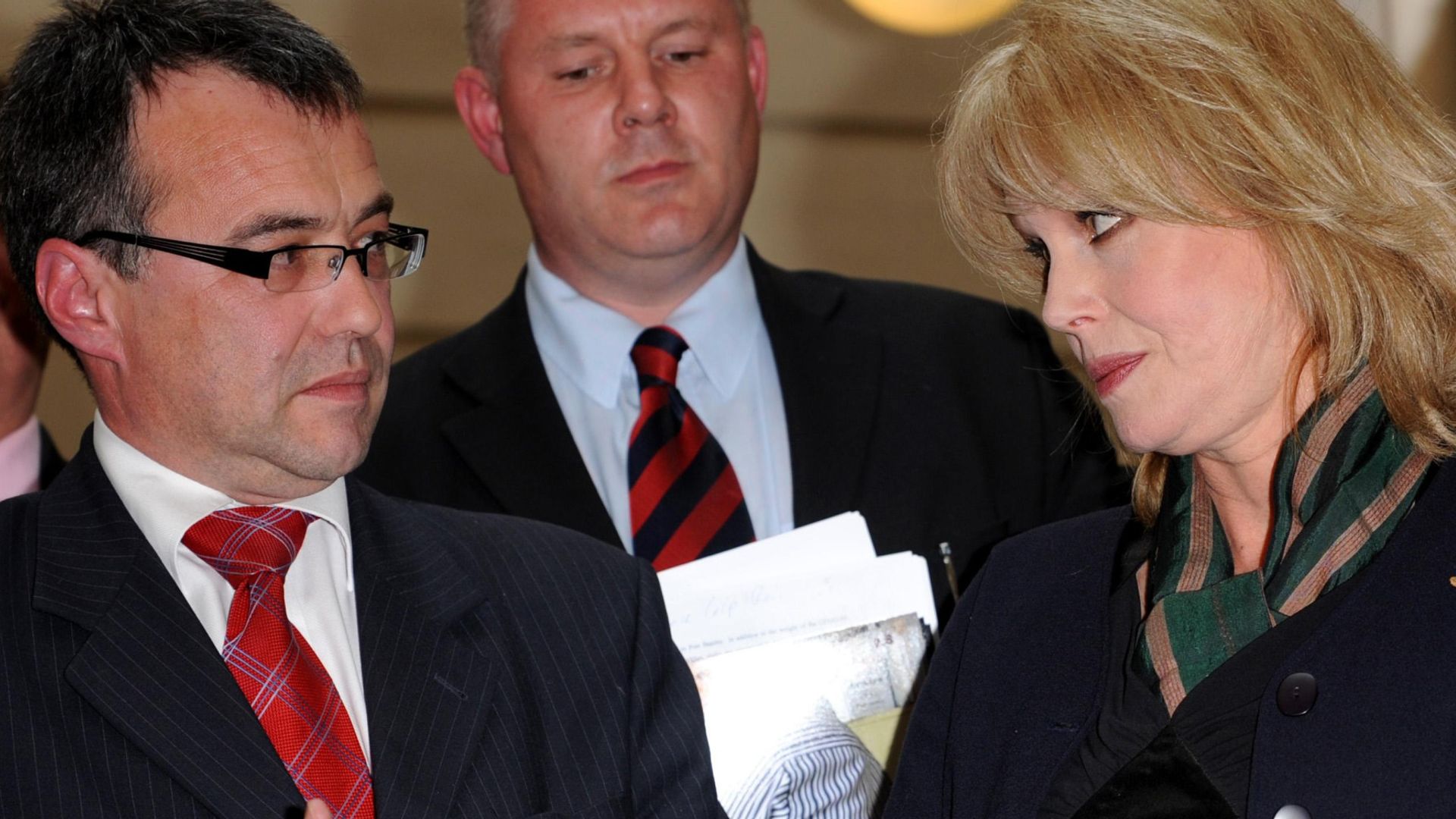
The image of Lumley cornering Woolas in a TV studio remains the gold standard for how a grassroots campaign can dismantle a government's narrative in real-time. Woolas, who served as the Member of Parliament for Oldham East and Saddleworth from 1997 to 2010, found himself as the face of an administration trying to restrict settlement rights for retired Gurkha soldiers. It didn't go well for him.
The Showdown That Changed Everything
Most political interviews are choreographed dances. This wasn't. When Lumley and Woolas met in the BBC studios, the power dynamic shifted instantly. You could see the discomfort on his face. It’s the look of a man who knows he’s technically following the rules but is losing the argument of the heart.
The Gurkhas had served the British Crown for nearly 200 years. The government's stance—that only those who retired after 1997 had an automatic right to live in the UK—felt like a betrayal to the public. Woolas tried to use logic. He talked about costs. He talked about "precedents" and "floodgates." Lumley talked about honor.
She didn't just argue with him; she beckoned him into a side room for a private chat while the cameras were still rolling. It was a masterclass in soft-power intimidation. That afternoon, the government blinked. Within hours, the policy was effectively dead. Woolas was left to deal with the fallout of being the man who tried to say "no" to the people who had bled for Britain.
Beyond the Lumley Moment
It's easy to reduce a man's life to a thirty-second clip, but Woolas was a political heavyweight in the North West long before the Gurkhas became a household cause. He was a former president of the National Union of Students. He was a "street fighter" in the Labour Party, a man who rose through the ranks because he knew how to win tough battles in working-class towns.
He served as a minister under both Tony Blair and Gordon Brown. He held portfolios in the Treasury, the Department for Environment, Food and Rural Affairs, and the Home Office. He wasn't a backbencher hiding in the shadows. He was a central figure in the New Labour machine.
His colleagues often described him as a tireless worker for Oldham. Even those who disagreed with his politics—and there were many—acknowledged his commitment to his constituents. He dealt with the 2001 Oldham riots, a period of intense racial tension that would have broken a lesser politician. He stood his ground in a community that was rapidly changing and facing massive economic hurdles.
The 2010 Election Scandal and the High Court
If the Lumley incident was a PR bruise, the 2010 election was a terminal blow to his political career. This is the part of the story that political science students still study today. Woolas won his seat by a razor-thin margin of just 103 votes. But the victory was short-lived.
His Liberal Democrat opponent, Elwyn Watkins, challenged the result under the Representation of the People Act 1883. The accusation was that Woolas had knowingly made false statements about Watkins' character in his campaign literature to stir up racial tensions and secure the "white vote."
The Leaflets That Ended a Career
The campaign mailers were aggressive. They suggested Watkins was courting "Islamic extremists" who had made death threats against Woolas. The court didn't just find the claims distasteful; they found them illegal.
- An election court—the first of its kind in 99 years—was convened.
- The judges ruled that Woolas had "banned" himself from the Commons by lying.
- His victory was declared void.
- He was barred from standing for public office for three years.
The Labour Party, which had initially supported him, dropped him like a stone after the ruling. He went from being a Minister of the Crown to a political pariah overnight. It was a brutal fall. He tried to appeal the decision in the High Court, but while some of the legal nuances were debated, the result stood. He was out.
Why Woolas Matters in the Current Political Climate
The death of Phil Woolas feels like the closing of a specific chapter of British politics. It was an era of intense spin, where the "dark arts" of campaigning were pushed to their absolute limit. We live in a world now where "fake news" is a daily talking point, but Woolas was caught doing it before there was a catchy name for it.
He was a reminder that the law actually has teeth when it comes to election integrity. You can't just say whatever you want about an opponent to scrape a win. There are lines. He crossed them, and he paid the ultimate professional price.
Yet, there is a certain sadness in how his life ended. Friends say he never truly got over the way his career collapsed. He spent his final years away from the spotlight, a shadow of the man who once traded barbs with the biggest names in the country. He was 66—hardly old by modern standards.
The Lessons of a Complicated Legacy
If you're a campaigner or a young politician, the Woolas story is a cautionary tale. Don't underestimate the power of a celebrity with a righteous cause. More importantly, don't underestimate the public's ability to sniff out a lack of authenticity.
Woolas was a man of his time. He was a product of the tough, uncompromising politics of the 80s and 90s. He fought hard, often too hard. He represented a brand of Labour politics that was pragmatic to a fault, sometimes losing its moral compass in the pursuit of power.
- Check your facts: The court proved that a lie in a leaflet can end a career.
- Respect the advocate: Joanna Lumley didn't have a political degree, but she had the moral high ground.
- Winning isn't everything: Winning by 103 votes isn't worth it if you have to break the law to get there.
You should look back at the footage of that 2009 showdown. It's not just a piece of nostalgia. It's a reminder that at the end of the day, politicians are accountable to the people they serve—and sometimes, the most effective accountability doesn't happen in Parliament, but on a sofa in a television studio.
The story of Phil Woolas isn't just about a minister who died; it's about the thin line between a successful career and a cautionary tale. He was a man who worked for his town, served his government, and then lost it all because he forgot that the rules of fair play apply to everyone, even a Minister of the Crown.
Take a moment to read the 2010 High Court ruling on the Oldham East and Saddleworth election. It is one of the most significant legal documents in modern British democracy. Understanding why he was removed is essential for anyone who cares about how our elections are run. It’s a messy, complicated, and deeply human story that deserves to be remembered for more than just a single headline.