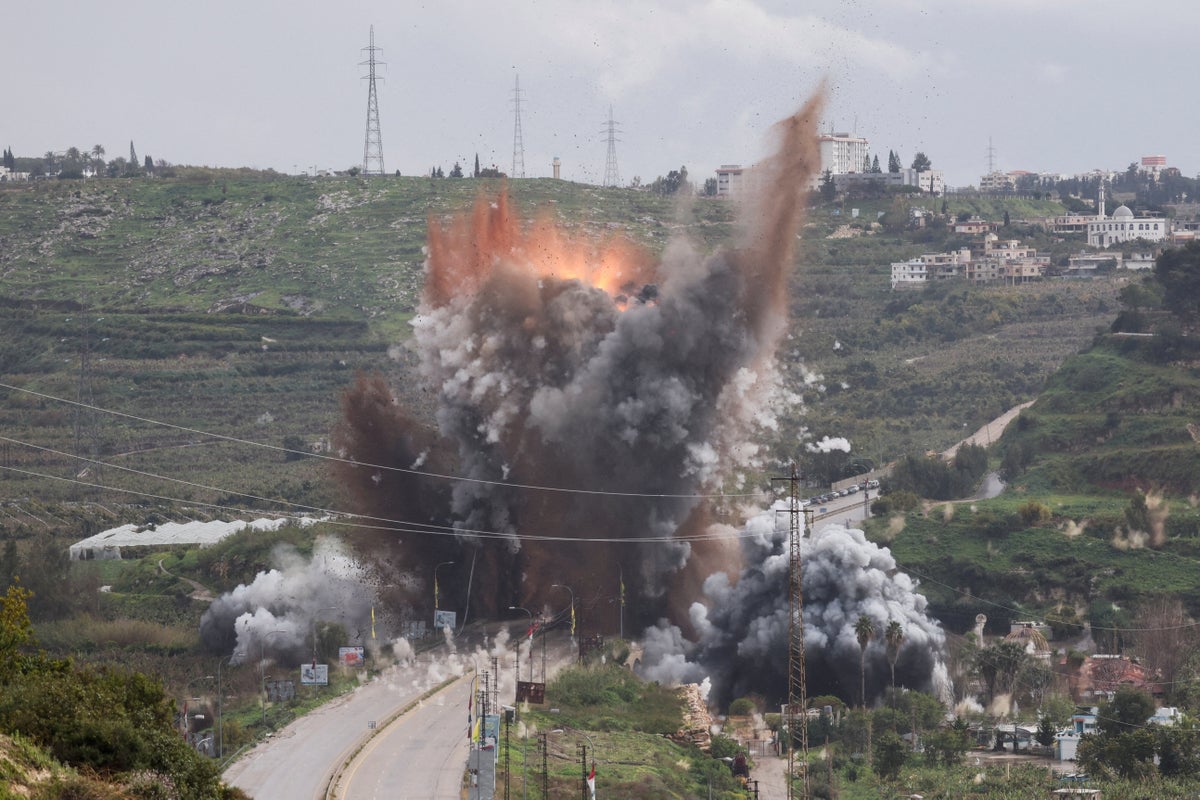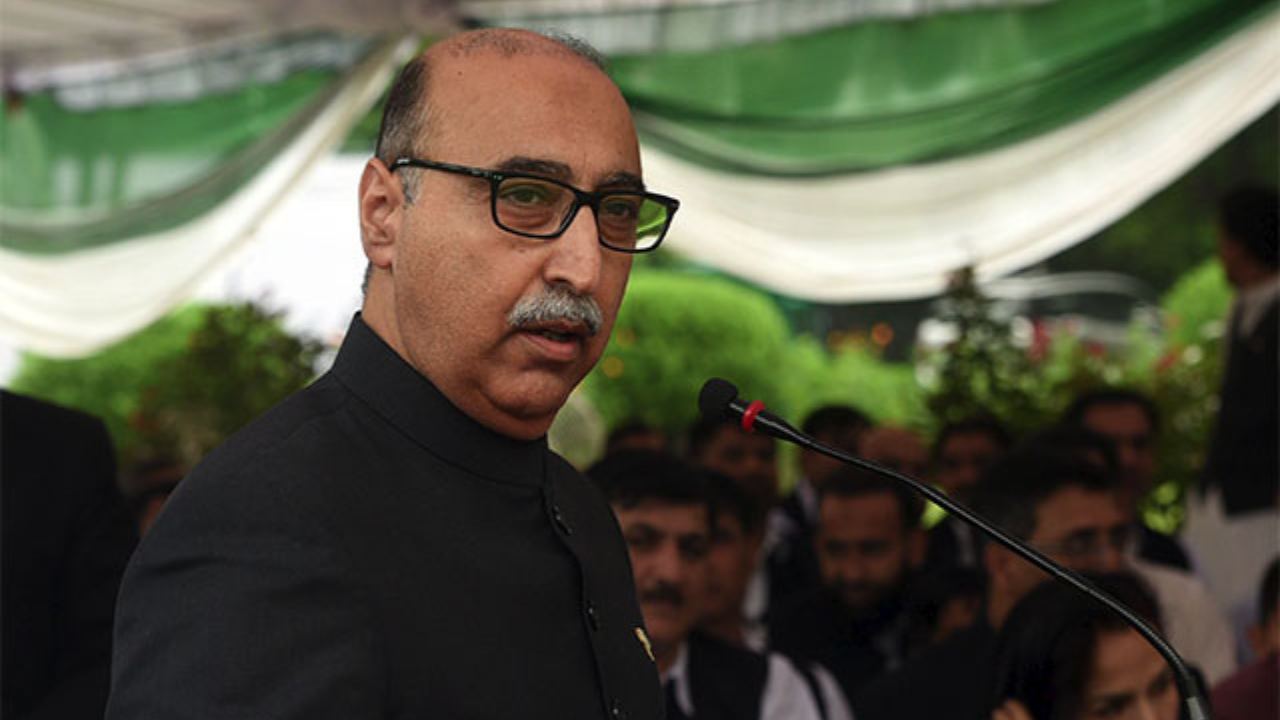
The air in the television studio is always too cold, a calculated chill designed to keep the pundits sharp and the sweat off their brows. Abdul Basit, a man who spent his life navigating the marbled corridors of high diplomacy, sat under those lights and uttered a sentence that felt like a crack in a dam. He wasn't speaking of trade or visas. He was speaking of fire.
The former Pakistani High Commissioner to India suggested that if the United States were to strike Pakistan, his nation should respond by attacking Indian cities like New Delhi or Mumbai.
It is a logic that defies the geography of the earth but follows the jagged, desperate maps of geopolitical survival. To understand why a seasoned diplomat would reach for the unthinkable, you have to look past the suit and the title. You have to look at the shadows cast by the 1,800 miles of border that separate two nuclear powers.
Imagine a tea stall in a narrow alley in Old Delhi. Let’s call the owner Arjun. He is a man who measures his life in the clink of glass and the smell of cardamom. He has no interest in the shifting alliances of Washington or the internal anxieties of Islamabad. But in the dark geometry of "asymmetric escalation," Arjun’s tea stall becomes a coordinate.
When a high-ranking official suggests that the path to deterring a superpower leads through the heart of a neighbor’s civilian population, the distance between a diplomat's mouth and a citizen’s doorstep vanishes.
The Mirror of Desperation
Diplomacy is usually a game of mirrors. You reflect what you receive. But Basit’s rhetoric suggests a distorted mirror, one where the target of your anger is not the person who hit you, but the person who stands closest to you. This is the "hostage logic" of South Asian security. It suggests that India is the perpetual collateral for Pakistan’s relationship with the West.
The history here isn't a straight line; it's a series of tripwires. For decades, the relationship between the U.S. and Pakistan has been a marriage of convenience shadowed by deep, mutual suspicion. When that friction sparks, the heat travels eastward. The rationale is terrifyingly simple: if the U.S. attacks, Pakistan may not be able to reach Washington, but it can reach Mumbai.
It is a strategy of redirected pain.
This isn't just a "hot take" for a news cycle. It represents a school of thought that views India as the "soft underbelly" of Western interests in Asia. By threatening Delhi, the aim is to force India to use its considerable influence to restrain American hands. It turns a billion people into a human shield for a political chess move.
The Cost of the Unthinkable
What does it actually mean to "attack a city"?
We use these words in policy papers as if they are abstract data points. But cities are living, breathing organisms. Mumbai is not a dot on a map; it is the roar of the local trains, the salt spray of the Marine Drive, and the millions of dreams being chased in cramped apartments. Delhi is the ancient dust of empires mixed with the frantic energy of a modern capital.
When a diplomat speaks of attacking these places, they are speaking of ending the world. Not the whole world, perhaps, but the world of the fruit seller, the software engineer, and the grandmother waiting for the bus.
There is a psychological weight to this rhetoric that statistics cannot capture. It creates a background hum of anxiety that defines a generation. In the late 1990s and early 2000s, this hum was a roar. The brinkmanship of the Kargil War and the 2001 Parliament attack brought the world to the edge of a nuclear winter. Basit’s comments tap back into that old, dark well.
He is leaning on a doctrine known as "Full Spectrum Deterrence." It’s a fancy term for a simple, horrifying reality: the willingness to use any means necessary, at any level of conflict, to ensure survival. But when that survival is bought by threatening the annihilation of millions of neighbors, the price is the very humanity the state is supposed to protect.
The Ghost in the Room
The United States is the silent ghost in this conversation. For years, the U.S. has navigated this minefield, providing aid while simultaneously eyeing Pakistan’s nuclear arsenal with a nervous squint. The fear in Washington has always been "loose nukes" or a rogue element within the state apparatus.
When an ex-envoy speaks this way, he confirms the West’s deepest fears. He suggests that the red lines are not just blurry—they are mobile.
Consider the mechanics of such a threat. If the U.S. carries out a drone strike or a cross-border raid against a militant group, and Pakistan responds by launching a missile at an Indian city, the chain reaction is instant. There is no "slow" version of this story.
India’s "Cold Start" doctrine and Pakistan’s "Tactical Nuclear Weapons" are two gears in a machine designed to grind bones. Once the first gear turns, the rest follow with a mathematical certainty that ignores the pleas of diplomats and the cries of the innocent.
The Human Buffer
We often talk about "strategic depth" or "credible deterrence" as if they are blankets that keep a nation warm. They aren't. They are walls built out of the lives of ordinary people.
The tragedy of Basit’s statement lies in its admission of helplessness. It is the cry of a man who believes his country is so backed into a corner by a superpower that the only way out is to burn the neighborhood down. It is a confession that the traditional tools of statecraft—trade, cultural exchange, shared history—have failed.
But look at the reality of the people on the ground.
A student in Lahore and a student in Delhi share more than just a history; they share a playlist, a language, and a penchant for over-spiced food. They are connected by a thousand invisible threads of culture. When the rhetoric of the "elite" suggests that these two students should be targets for each other's governments, the absurdity of the conflict reaches its peak.
The stakes are not just political. They are existential.
The "invisible stakes" are the dreams of a stable South Asia, a region that could be the engine of the global economy if it weren't so busy staring down the barrel of a gun. Every time a statement like Basit’s goes viral, investment shudders. Every time a threat is leveled at a city, a father wonders if he should save money for his daughter's education or for a fallout shelter.
Beyond the Studio Lights
The cameras eventually turn off. The makeup is wiped away. The pundit goes home. But the words remain, vibrating in the atmosphere like a low-frequency fever.
Basit’s logic relies on the idea that fear is the only language anyone understands. He assumes that the only way to talk to Washington is to scream at Delhi. It is a strategy born of the Cold War, a relic of a time when the world was divided into neat blocks of "us" and "them."
But the world is no longer neat.
The interconnectedness of the modern era means that a fire in Mumbai would choke the lungs of Karachi. The fallout, both literal and economic, does not respect borders. The wind blows where it will.
We are taught to see these conflicts as a game of "Risk," where pieces are moved across a board and losses are calculated in plastic tokens. But the reality is a mother in a tenement house clutching a child because she heard a loud noise in the street and for one terrible second, she thought the "envoy’s promise" had finally come true.
The real power doesn't lie in the ability to destroy a city. It lies in the courage to refuse the logic of destruction.
Diplomacy is supposed to be the art of the possible. When it becomes the art of the apocalyptic, it ceases to be diplomacy and becomes a suicide note. The path forward isn't found in identifying more targets. It’s found in recognizing that the person on the other side of the border isn't a coordinate on a strike map. They are the only ones who can help you put the fire out.
The lights in the studio may be cold, but the fire they discuss is very, very real. And once it starts, it doesn't care who threw the first match. It only cares for what is flammable. And in the end, we are all made of the same straw.