The British Ministry of Defence loves a good photo op. A Type 45 destroyer cutting through the Mediterranean, a few Wildcat helicopters hovering with fresh "counter-drone" kits, and a press release dripping with the language of "regional stability." It looks like power. It feels like a response.
In reality, it is a desperate attempt to use 20th-century hardware to solve a 21st-century math problem.
The consensus view—the one you’ll read in every defense rag from London to D.C.—is that sending a billion-pound vessel and high-tech rotaries to Cyprus "bolsters defenses" against regional drone threats. This is a lie of omission. It ignores the staggering asymmetry of modern attrition. We are watching the Royal Navy bring a gold-plated sledgehammer to a swarm of flies, and the flies are winning the economic war before a single shot is even fired.
The Billion Pound Target
Let’s talk about the Type 45. It is arguably the most capable anti-air platform on the planet. Its Sea Viper system can track objects the size of a cricket ball traveling at three times the speed of sound. It is a technological marvel. It is also a liability.
When you station a Type 45 off Cyprus to intercept one-way attack (OWA) drones, you are participating in a terminal exchange rate. A single Aster 15 or Aster 30 missile costs between £1 million and £2 million. The drones they are meant to intercept—like the Iranian-designed Shahed variants or local jury-rigged proxies—cost between £15,000 and £30,000.
Do the math. Even with a 100% intercept rate, you are trading millions to stop thousands. In a sustained conflict, the adversary doesn't need to hit the ship to win; they just need to make the ship empty its magazines. Once those silos are empty, that billion-pound "deterrent" is nothing more than an expensive floating hotel.
I’ve spent years analyzing procurement cycles where "capability" is measured by how much a sensor can see, rather than how much the platform costs to maintain in a high-intensity environment. We are building Ferraris to drive through minefields.
The Helicopter Myth
Then there are the Wildcats. The MoD is touting "counter-drone technology" integrated into these airframes. On paper, it sounds proactive. In practice, using a manned helicopter to hunt sub-£50k drones is a tactical nightmare.
- Vulnerability: A helicopter is a loud, hot, and relatively slow target.
- Operational Ceiling: Drones can operate in swarms that saturate a helicopter’s engagement window.
- Fatigue: You cannot keep a Wildcat on station 24/7. The maintenance-to-flight hour ratio is punishing.
The "lazy consensus" suggests that these assets provide a flexible layer of defense. The nuance they missed? These assets create a "high-value target" problem. By placing these specific platforms in the theater, the UK has essentially handed the adversary a list of targets that provide massive propaganda value if even scratched. A drone hitting a warehouse is a nuisance; a drone hitting a Wildcat on a flight deck is a national disaster.
The Logistics of Ego
Cyprus serves as "Sovereign Base Areas," a relic of empire that we treat as an unsinkable aircraft carrier. But an unsinkable aircraft carrier is useless if its supply lines are tethered to a bloated, slow-moving domestic industrial base.
The UK’s current stockpile of interceptors is not built for a war of swarms. We are prepared for a "quality" war—a few high-end jets, a few sophisticated missiles. We are totally unprepared for a "quantity" war. Sending the HMS Duncan or any of her sisters to the Eastern Mediterranean without a radical shift in how we replenish vertical launching systems (VLS) at sea is theater, not strategy.
Current maritime doctrine usually requires these ships to return to a specialized port to cranes-in new missiles. In a real-world saturation scenario, the ship is "out of the fight" for days or weeks just to reload. This isn't a secret; it’s a glaring hole in Western naval architecture that everyone agrees to ignore because acknowledging it means admitting our fleet is too small and too fragile.
The Wrong Questions
People often ask: "Can the UK protect its interests in Cyprus?"
That is the wrong question. The right question is: "Is the UK willing to bankrupt its defense budget to kill £20,000 plastic planes?"
If the answer is "yes," we are headed for a strategic collapse. The industry insists on "exquisite" solutions. We want the best radar, the best optics, the best cooling systems. But the battlefield is screaming for "good enough" and "cheap."
Instead of sending a Destroyer, the UK should be flooding the region with its own low-cost autonomous interceptors—disposable platforms designed to ram or net incoming threats. But there is no prestige in a disposable plastic drone. There is no "command" to be had over a swarm of autonomous bots. The Admiralty wants bridges to stand on and gold braid to wear.
The Electronic Warfare Trap
The MoD mentions "electronic warfare" (EW) as a key component of this deployment. Here is the uncomfortable truth about EW: it is a temporary fix.
Frequency hopping and GNSS-denied navigation (using optical flow or terrain mapping) are making traditional "jamming" obsolete. If a drone doesn't need a GPS signal to find its target because it’s "seeing" the coastline with a £50 camera and an onboard AI chip, your multi-million pound jammer is just a giant radio beacon saying "Here I am."
We are betting on a tech advantage that is evaporating in real-time. The transition from remote-controlled drones to truly autonomous terminal guidance means the "electronic shield" around Cyprus is more like a colander.
Direct Action for the Realist
If you are actually interested in defense—rather than the performance of defense—you stop looking at the ships. You look at the magazine depth.
- Stop the Interceptor Obsession: We need kinetic solutions that cost less than £50k per kill. If it isn't a laser (which has its own massive atmospheric hurdles in a maritime environment) or a gun-based CIWS with infinite-ish ammo, it isn't a long-term solution.
- Accept Attrition: We must design for loss. The current UK mindset treats the loss of a single airframe as a tragedy. In a drone-saturated landscape, loss is a statistic. If your platform is too expensive to lose, it’s too expensive to use.
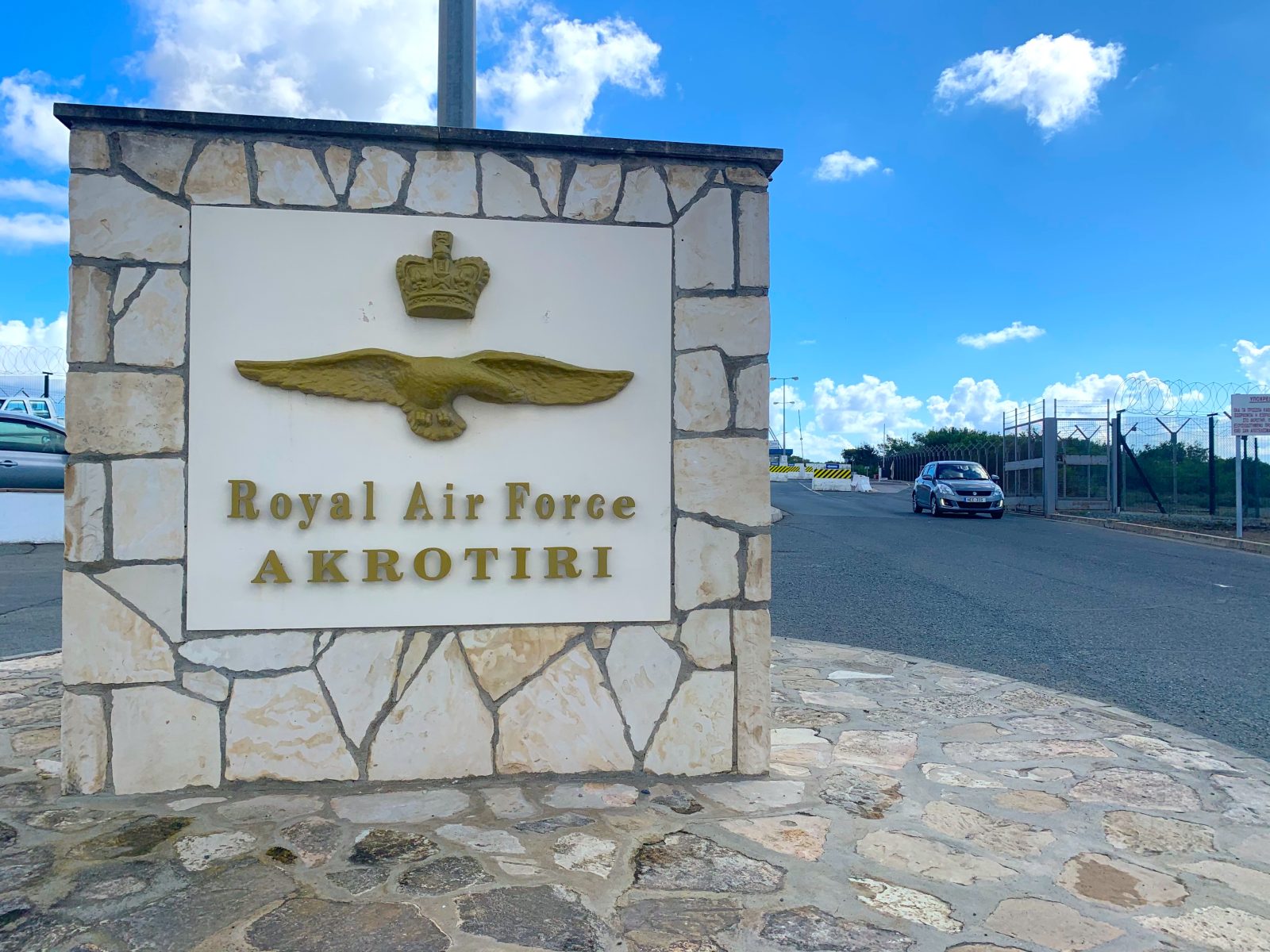
- Decentralize Cyprus: Concentrating assets at Akrotiri and Dhekelia makes them "fat targets." We need to stop thinking in terms of "bases" and start thinking in terms of "distributed nodes."
The deployment of a destroyer and a handful of helicopters is a signal sent to the British public, not to the adversaries. It’s meant to reassure voters that "something is being done." But to those of us watching the data, it looks like a dinosaur staring at a meteor, wondering if its skin is thick enough to survive the heat.
The Mediterranean is no longer a lake for Western powers to patrol at will. It is a laboratory for cheap, lethal, and autonomous systems that do not care about the pedigree of a Royal Navy captain. We are bringing a ledger to a street fight, and we’re the ones in the red.
Stop cheering for the arrival of the big ships. Start worrying about what happens when they run out of bullets.


