Stop Performing Your Weekend
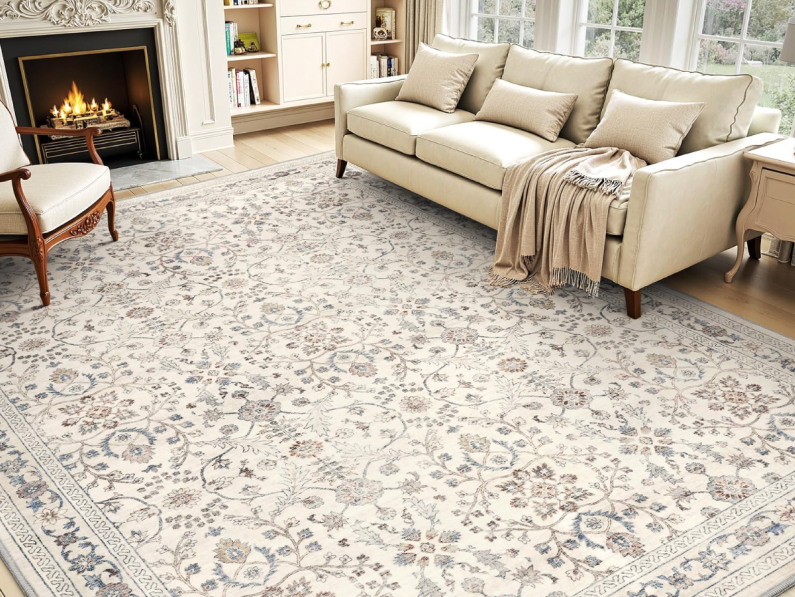
The modern "perfect Sunday" has become a checklist of aesthetic obligations. We’ve been fed a lie—mostly by influencers like Drew Michael Scott—that a day of rest requires a $200 ceramic vase, a specific shade of beige linen, and a high-end vintage rug crawl through Culver City.
This isn't living. It’s set design.
When you follow a pre-packaged itinerary of "curated" stops, you aren't actually relaxing. You are participating in a grueling, low-stakes theater production where the only audience is your Instagram followers. Los Angeles is a city built on the bones of genuine weirdness and chaotic sprawl, yet we’ve reduced it to a three-stop loop of expensive coffee, mid-century modern furniture, and overpriced flowers.
The industry-standard Sunday is a trap. It’s designed to keep you consuming under the guise of "self-care." If your day of rest involves navigating the 405 to find a specific "undiscovered" boutique that has 400,000 followers, you have failed the weekend.
The Myth of the Aesthetic Reset
The "Aesthetic Reset" is the most successful marketing scam of the decade. It suggests that by organizing your pantry or buying a new brass sconce, you are somehow fixing your internal state.
I have spent fifteen years watching people burn out while surrounded by perfectly styled interiors. I’ve seen homeowners drop six figures on a kitchen remodel just to realize they still hate their Monday mornings. The "Lone Fox" approach to Sundays is essentially a retail therapy marathon masquerading as a lifestyle philosophy.
True restoration doesn't happen in a showroom. It happens in the gaps where nothing is being sold to you. Most "best Sunday" guides are just thinly veiled advertisements for a specific brand of high-end, urban-nomad consumption. They tell you to go to the Flower Market, then a specific brunch spot, then a vintage shop.
Notice a pattern? Every single step involves a transaction.
If your "best day" requires a credit card to be swiped every ninety minutes, you aren't having a Sunday. You’re being a customer.
The Los Angeles Trap: Convenience vs. Character
The typical L.A. Sunday guide stays within a five-mile radius of West Hollywood or Silver Lake. It’s safe. It’s predictable. It’s "the best" only if your definition of quality is "it looks good in a square crop."
By sticking to the curated path, you miss the actual soul of the city. The real L.A. isn't found at a $15 latte stand in Larchmont Village. It’s in the strip malls of the San Gabriel Valley. It’s in the chaotic, un-Instagrammable swap meets in Santa Fe Springs. It’s in the hike that doesn't have a paved path and a juice bar at the trailhead.
The "curated" Sunday is a bubble of privilege that feels increasingly hollow. We’ve traded discovery for "vibe." When you go where everyone else goes, you see what everyone else sees. There is zero intellectual or emotional ROI in that.
The Contrarian Sunday Strategy: Radical Aimlessness
If you want to actually recover from a workweek, you need to abandon the itinerary. You need Radical Aimlessness.
Most people think they need a plan to avoid wasting time. In reality, the plan is what wastes the time. You spend your morning checking the clock to make sure you beat the line at the bakery. You spend your afternoon stressing about parking near the flea market.
Instead of a "Top 10" list, follow these rules:
- Digital Blackout: If you can’t document it, did it happen? Yes. And it was better because you were actually there. Turn off the phone.
- The Anti-Destination: Drive until you see something that looks ugly, weird, or old. Stop there. Eat at the diner with the faded sign. Browse the bookstore that smells like damp paper.
- Zero Transactions: Try to go four hours without buying a single thing. No coffee, no "found objects," no snacks. It’s amazing how much more you observe when you aren't looking for something to own.
- Physical Exhaustion over Aesthetic Fatigue: Walking around a vintage store for three hours isn't exercise; it’s a slow-motion shopping trip. Go somewhere where you’ll actually sweat.
The High Cost of "Lone Fox" Living
The "Lone Fox" aesthetic is built on the idea of the "find"—the unique item that defines a room. But when everyone is hunting for the same "unique" items at the same three markets, the result is a sterile, homogenous look that plagues every "creative" apartment from Echo Park to Brooklyn.
I’ve seen this play out in the design industry repeatedly. A trend starts as a genuine expression of personality, gets codified into a "Sunday Guide," and within six months, everyone’s living room looks like a stage set for a direct-to-consumer mattress commercial.
When you spend your Sunday chasing the aesthetic of someone else, you are outsourcing your personality. You are becoming a derivative of a derivative.
Why "Best" is the Wrong Metric
The "People Also Ask" sections of Google are littered with queries like "Where is the best place to spend Sunday in L.A.?" and "How do I make my home look like a Lone Fox project?"
These are the wrong questions. "Best" is subjective and, in our current climate, usually means "most photogenic."
The real question should be: "How do I reclaim my time from a culture that wants to sell it back to me in 15-minute increments?"
The obsession with having the "best" Sunday creates a toxic performance anxiety. People feel like they’ve "failed" their weekend if they stayed in bed until noon or if they didn't find a rare Moroccan rug at a yard sale. This is the ultimate victory of capitalism—it has convinced us that even our leisure time must be productive, optimized, and visually stunning.
The Art of the Boring Sunday
We need to bring back the boring Sunday.
A Sunday where nothing happens that would interest a photographer. A Sunday where you don't "discover" a new neighborhood, but instead finally learn the names of the trees on your own block. A Sunday where your home is a place you live, not a project you are "styling."
The industry insiders will tell you that a beautiful life is built through careful curation and "expert-approved" stops. They are lying. A beautiful life is built in the moments where you aren't trying to perform for anyone—including yourself.
The next time you see a guide telling you how to have the "perfect" day in Los Angeles, do the opposite. Stay home. Go to the "wrong" neighborhood. Buy nothing.
The only way to win the weekend is to stop playing the game.
Log off. Walk out the door. Don't take a picture.