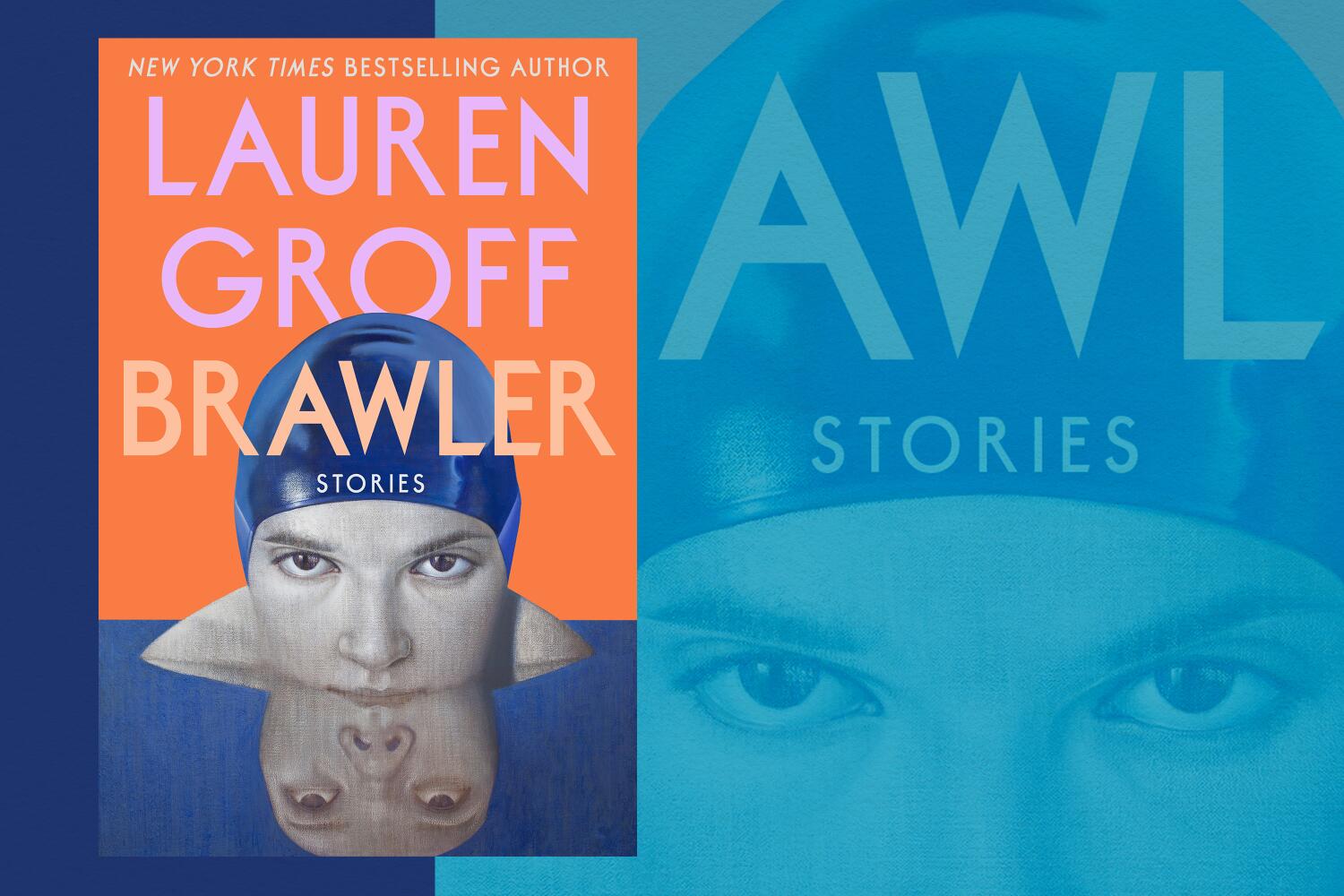
Literary critics have spent the last decade treating Lauren Groff like a secular saint, canonizing every sentence she breathes onto a page as "required reading." It is a predictable cycle. A new collection drops—usually full of humid Florida landscapes and women simmering with internal rage—and the legacy media machine begins its synchronized chanting. They call her a "master of the craft" and "one of the best in the game."
But the game is rigged.
The consensus around Groff isn’t based on narrative satisfaction or structural innovation. It is based on a specific, high-brow brand of stylistic hypnosis. We are being told to mistake atmosphere for substance. We are being bullied into believing that a lushly described swamp is the same thing as a plot.
If you strip away the shimmering adjectives and the aggressive "literariness" of her prose, what is actually left? Usually, it’s a collection of vignettes that refuse to commit to a point.
The Myth of Productive Ambiguity
The primary defense of Groff’s work—particularly her recent short fiction—is that she explores "the messy reality of the human condition." In critic-speak, that is code for "nothing happened, but it sounded beautiful while it didn't happen."
Modern literary fiction has developed a massive allergy to the Climax. Somewhere along the line, telling a story with a beginning, middle, and a definitive end became "low-brow." Writers like Groff have pivoted toward the "Epiphanic Slice of Life," a structure where a character thinks deeply about a bird or a thunderstorm for twenty pages and then experiences a vague internal shift that the reader is supposed to find profound.
I have sat in editorial rooms where we rejected mid-list authors for the exact same lack of momentum that Groff is praised for. Why? Because Groff has "The Voice."
"The Voice" is a literary sleight of hand. It’s the use of $High-Frequency Prose$ to distract from $Low-Frequency Plotting$. In any other industry, if you delivered a product that looked stunning but didn't actually function, you’d be fired. In publishing, they give you a Guggenheim.
The Florida Trap
Groff has claimed the state of Florida as her personal sandbox, much like Faulkner claimed Mississippi. Critics eat this up. They love "place as character." It feels intellectual. It feels grounded.
But let’s look at the data of the reading experience. A story should be a machine that generates meaning. When a writer leans too heavily on the "sensory details" of a setting—the heat, the rot, the insects—to carry the emotional weight of a piece, they are engaging in Atmospheric Inflation.
Imagine a scenario where a builder constructs a house with gold-leaf walls but forgets to install the plumbing. That is the Groff experience. You are dazzled by the shine, but eventually, you realize you can't actually live there. The stakes in her recent stories are often so internalized that they become invisible to the naked eye. We are no longer reading about people; we are reading about sensory perceptions of people.
Expertise vs. Performance
There is a difference between technical expertise and performative writing. Technical expertise is knowing how to use a semicolon to control the reader's breath. Performative writing is using a semicolon because you want the reader to know you’re the kind of person who knows how to use a semicolon.
Groff is a world-class performer.
She understands the optics of the "Great American Writer." She tackles the "right" themes: climate collapse, the female body, historical injustice, the isolation of the individual. But she tackles them with a detachment that feels more like a lecture than a conversation.
Take Matrix. It was hailed as a feminist masterpiece about a medieval nunnery. In reality, it was a spreadsheet of administrative tasks wrapped in liturgical prose. It was an exercise in world-building that forgot to build a heart. The "power" people felt reading it was actually just the exhaustion of keeping up with its vocabulary.
The Cost of the "Required Reading" Label
When we tell the public that a writer is "required reading," we set a dangerous precedent. We tell readers that if they find the work tedious, the fault lies with them, not the author.
This creates a Literary Feedback Loop:
- Critics praise a writer for being "challenging."
- Readers buy the book because they want to feel "challenged."
- Readers find it boring but are afraid to say so because they don’t want to seem "unchallenged."
- The writer receives more awards for being "challenging."
This loop is killing the industry. It drives the average reader away from the "Literary" section and straight into the arms of genre fiction that actually respects their time. People don't want to be "required" to read anything. They want to be compelled.
The Nuance We Are Missing
To be clear: Lauren Groff is not a bad writer. She is an exceptionally gifted stylist. The problem isn't her talent; it's our reaction to it.
We have stopped asking authors to provide Narrative ROI.
If I spend six hours with a book, I expect a return on that investment. I expect a shift in perspective that is earned through action, not just described through metaphor. Groff’s work often feels like a high-end art gallery where all the frames are exquisite, but the canvases are blank.
The "nuance" the critics miss is that prose is a delivery system, not the destination. When the delivery system becomes the star of the show, the storytelling has failed. We are currently valuing the texture of the paper more than the words written on it.
Stop Reading What You're Told to Love
The "status quo" in the literary world is a polite, terrified silence. No one wants to be the person to say that the Emperor’s new short story has no clothes.
If you want to read Groff for the sentences, do it. She is a master of the sentence. But stop pretending she is a master of the story. A story requires a transformation that is visible from space. It requires a collision of forces that results in a permanent change.
Most of Groff’s recent work results in a sigh.
We need to stop rewarding "mood" and start demanding "momentum." We need to stop mistaking a writer's vocabulary for their wisdom. Until we do, we will continue to be served these beautifully plated, nutritionally void literary meals.
The next time you see a headline telling you an author is "required," do yourself a favor: ask what they’re trying to sell you. Usually, it’s just the same old swamp water in a very expensive bottle.
Go find a book that actually wants to tell you a story.