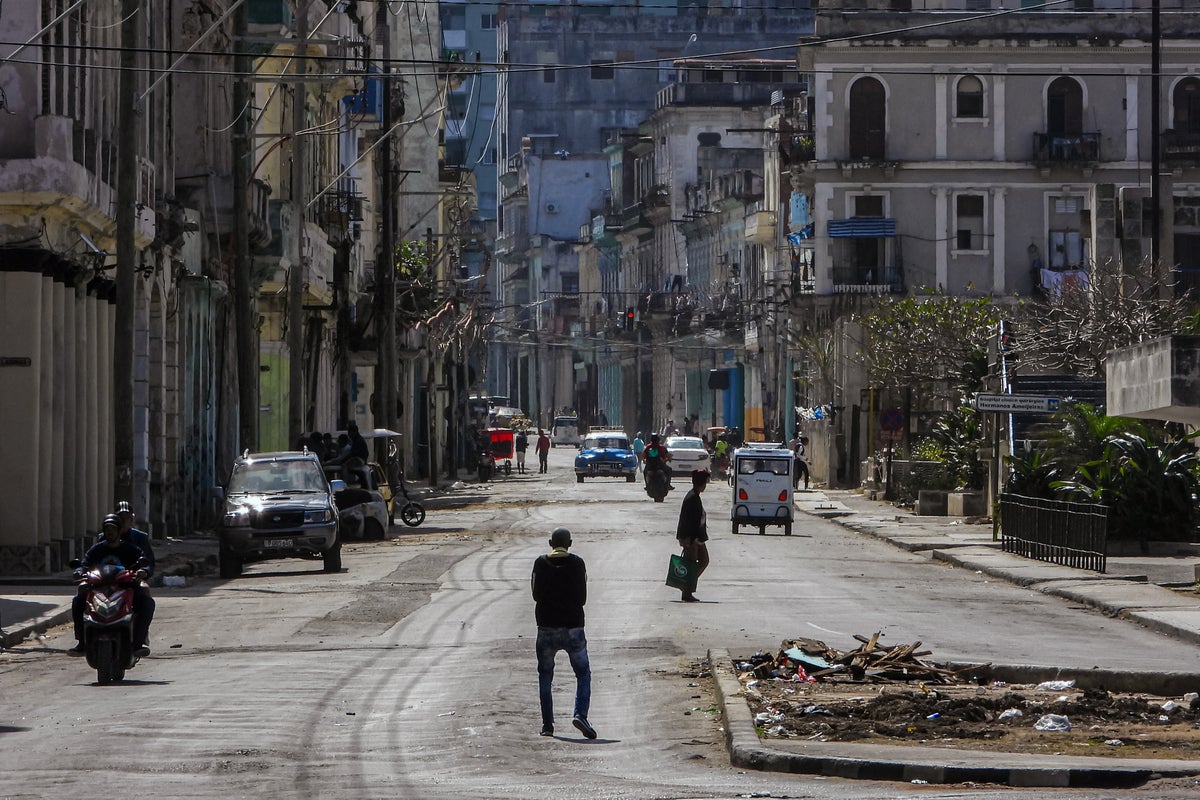
The headlines are predictable. They scream about "collapse," "infrastructure decay," and "island-wide darkness." The mainstream media treats the Cuban grid failure as a cautionary tale of a failed state. They are looking at the wrong map.
What happened in Cuba wasn’t just a mechanical breakdown of a few Soviet-era thermoelectric plants. It was the terminal velocity of a centralized energy model that the rest of the world is still desperately clinging to. While Western analysts mock the "fragility" of the Cuban system, they ignore the fact that their own aging, centralized grids are just a few heatwaves or cyberattacks away from the same cascading failure.
Cuba isn't behind the times. In a brutal, unintended way, it’s the laboratory for the post-grid world.
The Centralization Trap
The lazy consensus is that Cuba simply needs more oil or better spare parts. That’s like saying a man with stage four lung cancer just needs a better brand of cigarettes.
The Cuban grid (SEN) relies on a handful of massive, aging hubs like the Antonio Guiteras plant. When a single point of failure can trigger a national blackout, the system isn't "broken"—it’s fundamentally mismanaged at the architectural level.
Modern energy experts talk about "resilience" while building massive offshore wind farms that feed into the same vulnerable high-voltage lines. I’ve seen utility companies in the US and Europe pour billions into "grid hardening" that does nothing but reinforce the same brittle topology. We are doubling down on a 19th-century design.
Cuba’s total collapse is the logical end-state of centralization. If you want to see what happens when the "efficiency" of a massive grid meets the reality of resource scarcity, look at Havana. Then look at your own local utility bill and realize you’re paying for the same vulnerability, just with better PR.
The Myth of the "Fixed" Grid
People also ask: "How long will it take to fix the Cuban power grid?"
That is the wrong question. The right question is: "Why would you want to?"
Attempting to "fix" the Cuban SEN is a sunk-cost fallacy of epic proportions. To truly stabilize a national grid of that scale requires a level of capital investment and fuel consistency that no longer exists for a nation under sanctions.
The contrarian truth? The blackout is the catalyst for the only viable solution: Radical Decentralization.
In a world of increasing climate instability and geopolitical friction, the "all-in-one" grid is a liability. The future isn't a massive web; it’s a series of disconnected, self-sufficient cells.
The Microgrid Mandate
Imagine a scenario where energy is not something "transmitted" from a distant plant, but something "harvested" at the block level.
- Solar-Plus-Storage: Not as a supplement, but as the primary source.
- Localized Gasification: Utilizing waste-to-energy at the municipal level.
- Asynchronous Operation: Allowing neighborhoods to stay lit even when the national backbone snaps.
The "failure" in Cuba is actually a massive opportunity to bypass the 20th century entirely. Just as developing nations skipped landlines for mobile phones, Cuba is being forced to skip the centralized grid for distributed energy. The darkness isn't the problem; the attempt to turn the big lights back on is the problem.
Stop Chasing the Baseload Ghost
The energy industry is obsessed with "baseload"—the minimum amount of power a grid must provide at all times. In Cuba, the obsession with maintaining baseload via the Guiteras plant is what keeps the island in a cycle of total collapses. When the baseload fails, everything dies.
We need to kill the concept of baseload.
We should be moving toward a Variable Demand Model. Instead of the grid struggling to meet the whims of the consumer, the consumer’s high-draw devices (AC, industrial machinery, refrigeration) should only activate when supply is verified.
Is it inconvenient? Yes. Is it better than a total blackout? Ask anyone in Matanzas.
The Western world views energy as an infinite right. Cuba is learning it’s a finite variable. The "smart grid" tech we brag about in Silicon Valley is mostly theater—adjusting a thermostat by two degrees to save a few pennies. In Cuba, smart energy management is a matter of survival.
The Battle Scars of Energy Management
I’ve watched energy markets in Texas and California buckle under a fraction of the pressure Cuba faces daily. The "experts" always point to "unprecedented weather" or "unforeseen demand."
The truth is much simpler: Complexity is the enemy of reliability.
The more interconnected a system is, the more ways it can fail. The Cuban blackout is a masterclass in "complexity risk." By trying to keep the whole island synced to a single 60Hz frequency, the authorities have ensured that a single tripped circuit breaker in a remote substation can plunge a hospital in Havana into darkness.
If you want to protect a population, you break the grid. You segment it. You make it "loose."
The Brutal Reality of the Transition
Let's be honest about the downsides. A decentralized, cellular energy model means the end of "cheap" energy for heavy industry. It means a period of painful adaptation where the "haves" (those with solar arrays) and the "have-nots" (those dependent on the ghost of the SEN) are more visible than ever.
But the alternative is what we see right now: a nation of 10 million people sitting in the dark because a 40-year-old boiler gave up the ghost.
The Cuban government’s current strategy is to beg for fuel and patch the pipes. It’s a strategy of managed decline. If they had the courage to be truly radical, they would stop trying to "restore" the grid and start "dismantling" it in favor of regional autonomy.
Your Grid is Next
If you think this is a "Cuba problem," you aren't paying attention.
The UK’s National Grid, the US's Eastern Interconnection, the European ENTSO-E—these are all aging giants. They are being pushed to their limits by the transition to renewables without the necessary shift in architecture. We are adding volatile input (wind/solar) to a rigid, centralized structure. It’s a recipe for the same cascading failures we see in the Caribbean.
Cuba is just the first domino because it has the least amount of "buffer" capital. It is the canary in the coal mine for the entire concept of the "National Power Grid."
The "blackout" isn't a sign of things going wrong. It’s a sign that the old way is over.
Stop looking for the light switch. Start building your own power plant.