Havana is currently a city of skeletal infrastructure and frantic, small-scale innovation. While the international community watches the shifting diplomatic winds between Washington and the Caribbean’s largest island, the Cuban people are engaged in a far more immediate struggle. They are trying to build a middle class within a system that has historically viewed the accumulation of wealth as a political threat. The "hope and trepidation" often cited by casual observers isn't an abstract mood; it is a calculated response to a crushing economic reality where the state can no longer provide, but the market is not yet allowed to fully breathe.
For decades, the Cuban economy relied on massive subsidies, first from the Soviet Union and later from Venezuela. Those pillars have crumbled. Today, the island faces its worst crisis since the "Special Period" of the 1990s. Shortages of fuel, medicine, and basic food items have forced the government to do something once unthinkable: legalize Small and Medium-sized Enterprises (SMEs), known locally as mypimes. This isn't a sudden conversion to capitalism. It is an act of desperation.
The Myth of a Uniform Opening
To understand the current Cuban landscape, one must look past the colorful facades of tourist-friendly paladares in Old Havana. The real story lies in the warehouses of the outskirts. Here, entrepreneurs are importing everything from powdered milk to industrial spare parts, bypassing the sluggish state-run importers.
However, this opening is not a level playing field. The government remains the ultimate gatekeeper. To start a business, a Cuban citizen must navigate a labyrinth of bureaucracy that remains heavily influenced by political loyalty. While thousands of mypimes have been approved, they operate in a legal gray area. There is no independent judiciary to protect property rights, and the laws governing these businesses can be changed by ministerial decree overnight.
This creates a paradox. To succeed, an entrepreneur must grow, but growing too large invites state scrutiny. It is a "Goldilocks" economy where you must be big enough to be profitable but small enough to remain invisible to the hardliners in the Communist Party who still view private profit as a "capitalist poison."
The Dollarization of Daily Life
The most brutal aspect of the current transition is the widening inequality gap. Cuba was once a society defined by a low-level equality where everyone was equally poor, but everyone had their basic needs met through the libreta, or ration book. That system has effectively collapsed.
The government introduced the MLC (Moneda Libremente Convertible), a digital currency pegged to the U.S. dollar, to capture foreign exchange. Stores stocked with essential goods only accept MLC. If you don't have relatives abroad sending remittances or a job in the nascent private sector, you are locked out of the primary supply chain.
- The State Sector: Doctors, teachers, and scientists earn salaries in Cuban Pesos (CUP) that have seen their purchasing power decimated by triple-digit inflation.
- The Private Sector: Independent contractors and shop owners deal in cash and black-market rates, allowing them to outpace inflation but making them targets of social resentment.
This isn't just an economic shift; it's a social rupture. The very people who were supposed to be the vanguard of the revolution—the educated professionals—are now the ones struggling the most. A surgeon might earn the equivalent of $30 a month, while a person selling imported beer in a private kiosk can make that in a day.
Sanctions and the Scapegoat Strategy
It is impossible to discuss the Cuban economy without addressing the U.S. embargo. The restrictions on trade and financial transactions are a massive hurdle for any Cuban business. They complicate shipping, inflate the cost of goods, and prevent the use of standard international banking tools.
Yet, the embargo also serves a vital political purpose for the Cuban leadership. It is the ultimate "everything-proof" excuse. Whenever the state-run electrical grid fails or the harvest is botched, the blame is placed squarely on Washington. This creates a convenient narrative that masks internal mismanagement and the refusal to implement deeper structural reforms.
Independent analysts point out that while the embargo prevents Cuba from trading easily with the U.S., it does not prevent Cuba from trading with the rest of the world. The reality is that Cuba’s credit rating is abysmal, and many foreign companies are hesitant to do business not just because of U.S. sanctions, but because the Cuban state has a long history of failing to pay its debts.
The Great Migration
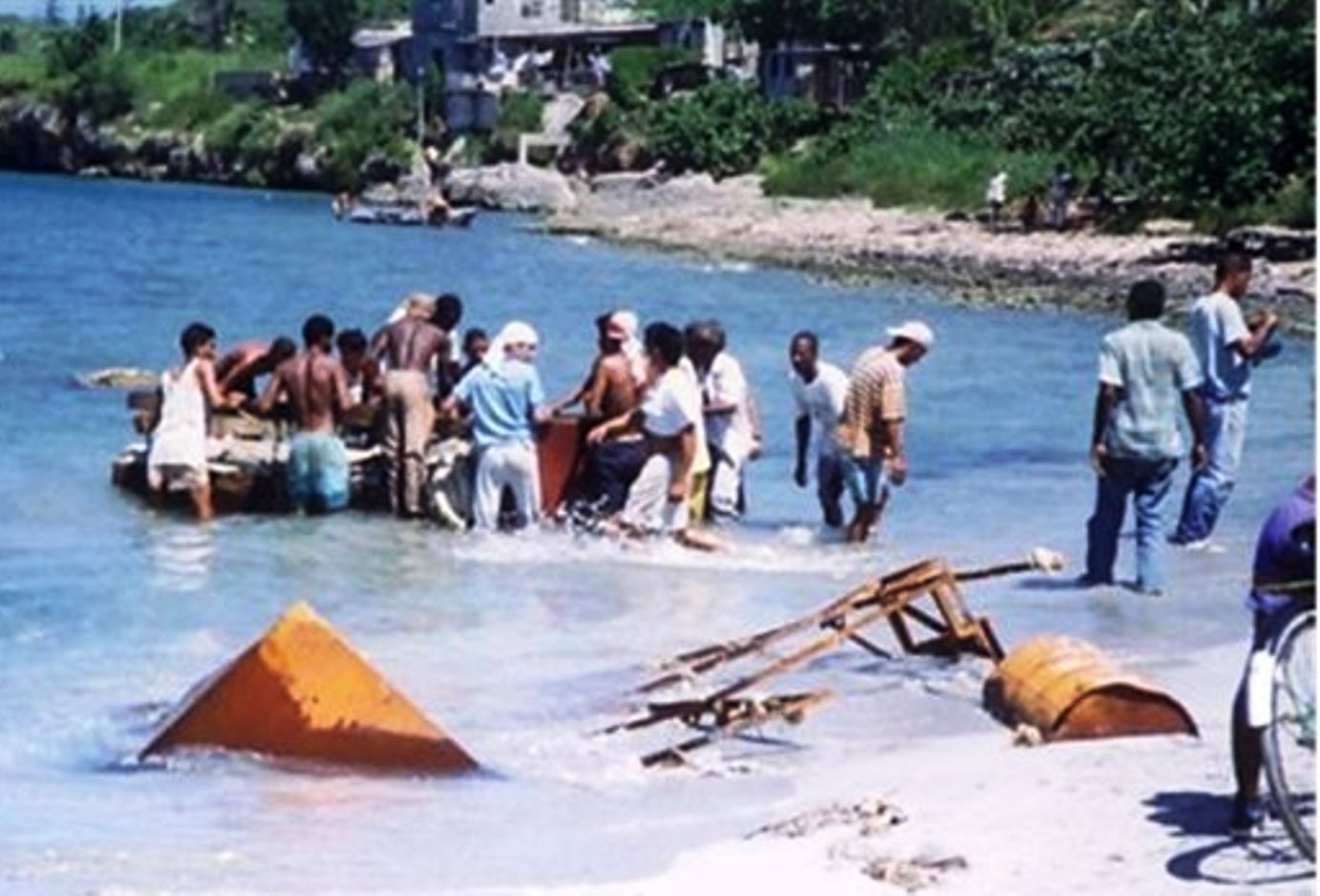
The most significant "export" from Cuba right now is its people. In the last two years, hundreds of thousands of Cubans have left the island, mostly for the United States. This is not just a political exodus; it is a massive brain drain.
When the youth leave, they take the country's future with them. The demographics of Cuba are skewing older at an alarming rate. This creates a looming pension crisis for a state that is already bankrupt. The entrepreneurs who stay are often those who have just enough capital to survive, but not enough to leave. They are betting their lives on a slow, painful liberalization that might never fully arrive.
The Shadow of the Military
A major factor often overlooked is the role of GAESA. This is the massive business conglomerate run by the Cuban military. GAESA controls the vast majority of the tourism industry, retail stores, and foreign exchange outlets.
When a tourist stays in a high-end hotel or shops at a state-run mall, the money often flows directly into military coffers rather than the national budget. This creates a "state within a state." The military has a vested interest in maintaining the status quo because they are the primary beneficiaries of the current system. They are willing to allow small-scale private businesses to exist because it provides a safety valve for social unrest, but they have no intention of ceding control of the "commanding heights" of the economy.
Logistics of the Black Market
Survival in Cuba requires a mastery of the bolsa negra. This isn't just about buying illicit goods; it's the primary way the country functions.
Imagine a private bakery. The owner might have a license, but where do they get the flour? The state-run wholesalers are often empty. The owner must find a "contact" at a state mill who is willing to divert bags of flour out the back door. This cost is then passed on to the consumer. This systemic corruption is not a bug; it is a feature of a centrally planned economy that cannot meet demand.
The government knows this is happening. They occasionally conduct high-profile raids on "speculators" to appease the public, but they cannot stop it. If the black market stopped tomorrow, the country would starve.
Potential for Genuine Reform
Is there a path forward? Some argue that the "Vietnam Model"—tight political control combined with an aggressive market economy—is the only way out. But the Cuban leadership is far more cautious than their counterparts in Hanoi. They saw what happened in Eastern Europe and are terrified that economic freedom will inevitably lead to demands for political pluralism.
The upcoming years will be defined by how the state manages the tension between the need for private capital and the desire for total control. If they tighten the screws too much, they risk another mass uprising like the protests of July 2021. If they loosen them too much, they risk losing their grip on power.
The most immediate change needed is a unified currency and a transparent legal framework for businesses. Without these, the mypimes will remain a temporary fix rather than a permanent engine of growth. Investors, even those within the Cuban diaspora, are unlikely to pour significant capital into an environment where their assets can be seized on a whim.
The Reality of the "New" Cuba
Walking through the streets of Havana today, you see a strange mix of decay and vibrancy. A crumbling 19th-century building might house a state-of-the-art private gym on the ground floor. This is the "new" Cuba: a patchwork of survival strategies.
The people aren't waiting for a grand political bargain between the U.S. and Cuba. They have learned that such deals often result in little change for the average citizen. Instead, they are looking for ways to bypass the state entirely. They are setting up rooftop gardens, learning to code for foreign firms via VPNs, and turning their living rooms into tiny grocery stores.
This is the true investigative story of the island. It is not a narrative of waiting for a "threat" or a "promise" from abroad. It is a story of a population that has become weary of rhetoric and is taking the slow, dangerous steps toward an uncertain independence. The trepidation is real because the stakes are their lives, but the hope is found in the simple fact that for the first time in sixty years, the state is no longer the only game in town.
Monitor the price of the dollar on the informal market. It is the only honest metric left in Cuba. If the rate continues to climb, expect the government to either introduce more radical market reforms or retreat into a period of intense repression to maintain order.