Donald Trump’s claim that he can "do anything he wants with Cuba" is the kind of chest-thumping rhetoric that sounds powerful in a Miami ballroom but falls apart the second it touches the jagged reality of Caribbean geopolitics. The prevailing wisdom—the "lazy consensus" shared by hawks and hardliners—is that tightening the screws on Havana will eventually force a collapse. It hasn't. It won’t. In fact, if you wanted to design a system to keep a socialist military junta in power for seven decades, you’d build exactly what the United States has: a permanent, external scapegoat.
The embargo isn't a wall; it's a life support machine for the Communist Party of Cuba (PCC). Recently making news lately: The Kinetic Deficit Dynamics of Pakistan Afghanistan Cross Border Conflict.
By treating Cuba like a grand chessboard where the U.S. can just "do anything," Washington ignores the most basic principle of market pressure: isolation breeds consolidation. When you cut a country off from the global financial system, you don't empower the people. You empower the person who controls the black market. In Havana, that’s the military.
The Scapegoat Industrial Complex
Every failure of the Cuban state—from the crumbling infrastructure in Old Havana to the chronic shortages of basic medicine—is blamed on "El Bloqueo." This isn't just propaganda; it's a structural reality. If the PCC can point to a giant superpower 90 miles away and say, "They are the reason you're hungry," they never have to explain why their own centralized planning is a disaster. Additional details on this are covered by USA Today.
I’ve seen this play out in dozens of emerging markets. When a regime faces a legitimate internal crisis, the quickest way to survive is to manufacture an external threat. The US policy of maximum pressure provides that threat on a silver platter. Every time a US President stands up and claims they can "do anything" to Cuba, they give the Cuban state media a week’s worth of headlines to justify more repression.
The nuance the mainstream media misses is that the embargo doesn't hurt the elites. The Cuban military holding company, GAESA, controls the hotels, the gas stations, and the retail stores. They have the logistics to bypass restrictions. The person the embargo actually crushes is the independent entrepreneur—the cuentapropista.
How Sanctions Kill Capitalism from the Inside Out
If the goal is to flip Cuba into a market economy, the current strategy is a masterclass in how to fail. To have a revolution, you need a middle class. To have a middle class, you need capital. To have capital, you need trade.
By restricting the flow of dollars and travel, the US isn't starving the regime; it's starving the only segment of the population that could actually challenge the regime's monopoly on power. Imagine a scenario where 2 million American tourists landed in Havana every year, armed with smartphones and cash, interacting directly with private B&B owners and independent taxi drivers. That level of information and capital flow is a far greater threat to a totalitarian state than a naval blockade.
The "People Also Ask" crowd wants to know: When will the Cuban government collapse? The honest, brutal answer: Not as long as they can blame the US for their failures. The current policy ensures the regime stays relevant. It turns a tiny, bankrupt island into a global symbol of "resistance," which earns them credit with Russia, China, and Iran.
The Geometric Trap of Cold War Thinking
We are stuck in a mental model from 1962. The math of the embargo is broken.
Let $P$ be the pressure applied by the US, and $S$ be the stability of the Cuban regime. The hawks assume $S = 1/P$. As pressure goes up, stability goes down.
In reality, the equation looks more like this:
$$S = \frac{k}{1 - P}$$
As the pressure $P$ approaches 1 (total isolation), the regime’s internal stability $S$ actually spikes because they can justify total control over all resources. When the state is the only provider of food because the "enemy" has cut off all other options, the state has 100% leverage over the population.
You don't win a fight by giving your opponent a permanent excuse for losing.
The "Doing Anything" Fallacy
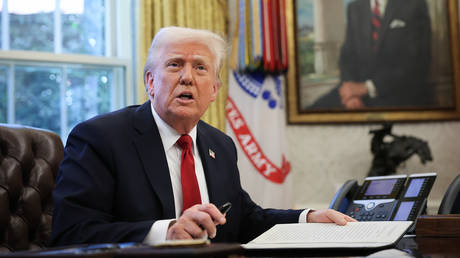
Trump’s assertion that he has total control over the Cuban outcome is a fantasy. Geopolitics is not a real estate deal. You cannot "out-negotiate" a regime whose only goal is survival. They don't care about GDP growth. They don't care about FDI. They care about the survival of the PCC.
If the US actually wanted to disrupt the status quo, it would do the one thing the Cuban generals fear most: it would flood the zone.
Flood the island with American goods. Flood it with American internet. Flood it with American tourists. Make it impossible for the PCC to explain why a private business in Matanzas is thriving while the state-run store next door is empty.
The downside to this contrarian approach? It’s slow. It doesn't look good on a campaign poster. It doesn't give you a "tough guy" soundbite for the evening news. But it’s the only thing that has ever worked against entrenched authoritarianism. Look at Vietnam. Look at China in the 90s. Economic integration is a far more effective solvent than diplomatic isolation.
Stop Trying to "Win" the Cold War (Start Winning the Market)
The current US policy is a relic. It’s a subsidized hobby for politicians who need to win Florida.
If you want to dismantle the Castro legacy, you don't do it by doubling down on a 60-year-old failure. You do it by making the embargo irrelevant. You do it by forcing the Cuban government to compete with the most powerful force on earth: the American consumer.
The military junta in Havana loves the embargo. They need the embargo. Without it, they are just another group of incompetent bureaucrats presided over a failing state with no one to blame but themselves.
Stop giving them an out.
End the embargo not because the regime deserves it, but because it’s the only way to finally kill the revolution. Every day the US maintains the status quo is another day the PCC gets to play the victim.
Take away their excuse. Open the gates. Let the market do the work the politicians are too afraid to try.
The greatest threat to a socialist dictatorship isn't a cruise missile. It's a Visa card.