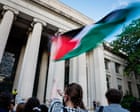
The legal battles over Israel and Palestine aren't just happening in international courts or war zones. They're hitting American classrooms, city councils, and private workplaces with a frequency we haven't seen in decades. If you've followed the headlines, you might think the wave of "anti-BDS" laws and campus speech bans has successfully shut down the conversation. You'd be wrong. In reality, a string of significant court victories shows that the First Amendment is still a remarkably tough wall to climb for those trying to penalize Pro-Palestinian advocacy.
The narrative often focuses on the initial shock—a student group suspended or a professor losing a job offer. But when these cases actually reach a judge, the "national security" or "harassment" excuses frequently fall apart. It turns out that the U.S. legal system, despite its flaws, still has a very low tolerance for viewpoint discrimination.
The First Amendment Does Not Have a Palestine Exception
A common misconception is that certain topics are so "sensitive" or "divisive" that they somehow bypass constitutional protections. We see this play out when universities try to ban groups like Students for Justice in Palestine (SJP) by claiming their rhetoric provides "material support" for terrorism. It’s a heavy accusation. It’s also one that judges are increasingly rejecting because it lacks a factual basis.
Take the recent legal skirmishes in Florida. The state government attempted to deactivate SJP chapters across public universities, citing a state law against supporting designated foreign terrorist organizations. The problem? There was zero evidence that these student groups were actually sending money, weapons, or tactical help to anyone. They were just talking. They were organizing protests. They were using strong, even provocative, language.
A federal judge eventually stepped in. The court's stance was clear: you can't punish an entire organization because you don't like their message or because you're worried about what might happen. Speech that's merely offensive or "hateful" to some isn't a crime. That's a fundamental pillar of American law that hasn't shifted, despite the political pressure to make an exception for this specific conflict.
Why Anti-BDS Laws Are Hitting a Wall
You’ve probably heard of "Anti-BDS" laws. These are state-level rules that require contractors—think teachers, lawyers, or even construction companies—to sign a pledge stating they won't boycott Israel. On the surface, these looked like a slam dunk for pro-Israel advocates. Dozens of states passed them.
But then the lawsuits started.
In several states, including Georgia and Arizona, federal courts have found these requirements deeply problematic. Why? Because a boycott is a form of "protected expression." The Supreme Court decided this way back in the 1980s during the civil rights movement. You have a right to choose where you spend your money as a form of political protest.
When a state tells a public school teacher they can't have a side gig as a consultant unless they sign a political loyalty oath, it's a blatant violation of the First Amendment. While some higher courts have tried to narrow these rulings by claiming a boycott is "commercial conduct" rather than "speech," the tide hasn't fully turned in their favor. The legal friction alone has made these laws harder to enforce and much more expensive for states to defend.
The Myth of the Universal Harassment Claim
One of the most effective tools used to silence Pro-Palestinian speech is the broad application of Title VI of the Civil Rights Act. The argument goes like this: Pro-Palestinian protests use slogans that make Jewish students feel unsafe, therefore the university is fostering a hostile environment and must shut the protests down.
It’s a complicated issue. Antisemitism is real, and it’s rising. However, the courts are beginning to draw a sharper line between actual targeted harassment and general political speech.
If a student follows a specific individual and screams slurs at them, that’s harassment. If a group of students stands in a plaza and chants "From the river to the sea," that’s political speech. Courts are wary of letting "subjective discomfort" become the new standard for censorship. If we allowed every student’s feelings of being "unsafe" by an idea to dictate what can be said on campus, then no one could say anything about anything.
Academic Freedom and the Tenure Trap
Professors are also fighting back—and winning. We've seen cases where faculty members were "un-hired" or put on administrative leave after posting pro-Palestinian sentiments on social media.
The American Association of University Professors (AAUP) has been vocal about this. In many of these instances, the "internal investigations" launched by universities are little more than PR exercises to appease wealthy donors. But tenure and employment law provide more protection than most people realize.
In several high-profile settlements, universities have been forced to pay out hundreds of thousands of dollars to faculty they tried to silence. These aren't just "quiet" exits. They're public admissions that the school overstepped. When a university settles, it sends a message to the board of trustees: "Your personal politics are going to cost us a lot of money in legal fees."
Public Space and the Right to Protest
The battle isn't just in the ivory tower. It’s on the streets. We’ve seen cities try to deny permits for Pro-Palestinian marches or use "noise ordinances" to break up rallies.
Historically, the "public forum" doctrine is one of the strongest protections we have. If a city allows a Pride parade or a MAGA rally, they cannot legally deny a Pro-Palestinian march simply because they fear it will be "disruptive." Disruption is often the point of a protest.
Lawyers from groups like the ACLU and Palestine Legal have been busy filing injunctions. They're winning because the law is on their side. You can't have a "free speech zone" that only applies to people you agree with.
The Donor Class vs. The Law
There's a massive gap between what a billionaire donor wants and what a judge will allow. We've seen a trend of massive donors pulling their funding from Ivy League schools because the administration didn't "crack down" hard enough on protesters.
This creates a terrifying incentive for university presidents to ignore the law in favor of the checkbook. But here’s the reality: donors don't write the law. A university that violates a student's or professor's constitutional rights to please a donor is just setting itself up for a massive, losing lawsuit.
What This Means for the Future of Advocacy
The setbacks for those trying to silence this speech aren't accidental. They're a result of a legal infrastructure that—while slow—eventually prioritizes the right to dissent.
If you're an activist or just someone concerned about civil hits, don't let the "chilling effect" actually freeze you. The law is often sturdier than the headlines suggest. Organizations are literally waiting to take these cases to court because the precedents are so clear.
What should you do if you're facing pushback for your speech?
- Document everything. Save emails, record meetings (if legal in your state), and keep a paper trail of every interaction with administrators or HR.
- Don't sign anything immediately. If you're being disciplined or asked to retract a statement, tell them you need to consult with legal counsel first.
- Know the difference between "private" and "public." If you work for a private company, your First Amendment rights are much more limited than if you're at a public university or government job.
- Connect with specialized legal groups. Don't just hire a local divorce lawyer. Reach out to organizations that specialize in civil rights and academic freedom.
The attempt to create a "Palestine exception" to the First Amendment is failing because the Constitution doesn't work that way. You can't pull one thread without unraveling the whole thing. If the government can silence a student for talking about Gaza today, they can silence you for talking about taxes or healthcare tomorrow. That's a risk most judges aren't willing to take.