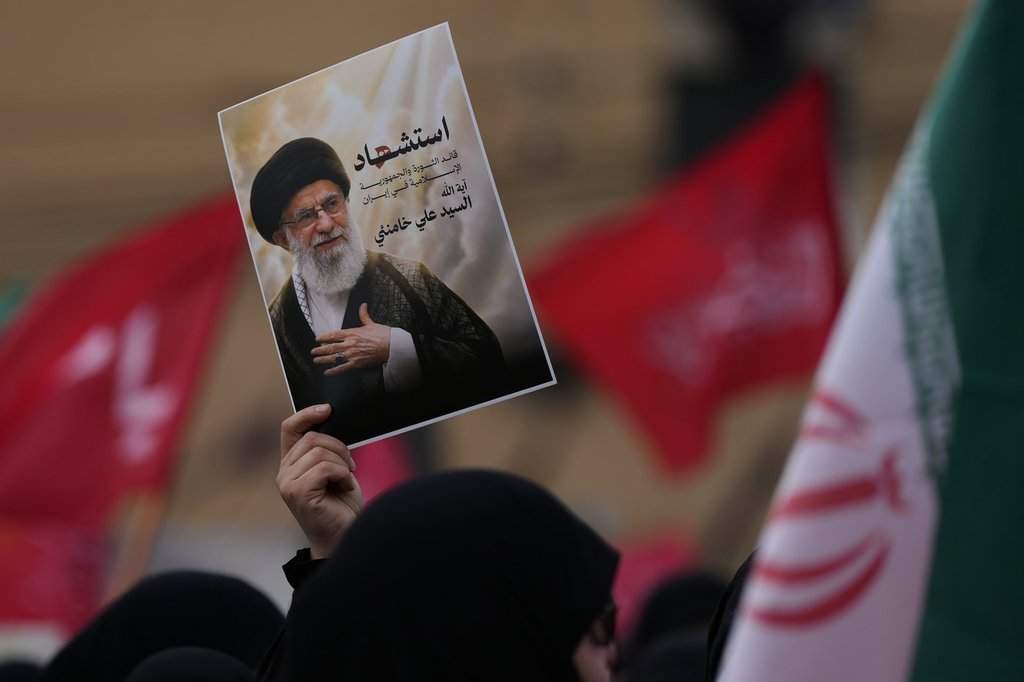
The Western press is obsessed with the optics of fire. When smoke rises outside a U.S. consulate in Karachi or Lahore following the death of Ali Khamenei, editors salivate over the "clash of civilizations" narrative. They see a mob and call it a movement. They see a banner and call it a shift in the regional axis.
They are wrong.
These protests aren't a sign of Pakistan’s pivot toward Tehran, nor are they a genuine threat to the American presence in South Asia. If you’re watching the news and seeing a populist uprising that threatens to upend the U.S.-Pakistan security relationship, you’re falling for a staged performance. I’ve spent years analyzing the back-channel mechanics of the Islamabad-Washington-Riyadh triangle. These outbursts aren't about Khamenei. They are about domestic leverage and the transactional nature of manufactured outrage.
The Myth of the Pan-Islamic Surge
The standard reporting suggests that Khamenei’s passing has unified the Pakistani street in a wave of anti-Western sentiment. This ignores the brutal reality of Pakistan's sectarian and fiscal geography. Pakistan is a majority Sunni nation with a deep, systemic reliance on Saudi Arabian liquidity and American military hardware.
The idea that a Shia cleric’s death—no matter how significant his title—could fundamentally realign Pakistan’s foreign policy is a fantasy. The protesters at the gates of the consulates represent a specific, vocal minority. They are often mobilized by political entities that use anti-Americanism as a currency to negotiate better terms with their own military establishment.
When you see a thousand people chanting in the street, you aren't seeing a revolution. You’re seeing a lobby group.
Follow the Money Not the Megaphones
Let’s talk about the math. Pakistan’s economy currently survives on a life-support system provided by the IMF and bilateral rollovers from Gulf monarchies. In the fiscal year 2024-2025, the dependency on Western-backed financial institutions reached a fever pitch.
Do you honestly believe the Pakistani state—an entity that needs the U.S. to greenlight every tranche of emergency funding—is going to allow a few burnt effigies to dictate its geopolitical standing?
- The IMF Factor: The U.S. holds the largest voting share in the IMF. Islamabad knows this.
- The Saudi Veto: Riyadh, Tehran’s primary regional rival, provides the oil and the cash deposits that keep the Pakistani rupee from total collapse.
- The Military Industrial Complex: The Pakistani military is trained on and equipped with American systems. You don’t trade an F-16 fleet for a handful of Iranian drones because of a protest in Karachi.
The protests are a pressure valve. The state allows them to happen because it gives the government a card to play when sitting across from American diplomats. "Look," they say, "the street is angry. We need more aid to keep the radicals at bay." It is a protection racket, not an ideological shift.
The Security Theater of Consular Protests
I’ve watched these "security crises" unfold from the inside. The barricades go up, the tear gas is fired, and the local police make a show of holding the line. It looks like chaos on a 24-hour news cycle. In reality, it is a choreographed dance.
The Pakistani security apparatus is one of the most efficient in the world when it wants to be. If they didn't want protesters reaching the red zone, those protesters wouldn't get within three miles of a U.S. flag. The fact that the cameras are close enough to catch the sweat on a demonstrator’s brow tells you that the authorities permitted the optics.
Western journalists mistake "permission" for "instability."
Why the "Expert" Analysis is Flawed
People Also Ask: "Is Pakistan moving closer to Iran after Khamenei?"
The answer is a resounding no. The border between Pakistan and Iran is a site of constant friction, smuggling, and cross-border militancy. The death of a Supreme Leader doesn't fix the fundamental distrust between a nuclear-armed Sunni state and a revolutionary Shia power.
The "experts" who claim this is a turning point are likely the same ones who thought the Arab Spring would lead to a liberal democratic utopia. They fail to account for the Deep State inertia. In Pakistan, the military is the only institution that matters. And the military is inherently pragmatic. They aren't going to burn their bridges with the Pentagon over a mourning period in Tehran.
The Cost of the "Contrarian" Reality
Admitting that these protests are largely performative isn't popular. It ruins the drama. It makes for a boring headline. But if you are an investor, a policy analyst, or a corporate strategist, you cannot afford to react to the smoke. You have to look at the structural foundations.
The downside of my perspective? It suggests a level of cynicism that many find uncomfortable. It implies that "the will of the people" is often just a tool for the powerful. But in the theater of South Asian politics, cynicism is the only lens that provides 20/20 vision.
The Real Threat Nobody is Watching
While the world stares at the front gate of the Karachi consulate, the real shifts are happening in the boardroom and the barracks.
- China’s quiet consolidation: While the U.S. worries about religious protests, Beijing is securing 40-year leases on infrastructure.
- The Tech Brain Drain: The brightest minds in Pakistan aren't at the protests; they are applying for H-1B visas or remote dev jobs in Europe.
- The Energy Crisis: Pakistan’s inability to pay for imported LNG is a much bigger threat to the U.S. relationship than a thousand angry chants.
Stop looking at the fire. Look at the ledger.
The death of Ali Khamenei is a generational event for Iran. For Pakistan, it is a Tuesday. It is an opportunity to let the fringe elements scream, let the Western media panic, and then go back to the table to ask for a debt restructuring.
The protesters will go home when the sun sets. The debt, the drones, and the deep state will remain exactly where they were.
Don't buy the narrative of a crumbling alliance. The U.S.-Pakistan relationship is a marriage of convenience where both partners hate each other but neither can afford the divorce. A funeral in Tehran doesn't change the alimony payments.
Ignore the headlines. Watch the central bank.