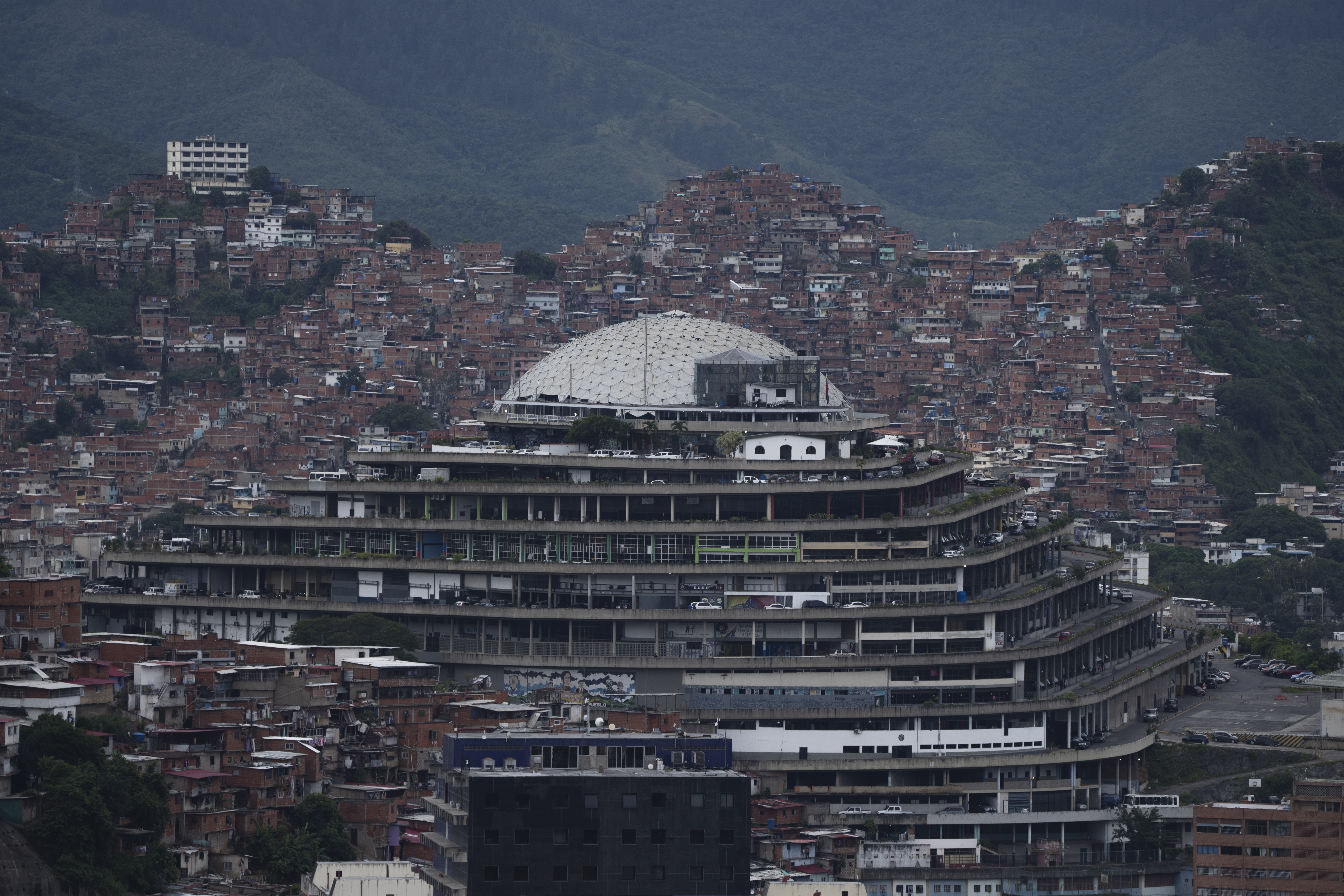
High on a hill overlooking Caracas, a gleaming white spiral of concrete catches the tropical sun. It was supposed to be the future of Latin American capitalism—a drive-in shopping mall where the wealthy could park their cars directly in front of luxury boutiques. Today, El Helicoide is the most notorious symbol of the Venezuelan state's descent into systemic repression. It is no longer a monument to modernism. It is a vertical dungeon where the architecture of convenience has been repurposed into the architecture of control.
To understand why El Helicoide matters, one must look past the headlines of political unrest. This building represents a specific, terrifying evolution in how urban spaces are weaponized against the population. While the international community often focuses on the broader economic collapse of Venezuela, the physical reality of this structure tells a deeper story about the durability of autocracy.
From Mid-Century Dream to Brutalist Nightmare
The 1950s in Venezuela were defined by "The New National Ideal," a period of aggressive modernization funded by an endless flow of oil wealth. El Helicoide was the crown jewel of this era. Designed by architects Pedro Neuberger, Dirk Bornhorst, and Jorge Romero Gutiérrez, the structure was meant to be a 360-degree experience. It featured a double-spiral ramp that allowed drivers to ascend and descend the building without ever leaving their vehicles.
In its original blueprints, there was room for a gymnasium, a hotel, and even a helipad. It was a masterpiece of organic architecture, praised by Salvador Dalí and showcased at the Museum of Modern Art in New York. However, when the dictatorship of Marcos Pérez Jiménez fell in 1958, the money dried up. The building sat as a skeletal ruin for decades, a massive concrete ghost haunting the capital’s skyline.
The transition from a failed commercial project to a high-security prison didn't happen overnight. It was a slow, opportunistic takeover. In the 1980s, the intelligence services began moving into the lower levels. They found that the very features that made it a great mall—its isolation from the street, its thick reinforced concrete walls, and its labyrinthine interior—made it a perfect site for a clandestine prison.
The Physics of Modern Repression
Walking through El Helicoide today is an exercise in sensory deprivation and spatial confusion. Because the building was designed for cars and commerce, not human habitation, the internal climate is stifling. There is no central ventilation system suited for thousands of detainees. The air is heavy with the smell of sewage and unwashed bodies.
The cells are often improvised. Administrative offices, storage closets, and even stairwells have been converted into holding pens. This lack of specialized prison design actually aids the captors. In a traditional prison, there are clear lines of sight and standardized procedures. In El Helicoide, the layout is intentionally chaotic. Prisoners often have no idea where they are in relation to the exit or the street level.
Technology has augmented this physical trap. The SEBIN (Bolivarian National Intelligence Service) has equipped the facility with sophisticated surveillance grids. They monitor not just the inmates, but the guards themselves. The spiral ramps that were once meant for Ferraris are now used for the rapid deployment of tactical units during protests.
The Economy of the Dungeon
There is a grim business model functioning within these walls. Investigative reports and testimonies from former detainees reveal a structured system of extortion. To get a bed, you pay. To get a meal that isn't rotten, you pay. To see a lawyer or a family member, you pay in American dollars—the very currency the regime publicly vilifies.
This internal economy creates a hierarchy of suffering. Political prisoners, who might have international backing or wealthy families, are often kept in slightly better conditions to be used as bargaining chips. The "common" criminals or those swept up in indiscriminate raids are relegated to the "Infiernito" (the little hell), overcrowded rooms where men sleep standing up or tied to bars to avoid falling onto the filth-covered floor.
The psychological toll is calculated. Guards use the building's acoustics to their advantage. The circular nature of the structure means that sounds of interrogation often echo through the central void, ensuring that every inmate knows exactly what is happening to their neighbors.
Why the Building Cannot Be "Fixed"
There is a growing debate among Venezuelan urbanists and human rights activists about what to do with El Helicoide if the current regime ever falls. Some argue for its demolition, claiming the concrete is too soaked in blood and trauma to ever be reclaimed. Others suggest a museum of memory, similar to the ESMA in Argentina or the Stasi prisons in Germany.
However, the structural reality of the building makes any transition difficult. It is a massive, incredibly dense block of reinforced concrete integrated into the hillside. Tearing it down would risk destabilizing the surrounding "barrios" (slums) that have grown up around its base. It is physically tethered to the city it haunts.
More importantly, El Helicoide serves as a warning about the "repurposing" of infrastructure. In many parts of the world, abandoned industrial sites are turned into lofts or art galleries. In Caracas, a monument to consumerism became a monument to cruelty. This isn't just a Venezuelan problem; it is a blueprint for how any state can turn the symbols of its former prosperity into the tools of its current survival.
The Architecture of Silence
Current satellite imagery shows continued activity around the site, despite various reports of "decongestion" or prisoner transfers. The regime knows that the mere image of El Helicoide is enough to dampen dissent. It sits there, visible from almost every point in Caracas, a constant reminder of the price of opposition.
The international community's focus on sanctions and diplomatic pressure often misses the physical permanence of these sites. You can sanction a general, but the prison remains. You can freeze an account, but the concrete ramps still spiral upward. The building has become an active participant in the repression.
The tragedy of El Helicoide is that it was designed to be open—a place where the city could flow in and out on wheels. Now, it is the ultimate closed system. It is a place where time stops, and where the mid-century optimism of a nation went to die.
If you want to track the current status of political detainees in South America, look at the data provided by organizations like Foro Penal, which maintain real-time registries of those held without trial in facilities like this one.


