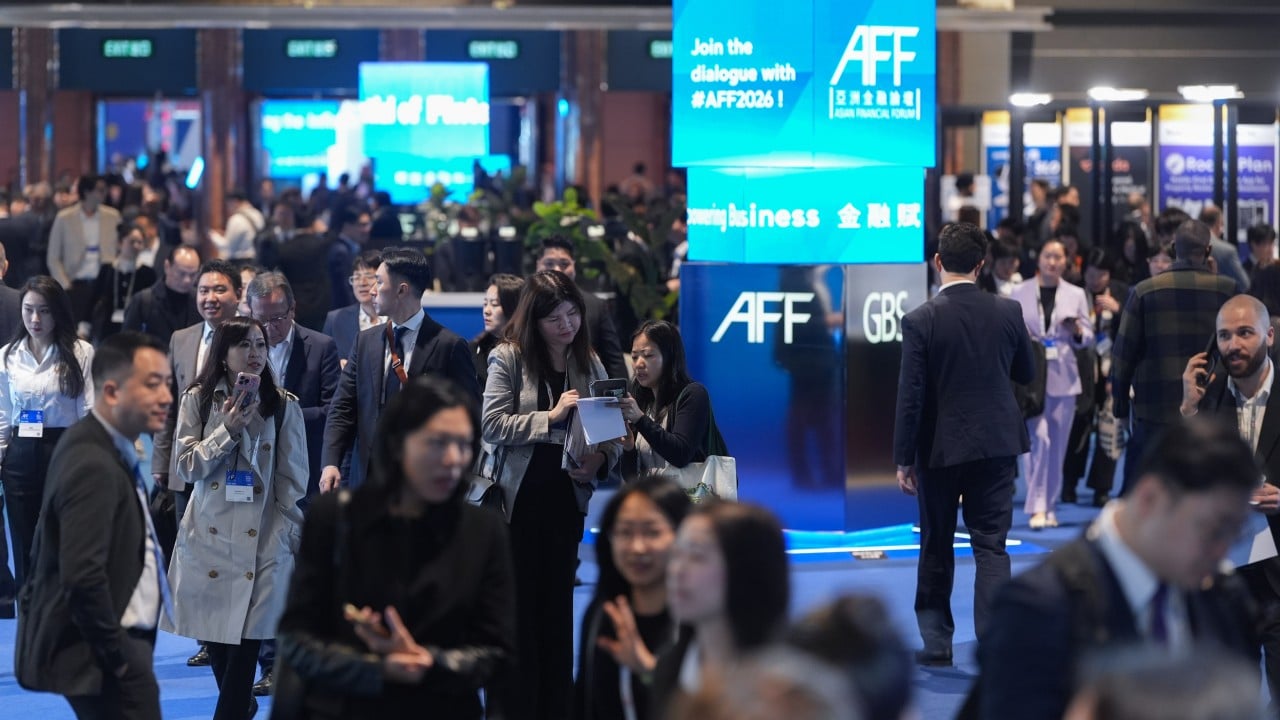
The air inside the glass-and-steel expanse of the Hong Kong Convention and Exhibition Centre (HKCEC) carries a specific, metallic scent. It is the smell of filtered oxygen, expensive espresso, and the faint, ozone-heavy crackle of a thousand laptops humming in unison. Outside, the Star Ferry churns the green waters of Victoria Harbour, a rhythmic reminder of a city that has always lived and died by its ability to move things from one side of the world to the other.
But the cargo has changed.
Decades ago, the crates swinging over the docks were filled with plastic toys and textiles. Today, the most valuable freight arriving at Wan Chai is invisible. It arrives in the minds of surgeons, the encrypted drives of fintech developers, and the PowerPoint decks of climate researchers. The HKCEC isn't just a building. It is a pressure cooker where the world’s most urgent problems are brought to be boiled down into solutions.
The Surgeon’s Hands
Consider a hypothetical woman named Dr. Aris Thorne. She has traveled sixteen hours from London, her eyes gritty from the recirculated air of a long-haul flight. She isn't here for the skyline or the dim sum, though she will appreciate both. She is here because, in a breakout room on Level 3, a colleague from Seoul is demonstrating a robotic tactile feedback system that could allow her to perform heart surgery on a patient in a rural village while she sits in a theater in Chelsea.
When we read a headline stating that Hong Kong is hosting more medical and tech events, we often gloss over the human reality. These aren’t just "events." They are collisions.
Dr. Thorne represents the "Medical" category in a government spreadsheet, but in reality, she represents a shift in global gravity. The HKCEC has signaled a massive uptick in these high-stakes gatherings, moving away from the general consumer trade fairs of the past toward hyper-specialized corridors of knowledge. In the coming months, the schedule is packed. We are looking at a calendar where oncology summits overlap with AI infrastructure forums.
The stakes? Life. Death. And the code that governs both.
The Geometry of Trust
Why Hong Kong? Why now, when the digital world promised us that the "death of distance" would make physical gatherings obsolete?
Because video calls are terrible for building trust.
You can explain a new financial derivative or a breakthrough in quantum computing over a screen, but you cannot look a partner in the eye and gauge the microscopic tells of their sincerity. In the high-finance sectors currently flooding back to the HKCEC, that physical presence is the only currency that hasn't devalued.
The architecture of the HKCEC itself plays a silent role in this. It was designed to handle the flow of 140,000 people a day, but its real magic is in the "in-between" spaces. The wide corridors and harbor-front benches are where the real work happens. It’s where a venture capitalist from Singapore happens to stand next to a renewable energy startup founder from Shenzhen while waiting for a flat white.
A fifteen-minute conversation on a carpeted walkway can result in a $50 million Series B funding round. That isn't hyperbole. It is the history of this specific plot of reclaimed land.
The Education of an Island
The surge in education-focused events at the center points to a deeper anxiety. The world is re-learning how to work. We are seeing a pivot toward "EdTech" and global pedagogical forums because the skills we relied on five years ago are melting away.
Think of a teacher in a classroom in Kowloon. They are facing a generation of students who view AI as a limb, not a tool. The conferences filling the HKCEC halls this year are the laboratories where the new rules of human intelligence are being written. When education ministers and tech giants gather under that sweeping, bird-like roof, they are trying to figure out how to keep the human element relevant in a world of algorithms.
It is a massive, logistical ballet.
To host these events, the HKCEC doesn't just provide a room and a microphone. They provide an ecosystem. The recent push to bring in more "Professional and Scientific" exhibitions is a calculated move to ensure Hong Kong remains the "World’s Meeting Place." It is a defensive maneuver against the rise of virtual spaces. It says: You still need to be here. You still need to touch the hardware. You still need to shake the hand.
The Invisible Infrastructure
Behind the scenes of these high-flying medical and finance summits is an army of people who make the "invisible" work.
The logistics of a medical convention are terrifying. You aren't just shipping brochures; you are shipping cryogenically frozen samples, multi-million dollar imaging machines that require their own power grids, and delicate surgical tools that cannot have a speck of dust on them.
When the HKCEC announces it is targeting these sectors, it is really announcing a massive upgrade in its own technical soul. It is becoming a giant, multi-functional lab. The center has had to evolve its high-speed data capabilities and its security protocols to match the sensitivity of the data being discussed within its walls. If a group of the world's leading fintech minds is discussing the future of blockchain-based sovereign debt, that building needs to be a fortress—both physically and digitally.
The Return of the Suit
There was a moment, not long ago, when the halls of the convention center were silent. The pandemic turned this vibrant hub into a ghost ship of empty escalators and darkened ballrooms. People whispered that the age of the "Mega-Convention" was over.
They were wrong.
The current explosion of bookings—specifically in the "Tech" and "Finance" sectors—is a visceral reaction to that silence. There is a hunger for the "room where it happens."
Consider the impact on the city outside the glass. A medical convention bringing 5,000 specialists isn't just a win for the HKCEC; it’s a lifeline for the tailor in Tsim Sha Tsui who makes their suits, the taxi driver who navigates the Cross-Harbour Tunnel, and the hotel staff who know exactly how a weary cardiologist likes their pillows.
These events are the heartbeat of the city’s service economy. When the center pivots toward high-value, professional events, it is choosing quality over quantity. A specialized tech summit might have fewer attendees than a massive toy fair, but the "spend-per-head" is significantly higher. These are visitors who stay longer, eat better, and engage deeper with the city’s infrastructure.
The Friction of Ideas
Growth isn't comfortable. It requires friction.
When you cram ten thousand experts into a single building, ideas rub against each other until they catch fire. A researcher focusing on climate change might see a data visualization technique at a fintech booth and realize it’s exactly what they need to map rising sea levels in the South China Sea.
This cross-pollination is the "secret sauce" of the HKCEC’s new strategy. By diversifying the types of events—mixing the hard sciences with finance and education—they are creating a microcosm of a functioning civilization.
It is easy to look at a calendar of events and see a list of boring titles. International Forum on Bio-Tech Innovations. Asian Financial Circuit. Global Education Summit. But if you look closer, you see the narrative of our species trying to survive the 21st century. We are trying to cure ourselves. We are trying to fund the future. We are trying to teach our children. And for some reason, we still feel the need to travel thousands of miles to do it together, in a room, overlooking a harbor.
The HKCEC stands as a monument to that specific human need. It is a lighthouse made of concrete and glass, signaling to the world that even in an age of ghosts and signals, the physical presence of a person still carries the most weight.
As the sun sets over the harbor, painting the sky in bruises of purple and gold, the lights inside the center remain bright. Deep in the bowels of the building, a technician is testing the acoustics for tomorrow’s keynote. An oncologist is practicing her opening remarks. A programmer is fixing a bug in a demo that might change how we trade currency.
The city hums. The ferry whistles. The doors stay open.
In the end, we don't gather to see the building. We gather to see each other, waiting for that one sentence, that one handshake, that one spark of recognition that only happens when we are breathing the same metallic, filtered air.