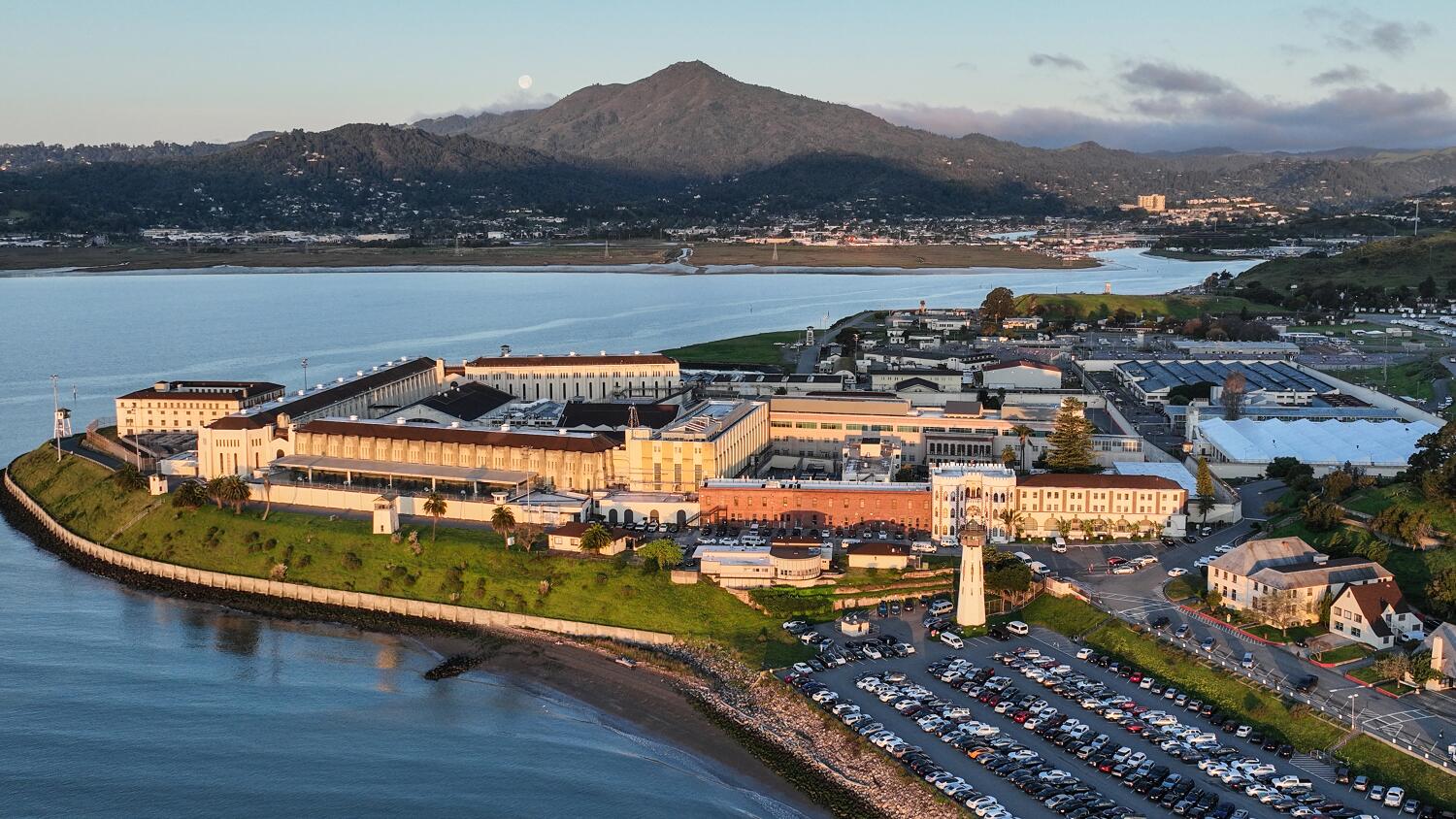
The air inside San Quentin doesn't move like the air outside. It is heavy, seasoned with a century of salt from the San Francisco Bay and the sharp, metallic tang of anxiety. For decades, this place was the destination for those we decided to forget. It was a warehouse for the broken. You walked through the gates, the iron groaned, and the world essentially hit "delete" on your existence.
We have been told for generations that safety is a product of shadows and steel. The logic was simple: the more people we put behind walls, the safer the streets become. It’s a seductive thought. It’s also a lie.
California is currently conducting a massive, quiet experiment that flips that logic on its head. It is an attempt to turn a death chamber into a campus. Governor Gavin Newsom calls it the "California Model," but to the men inside, it feels more like a final chance to remember how to be human.
The Myth of the Cage
Consider a man named Elias. He isn't a specific person, but he is every person I’ve met who has cycled through the system. Elias went in at twenty-one for a robbery. He spent ten years in a high-security block where his only meaningful interactions were with a CO barking orders or a cellmate who was just as traumatized as he was.
In that environment, your brain undergoes a physical change. The amygdala—the part of the brain that handles fear and survival—works overtime. The prefrontal cortex, where we make rational decisions and feel empathy, begins to atrophy. When Elias finally walked out of those gates with $200 and a plastic bag of clothes, we expected him to be a model citizen.
He wasn't. He couldn't be. We had spent a decade training him to be a predator or prey, then acted shocked when he struggled to wait in line at a grocery store without feeling a panic attack coming on.
The old model of public safety relied on the "tough on crime" rhetoric that dominated the 1990s. It was a political winner because it played on our deepest fears. But the data tells a different story. High-velocity incarceration didn't end crime; it created a revolving door. It created a permanent underclass of people who were legally free but mentally and socially shackled.
The Scandinavian Shadow
The shift happening at San Quentin—now rebranded as the San Quentin Rehabilitation Center—is heavily influenced by the Nordic approach. In places like Norway, prisons look more like college dorms than dungeons. Critics call it "soft." They say it’s an insult to victims.
But look at the math.
In Norway, the recidivism rate—the number of people who commit another crime after release—is roughly 20%. In the United States, it has historically hovered around 60% to 70% within three years. If the goal is truly "public safety," which system is actually working?
Newsom’s push is to move California toward that 20%. This isn't about being "nice" to people who have done bad things. It is a cold, calculated investment in the safety of the person walking their dog in a suburban neighborhood three years from now. Because almost everyone in prison eventually comes home. The only question is who we want that person to be when they arrive.
Transformation in the Details
At San Quentin, the physical space is changing. Imagine a prison where the guards are trained more like social workers or mentors than wardens. Imagine a place where "residents" (a term that replaces "inmates") have access to a media center, a professional-grade kitchen for culinary training, and a coding academy.
These aren't luxuries. They are anchors.
When a man learns to write a line of JavaScript or perfects a sourdough starter, he is reconnecting his brain to a future. He is building an identity that isn't defined by the worst thing he ever did.
The opposition to this model usually centers on the idea of "punishment." There is a deep-seated human desire for retribution. We want the "bad guys" to suffer. But we have to ask ourselves: do we want them to suffer, or do we want to be safe? Often, you cannot have both. If you break a person completely, you shouldn't be surprised when they return to society as shards of glass.
The Trump Contrast
This brings us to the inevitable political collision. The "California Model" stands in direct opposition to the federal vision championed by Donald Trump. The former president has often leaned back into the rhetoric of the 1980s: more police, more mandatory minimums, and even suggestions of the death penalty for drug dealers.
It is a battle between two different versions of the future. One side sees safety as a wall. The other sees safety as a bridge.
One side views the "criminal" as a fixed entity—a person who is inherently broken and must be contained. The other views the individual as a variable that can be influenced by their environment.
If you believe people can’t change, the old system is perfect. But if you believe in the possibility of transformation, the old system is a taxpayer-funded tragedy.
The Invisible Stakes
The stakes of this experiment go beyond the walls of San Quentin. They touch on how we view the social contract.
When the state spends $100,000 a year to keep a man in a cage, that is money not being spent on mental health clinics, after-school programs, or affordable housing. The "tough" model is, ironically, the most expensive and least efficient way to run a society. It is a blunt instrument used on a surgical problem.
I remember talking to a man who had served twenty-five years. He told me the hardest part wasn't the violence. It was the "de-skilling" of his humanity. He had forgotten how to make a choice. In prison, every second of your day is decided for you. Then, you are released into a world where you have to make ten thousand choices a day just to survive.
"They want us to fly," he said, "but they spent two decades clipping our wings."
The Resistance
Changing the culture of a prison is like trying to turn an aircraft carrier in a bathtub. There is massive resistance from within. Some correctional officers feel the new model puts them at risk. They were trained to be the thin blue line between order and chaos. Now, they are being asked to engage in "dynamic security"—building relationships with the people they are guarding.
It requires a level of emotional labor that many didn't sign up for. It’s easier to point a gun from a tower than it is to sit across a table from a man who killed someone and help him process his trauma.
Yet, the guards who have embraced the change report something unexpected: their own stress levels go down. When the environment is less antagonistic, everyone is safer. When you treat someone like a human, they are less likely to treat you like a target.
A New Definition of Strength
We often mistake cruelty for strength. We think that the harsher the sentence, the stronger we are as a society.
But true strength is the ability to look at a broken system and have the courage to try something that feels counterintuitive. It’s easy to yell about law and order. It’s much harder to do the grueling work of rehabilitation.
The California Model is a gamble. It is a bet on the idea that the human spirit is resilient, and that even in the darkest corners of San Quentin, something can grow if you give it enough light.
The gates of San Quentin used to be a one-way street. Today, they are becoming something else. They are becoming a filter. If the experiment works, the men walking through those gates won't be looking over their shoulders for the next person to hurt. They will be looking forward, wondering where they can find a job, a home, and a way to atone for the past by building a future.
In the end, public safety isn't found in the thickness of a wall. It is found in the thickness of the ties that bind us to each other. When we realize that the man in the cell is not a monster, but a neighbor who hasn't come home yet, everything changes.
The cage hasn't just been holding them in. It’s been holding us back.
Somewhere in the facility, a man is sitting in front of a computer, learning to code. He isn't thinking about the crime he committed in 2004. He is thinking about a bug in his script. He is thinking about a solution. For the first time in his life, he isn't the problem.
He is the person who fixes things.