The silence in Nuuk is not empty. It is heavy. It carries the weight of a billion tons of ancient ice and the hum of a geopolitical engine that most of the world only hears in snippets on the evening news. To the people living here, the Arctic is not a strategic coordinate on a map in Brussels or Washington. It is home. But lately, home feels less like a sanctuary and more like a stage.
Imagine a fisherman named Malik. He is hypothetical, but his reality is shared by thousands across Greenland. Malik wakes up in a world where the sea ice is thinner than it was when his father taught him to hunt. That is a physical change. But there is a secondary, invisible layer shifting over his landscape: the sudden, intense interest of powerful men in suits and uniforms who have realized that Greenland is the "unsinkable aircraft carrier" of the North Atlantic.
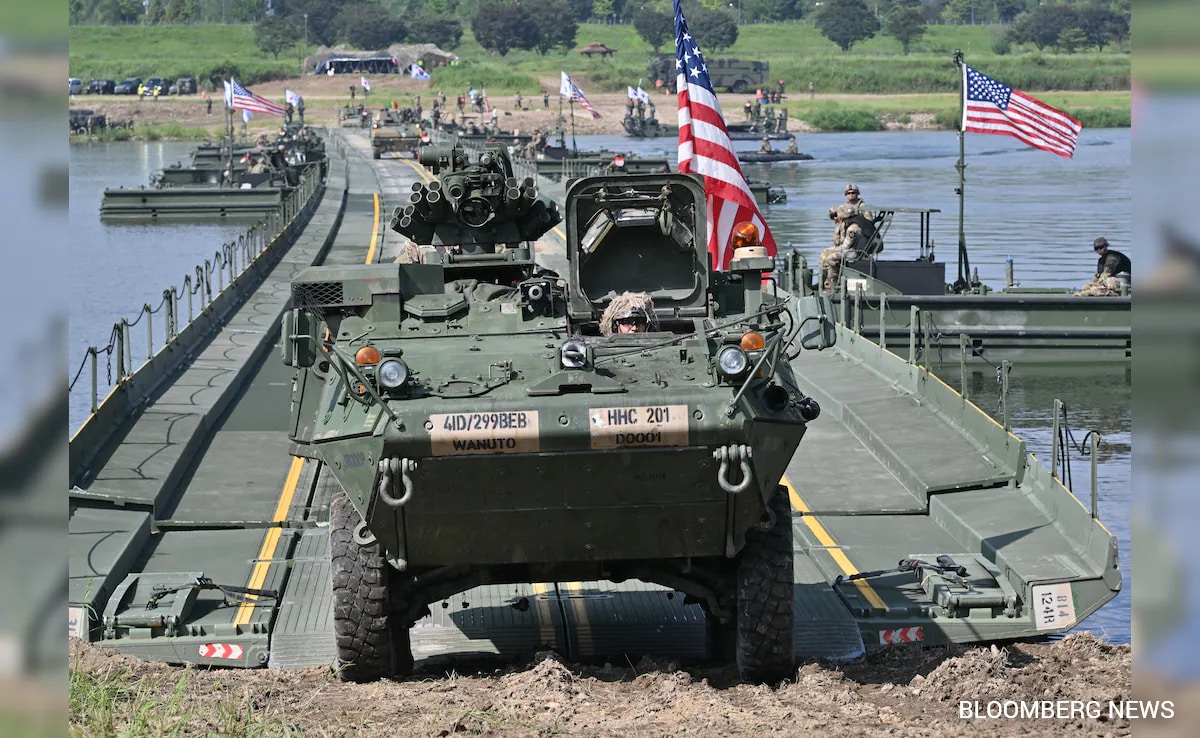
NATO is currently conducting drills in this freezing expanse. They call it civilian readiness. They speak of resilience. Behind the jargon lies a stark admission: the Arctic is no longer a frozen buffer zone. It is a frontier.
The Friction of Sovereignty
For decades, the Arctic was governed by a mantra: "High North, low tension." That era ended. The invasion of Ukraine acted as a global catalyst, turning the northern latitudes into a mirror of the tensions seen in Eastern Europe. Greenland finds itself at the center of a tug-of-war that is as much about pride as it is about plate tectonics.
The recent "row" over Greenland’s status—sparked by clumsy diplomatic overtures and a growing desire for independence among the local population—has created a vacuum. When a territory is this vast and this sparsely populated, a vacuum is never empty for long. If the West isn't there to fill it, someone else will be.
Consider the geography. The GIUK gap—Greenland, Iceland, and the United Kingdom—is the naval choke point of the North. If Russian submarines want to reach the Atlantic, they have to pass through these waters. If NATO wants to protect its supply lines, it has to hold the line here. But you cannot hold a line made of ice and water with soldiers alone. You need a functioning society behind them.
This is why the current drills are different. They aren't just about firing missiles or testing cold-weather gear. They are about power grids. They are about hospitals. They are about whether a small Arctic town can survive if its satellite link is cut or its fuel supply is sabotaged.
The Invisible Stakes of a Frozen Grid
The vulnerability of the Arctic is hard to grasp until you feel the wind. In a temperate climate, a power outage is an inconvenience. In the Arctic, it is a death sentence. Within hours, pipes freeze and burst. Within a day, homes become uninhabitable stone boxes.
NATO’s focus on civilian readiness is a recognition that modern warfare isn't fought on a battlefield. It is fought in the circuitry of a nation. If an adversary can freeze a population out of their own homes without firing a single shot, they have won. The drills are testing "total defense" models—the idea that every fisherman, every nurse, and every local official is a part of the security infrastructure.
But there is a human cost to being a "strategic asset."
Living in a place that the world suddenly considers a potential war zone changes the psychology of a community. There is a sense of being watched. There is the dissonance of seeing high-tech military hardware parked next to colorful wooden houses that haven't changed in fifty years.
The tension between Denmark and Greenland adds another layer of complexity. Greenland is a self-governing territory under the Danish Crown, but the path toward full independence is paved with difficult questions. Who pays for the defense? Who manages the mineral rights that are becoming accessible as the ice melts? When NATO arrives to practice "readiness," they are stepping into a family argument that has been simmering for generations.
Gold Beneath the White
The ice is leaving. As it retreats, it reveals a treasure map. Rare earth minerals, gold, and vast oil reserves are no longer tucked away under an impenetrable shield. They are becoming reachable.
This is the "Greenland row" in its most literal sense. It is a gold rush in slow motion. China has expressed significant interest in investing in Greenlandic infrastructure, from airports to mines. For a territory seeking financial independence from Denmark, that money is tempting. For NATO, that money is a Trojan horse.
The drills are a signal. They are a physical manifestation of the phrase "we are here." It is a way of telling both the locals and the global adversaries that the Arctic is not up for grabs.
The Reality of Resilience
What does "civilian readiness" actually look like on the ground?
It looks like a town hall meeting where people are taught how to use analog radio equipment when the internet fails. It looks like stockpiling food in ways that the ancestors of this land would recognize, but for reasons they never could have imagined. It is the realization that the "Information Age" is incredibly fragile in a place where the sun disappears for months at a time.
The military likes to use the word interoperability. They want their radios to talk to each other. But the real challenge is human interoperability. Can a Danish soldier, a Greenlandic hunter, and an American logistics officer trust each other when the temperatures hit forty below and the power goes out?
We often think of security as a shield. In the Arctic, security is a web. It is the thousands of invisible threads of cooperation that keep a remote society functioning. If one thread snaps, the whole thing sags. NATO is trying to reinforce those threads, but they are doing so in an environment that is fundamentally hostile to human life.
A Future Carved in Ice
The Arctic is the world’s early warning system. Usually, we talk about this in terms of climate change—the "canary in the coal mine" for rising sea levels. But it is also the early warning system for the new geopolitical order.
The drills will end. The ships will sail away, leaving behind a wake of broken ice that will soon freeze over again. But the people of Greenland will remain. They are the ones who have to live in the shadow of the Thule Air Base. They are the ones who have to navigate the shifting loyalties of a world that has suddenly remembered they exist.
There is a certain irony in the fact that the most remote places on Earth are now the most connected to its conflicts. You can stand on a cliffside in Greenland, miles from the nearest road, and you are technically standing on the front line of a global struggle for dominance.
Malik, our fisherman, pulls his nets from the water. The catch is smaller this year. The water is warmer. He looks out at the horizon and sees the gray hull of a destroyer cutting through the dark blue waves. To the people on that ship, he is a data point in a civilian readiness report. To him, they are a reminder that the world is getting smaller, louder, and much more dangerous.
The ice used to be a wall. It was a barrier that kept the rest of the world at bay, allowing a unique culture to thrive in the harshest conditions imaginable. Now, the wall is melting. In its place, we are building a fence. And like all fences, it serves to remind us exactly how much we have to lose.
The sun sets over the ice cap, casting a long, blood-red shadow across the snow. It is beautiful. It is terrifying. It is the new North.