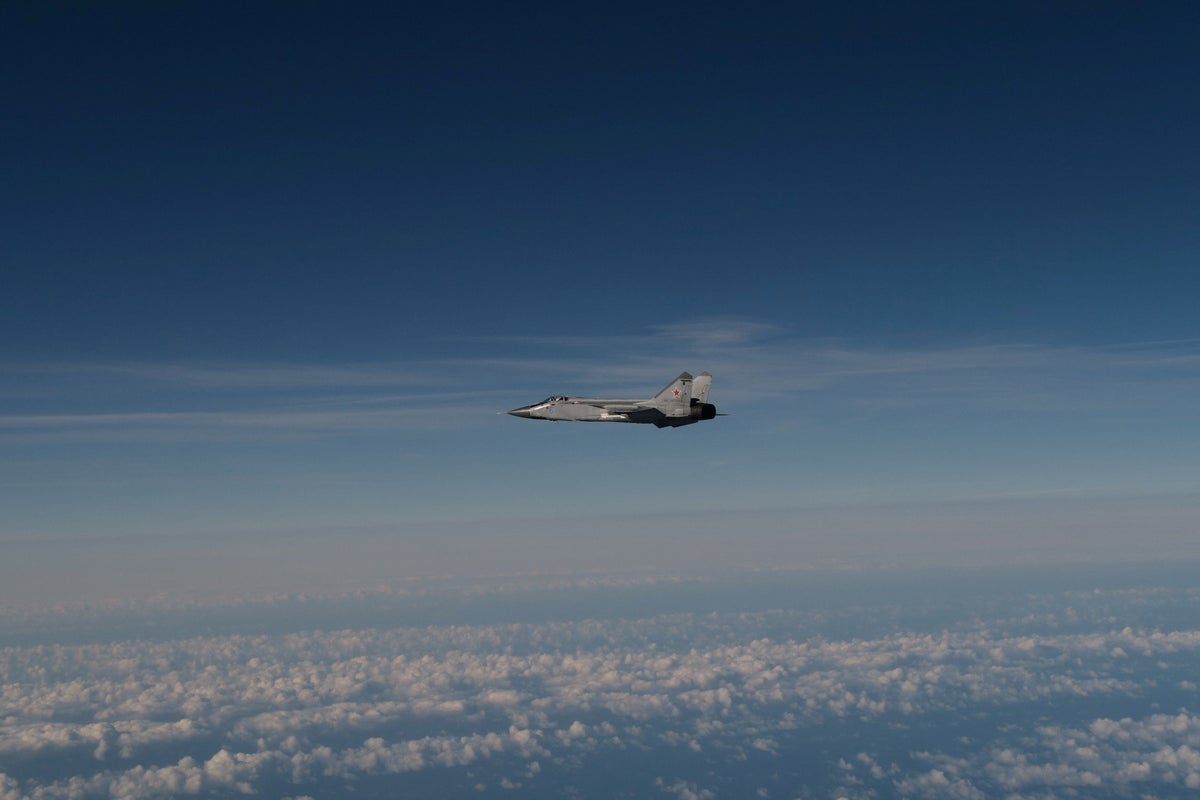
The air at Keflavik Air Base doesn't just bite; it gnaws. It is a sterile, freezing wind that carries the scent of salt spray and jet fuel, whipping across a landscape so desolate it looks like the surface of a forgotten moon. For decades, this stretch of the North Atlantic was a playground for ghosts. But today, the silence is broken by a sound that signifies a fundamental shift in the tectonic plates of global geopolitics.
It is the scream of a GE F414-GE-396 engine. You might also find this connected story insightful: The $2 Billion Pause and the High Stakes of Silence.
For the first time in history, Swedish Gripens are patrolling the Icelandic skies. To a casual observer, it’s just another military exercise, a checkbox in a NATO ledger. To those who understand the friction of history, it is a seismic event. Sweden, a nation that clung to the shield of neutrality for two centuries—surviving world wars and the suffocating tension of the Cold War without picking a side—has finally stepped into the light.
The Empty Throne of the Atlantic
Iceland is a country without a standing army. It is a nation of poets, fishermen, and tech entrepreneurs who rely on the collective promise of others for their survival. Because of its location, sitting like a sentry between the Arctic and the Atlantic, Iceland is the ultimate strategic prize. If you control the skies over Reykjavik, you control the gateway to Europe and the high-speed data cables that hum beneath the waves. As highlighted in detailed coverage by The Guardian, the effects are notable.
In the past, the "guardians" were usually Americans, British, or Norwegians. The rotation is a standard part of NATO’s Air Policing mission. But seeing the blue and yellow roundel of the Swedish Air Force on an Icelandic runway feels different. It feels heavy.
Imagine a pilot—let’s call him Erik. He grew up in a Sweden that believed it could be the world’s conscience by remaining apart from its conflicts. He trained to defend Swedish forests and Swedish lakes, always with the understanding that his role was purely reactive. Now, Erik is strapped into a cockpit thousands of miles from home, staring into the vast, grey nothingness of the North Atlantic. He isn't just flying a patrol. He is the physical manifestation of a broken tradition.
The Engineering of a Sentinel
The Saab JAS 39 Gripen is not just a jet; it is a philosophy. Unlike the massive, fuel-hungry heavyweights used by larger superpowers, the Gripen was designed for a David vs. Goliath scenario. It was built to take off from snowy highways, to be serviced by a handful of conscripts in the middle of a forest, and to punch far above its weight class.
The technology inside that airframe is a marvel of sensor fusion. It doesn't just see the enemy; it understands the environment. When these jets roam the Icelandic coast, they are creating a digital map of the High North that is more precise than anything we’ve had before.
The stakes are invisible but absolute. Beneath Erik’s wings, the Russian Northern Fleet maneuvers in the deep. Submarines, silent and lethal, test the boundaries of international waters. Long-range bombers occasionally skirt the edges of sovereign airspace, testing response times like a burglar checking for unlocked windows. The Gripen is the lock.
Why the Silence Ended
The decision to send Swedish jets to Iceland wasn't made in a vacuum. It was forged in the fires of 2022, when the European security map was unceremoniously shredded. For the Swedes, the realization was visceral: neutrality is a luxury that only exists as long as your neighbors respect it.
There is a specific kind of vulnerability in realizing your old defenses are obsolete. It’s like discovering the locks on your front door are made of cardboard. By joining NATO and immediately taking the lead in Iceland, Sweden is signaling that it is no longer content to sit on the sidelines. They are now part of the "Persistent Presence."
The mission is technically called "Icelandic Air Policing," but that’s a sanitized term for a high-stakes game of chicken. When an unidentified radar track appears on the screen, Erik has seconds to react. He isn't thinking about policy or treaties then. He is thinking about the vibration in his stick, the oxygen flowing through his mask, and the immense responsibility of representing a new era of Nordic defense.
The Cost of the Shield
We often talk about defense in terms of budgets and "interoperability"—a word that sounds like it was spat out by a corporate printer. But the real cost is measured in the salt-corroded skin of technicians working in sub-zero temperatures and the psychological strain on pilots who must remain at "Quick Reaction Alert," ready to scramble in under fifteen minutes.
Iceland’s weather is a character in this story. It is unpredictable and violent. A clear sky can turn into a blinding whiteout in the time it takes to taxi to the runway. Operating a high-performance jet in these conditions requires a level of precision that borders on the supernatural.
The Gripens are operating out of Keflavik alongside colleagues from other nations, sharing data and tactics. This is the "synergy" the bureaucrats love to talk about, but on the ground, it looks like a cold, tired pilot sharing a coffee with a mechanic from a country his grandfather would have considered a "foreign entanglement."
The North is Changing
The ice is melting, and as it disappears, new shipping lanes are opening. The Arctic is no longer a frozen wasteland; it is a burgeoning highway for global trade and a treasure chest of untapped resources. This makes the airspace above Iceland more valuable than it has been since the height of the 1960s.
Sweden’s presence here is a reminder that the "High North" is no longer a fringe concern. It is the center of the board. The jets patrolling these skies are not just looking for threats; they are staking a claim. They are saying that the democratic West will not leave a vacuum in the Arctic.
Every time a Gripen touches down on that Icelandic tarmac, the tires smoke, and the drag chute deploys, it writes a new chapter. The transition from a neutral state to a frontline defender is not an easy one. It requires a shedding of identity, a retooling of the national psyche.
As the sun sets over the North Atlantic—a long, bruised purple smear on the horizon—the jets are tucked into their hangars. The pilots unstrap, their faces marked by the pressure of the G-suit and the intensity of the flight. They walk across the tarmac, heads down against the wind, heading toward a warm meal and a few hours of sleep before the sirens inevitably wail again.
The peace is still there, but it is no longer a quiet, passive thing. It is a loud, active, and expensive peace, maintained by the constant roar of engines and the steady hands of people who realized that some things are worth standing up for, even if it takes two hundred years to decide.
The shadows of the Gripens on the Icelandic snow are long, stretching out toward a future that looks nothing like the past.
Would you like me to research the specific technical upgrades included in the latest Gripen E-series to see how they specifically handle the unique electromagnetic environment of the Arctic?