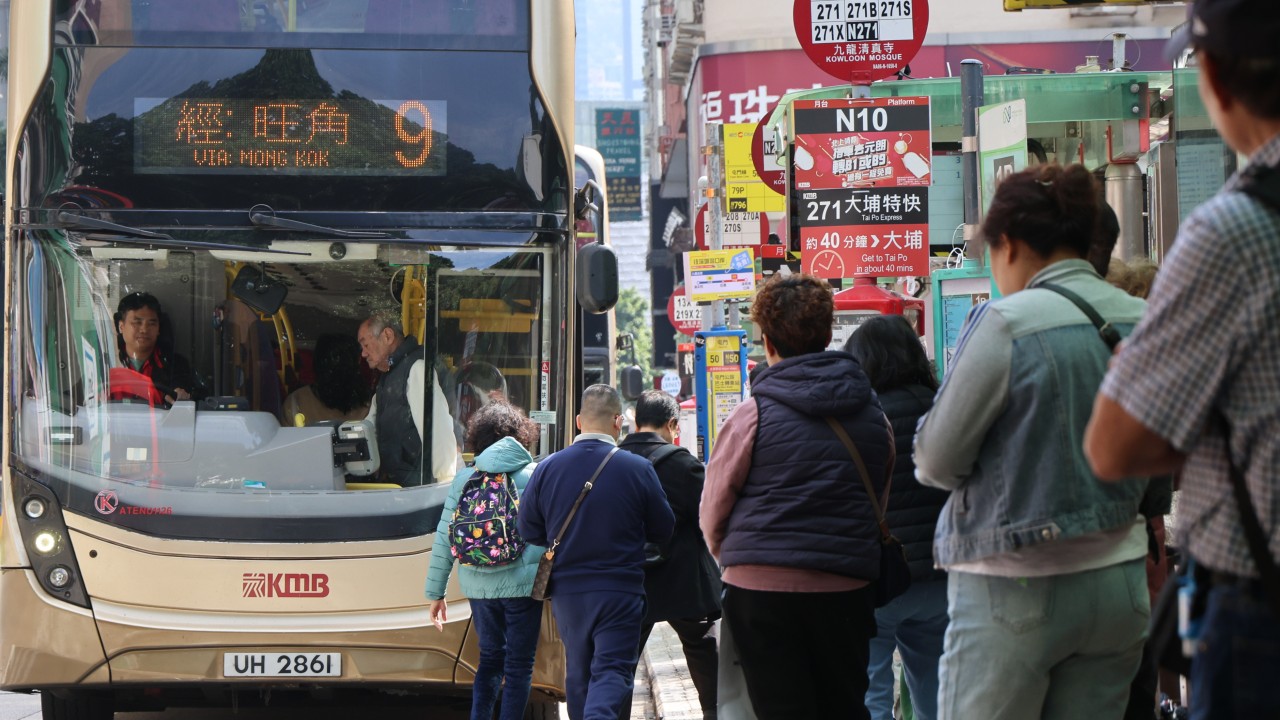
The union is crying foul. They’re claiming that KMB’s directive to cut the air conditioning on empty buses is a "health hazard" for drivers or a "logistical nightmare." They’ve got the public nodding along because everyone loves a villain, and a massive transport utility making its employees sweat is an easy target.
They are wrong. Dead wrong.
The outrage over switching off the AC isn't about safety or comfort. It’s a desperate cling to the inefficient, carbon-heavy legacy of 20th-century transport. We’ve spent decades conditioning passengers and staff to expect meat-locker temperatures in a tropical climate, regardless of whether there is a single soul on board to feel the breeze. It is a massive waste of energy, a strain on mechanical longevity, and a slap in the face to any real ESG targets.
If you think a bus driver can’t handle five minutes without a compressor running while the vehicle is stationary and unoccupied, you aren’t arguing for labor rights—you’re arguing for institutional fragility.
The Thermodynamic Stupidity of Cooling Empty Air
Let’s look at the physics that the union ignores. A standard double-decker bus in Hong Kong requires an immense amount of energy to maintain a temperature of 22°C when the outside air is 32°C with 90% humidity.
When that bus is empty and the engine is idling, the cooling system is fighting a losing battle against heat soak and solar radiation. For every minute an empty bus runs its AC at full blast, it consumes a disproportionate amount of fuel just to cool plastic seats and handrails. We are talking about a system where the parasitic load of the AC can eat up to 20% to 25% of the engine's power output.
From a business standpoint, running the AC on an empty bus is like leaving your refrigerator door open while you go on vacation. It doesn’t "prepare" the bus for passengers; it merely burns cash and carbon for zero utility. The "pre-cooling" argument is a myth. Modern HVAC units can drop the cabin temperature of a bus by several degrees in less than three minutes once the vehicle is in motion and air is circulating.
The Labor Union’s Real Motivation
The union isn't worried about the driver’s internal body temperature. They are worried about discretionary power.
By mandating that the AC stays on, the union ensures that the driver’s environment remains a static, untouchable bubble. Any attempt by management to optimize the fleet through telematics or remote engine shut-offs feels like an invasion of the driver’s "office."
I’ve spent years analyzing fleet operations across Southeast Asia. The moment you introduce automated efficiency, the legacy workforce rebels. They don’t want the "smart bus" because a smart bus tracks idling time, fuel wastage, and unnecessary cooling. It’s easier to hide 20 minutes of unauthorized break time if you can claim the engine had to stay running to keep the bus "passenger-ready."
Stop Romanticizing Inefficiency
Critics argue that turning the AC off and on causes "wear and tear." This is a classic 1980s mechanic’s tale that has no place in 2026. Modern compressors and bus engines are designed for high-cycle start-stop operations. In fact, many electric buses (eBuses) and hybrid models are built specifically to manage these thermal loads dynamically.
If KMB or any other operator wants to survive the transition to a zero-emission fleet, they have to break the habit of "always-on" cooling. In an electric vehicle, the climate control is the single biggest drain on the battery after the drivetrain. If you can’t manage a diesel bus’s AC today, you will bankrupt your electric fleet tomorrow.
Let's do a thought experiment. Imagine a fleet of 4,000 buses. If each bus idles for just 30 minutes a day with the AC on while waiting for a shift change or at a terminus, that is 2,000 hours of wasted cooling per day. Over a year, that represents millions of liters of diesel and thousands of tons of $CO_2$.
The union’s demand is essentially asking the public to subsidize a massive environmental crime so that a driver doesn't have to feel a 2°C fluctuation for a few minutes.
The False Premise of "Passenger Comfort"
The loudest argument against this policy is that passengers will step into a "sauna."
This is a failure of imagination. If the bus is truly empty, there are no passengers to complain. By the time the bus reaches its first stop on the route, the system has already cycled the air. The sensation of "heat" in a bus is often more about stagnant air than actual ambient temperature.
Instead of fighting the shut-off policy, the industry should be investing in:
- Solar-reflective glass: Reducing the greenhouse effect inside the cabin so it doesn't heat up as fast when the AC is off.
- Variable Frequency Drives (VFDs): Allowing the AC to run at 10% capacity rather than 0% or 100%.
- Active Ventilation: High-efficiency fans that move air without engaging the energy-hungry compressor.
The Hard Truth About Operational Costs
Public transport is a low-margin, high-stress business. Fuel is the second-largest expense after labor. When fuel prices spike, the first thing that happens is a request for a fare hike.
The same people screaming about the AC being turned off are the ones who will protest when bus fares go up by 15%. You cannot have it both ways. You cannot demand maximum luxury (constant arctic temperatures in an empty vehicle) and minimum pricing.
The "lazy consensus" says we should prioritize the status quo of comfort. I say we prioritize the survival of the service. Every dollar saved on wasted fuel is a dollar that can go into driver salaries or fleet electrification.
Stop Coddling the Status Quo
The union’s "slamming" of this policy is a distraction from the real issues in the transport sector, like aging infrastructure and the lack of autonomous integration.
We need to stop treating the bus cabin like a sacred, unchanging temple of refrigeration. It is a tool. It is a mobile asset. If the asset isn't being used, the power should be off.
Drivers are professionals. They operate in varying conditions every day. To suggest they cannot manage a vehicle that isn't constantly chilled is an insult to their competence.
The next time you see a bus with its engine off at a terminal, don't pity the driver. Appreciate that for once, a company is actually prioritizing logic over the noisy demands of an inefficient union.
The era of the "always-on" empty bus is over. It’s time to grow up and turn the dial down.
Would you like me to analyze the specific fuel-to-weight ratio of double-decker buses to show exactly how much these cooling cycles cost the average city?