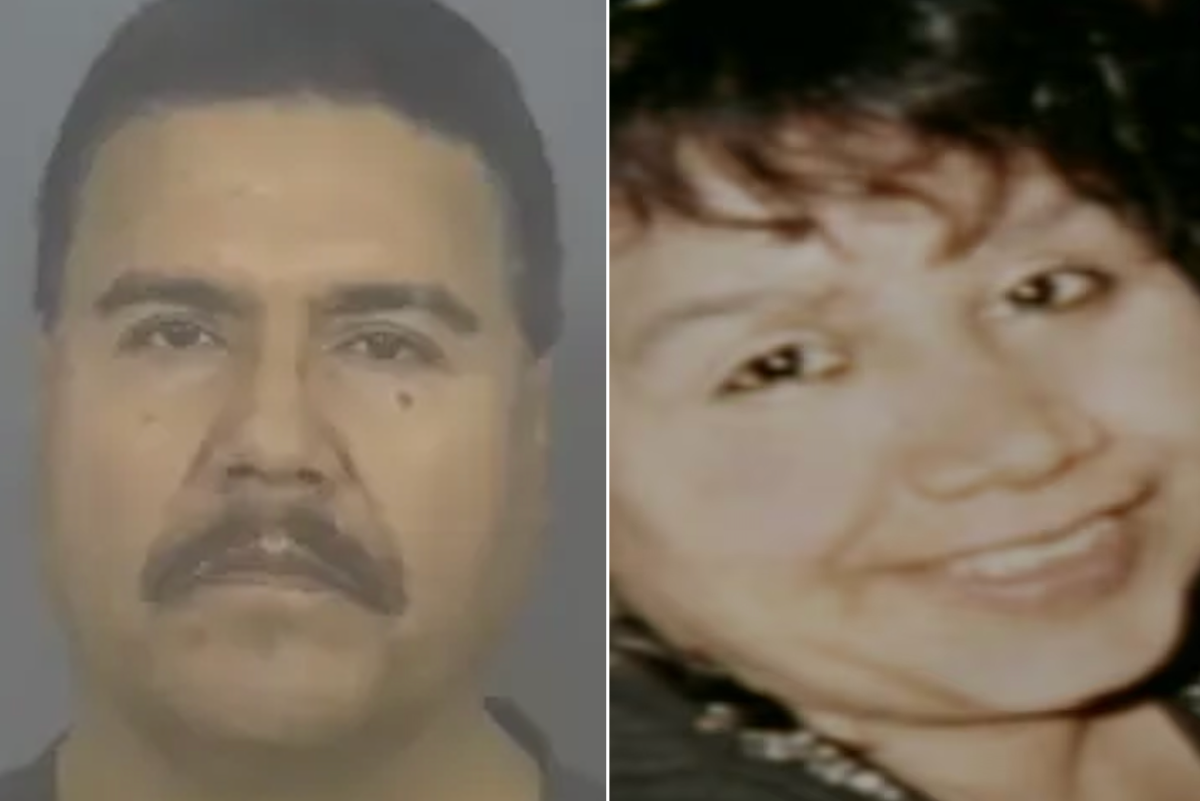
The arrest of a husband fifteen years after the disappearance of his wife—despite the discovery of her remains in a vehicle shortly after the initial report—represents a systemic failure in forensic synchronization and investigative prioritization. The delay between the act of disappearance (Year 0) and the execution of a murder charge (Year 15) is rarely the result of "new" evidence. Instead, it is typically the byproduct of Information Silo Friction, where the data exists within the system but lacks the connective tissue to trigger a prosecutorial threshold.
Analyzing this case requires a departure from the emotional narrative of "justice at last" to focus on the objective variables that allow a primary suspect to remain at liberty while the physical evidence is already in state custody. This is an audit of institutional latency.
The Structural Anatomy of Investigative Stagnation
The failure to bridge the gap between a missing persons report and a homicide conviction stems from three distinct breakdowns in the law enforcement operational cycle.
1. The Decedent Identification Gap
When a body is discovered in a vehicle (the "van"), it enters a specific processing queue. If the remains are skeletal or significantly decomposed, the immediate link to a specific missing persons file is not automated. This creates a Disjointed Data Set:
- Set A: The missing person report (The Victim’s Identity).
- Set B: The John/Jane Doe recovery (The Physical Evidence).
In many jurisdictions, these two sets do not "handshake" unless a manual cross-reference is triggered by a detective or a DNA match is uploaded to CODIS (Combined DNA Index System). If the husband filed the report, he established the initial narrative, which often functions as a "containment strategy" to steer the investigation toward a runaway or voluntary disappearance scenario.
2. The Narrative Monopoly
The person who files the missing persons report—in this case, the husband—gains a first-mover advantage. By initiating the legal record, the suspect defines the timeline, the victim's state of mind, and the "last seen" variables. This creates an Anchoring Bias in the early investigative stages. Investigators often work within the parameters provided by the reporter until physical evidence explicitly contradicts them. If the evidence (the van) is recovered but not immediately identified as belonging to the missing person, the husband’s narrative remains the unopposed baseline for years.
3. Forensic Resource Allocation
Homicide investigations are subject to a Cost-Utility Function. A "cold" case where the victim is missing but no body is confirmed requires a high expenditure of man-hours with a low probability of a conviction. Once a body is found but remains unidentified, the case sits in a state of suspended animation. The transition from "Missing" to "Murdered" only occurs when forensic technology (such as advanced mitochondrial DNA sequencing or forensic odontology) catches up to the quality of the recovered remains.
The Three Pillars of a Delayed Prosecution
To understand why a 15-year gap occurs, one must look at the evidentiary hurdles required to move from "person of interest" to "defendant." Prosecutors generally refuse to file charges based on circumstantial proximity alone; they require a convergence of three specific pillars.
Pillar I: Proximity and Logistics
The recovery of the victim in a van is a critical logistical marker. The investigation must prove not just that the victim is dead, but that the husband had exclusive access or primary control over the vehicle at the time of death. 15 years later, establishing a chain of custody for a vehicle becomes a forensic nightmare.
The prosecution must map the "Vehicle Lifecycle":
- Who was the registered owner?
- Where was the van parked during the window of disappearance?
- Is there forensic transfer (DNA, fibers, hair) that places the suspect inside the van post-mortem?
Pillar II: The Temporal Alibi Collapse
A suspect’s story is most vulnerable to time. In Year 1, a lie is easily maintained. In Year 15, the inconsistencies between the original statement and physical realities (like the decomposition rate of the body found in the van) become insurmountable. If the husband claimed his wife left on foot, but she was found in the family van, the Logical Disconnect serves as the catalyst for the arrest. The arrest is often the result of a "re-interview strategy" where the suspect is forced to reconcile their 15-year-old statement with newly verified forensic facts.
Pillar III: Technological Evolution
The "15-year mark" is a common threshold for cold case resolutions because it aligns with the cycles of DNA technology upgrades. What was "inconclusive" in 2010 is "definitive" in 2025. Specifically, SNP (Single Nucleotide Polymorphism) genotyping and Investigative Genetic Genealogy have allowed labs to identify remains from degraded samples that were previously useless. Once the Jane Doe in the van is officially linked to the missing wife, the "Missing Person" case instantly converts into a "Homicide" case with a singular, high-probability suspect.
The Cost of Investigative Latency
The delay in this arrest is not a neutral event; it carries a significant social and evidentiary cost.
- Degradation of Witness Memory: After 15 years, the reliability of testimony regarding the couple’s behavior or the events leading up to the disappearance is significantly diminished. This creates a "Reasonable Doubt" opening for the defense.
- Loss of Secondary Evidence: Digital footprints, cell tower pings, and financial records from 15 years ago may no longer exist or are harder to subpoena from legacy systems.
- The Suspect’s Integration: In 15 years, a suspect often builds a new life, which defense attorneys use to argue against the likelihood of a violent past.
The mechanism of justice in this scenario is reactive, not proactive. The state did not "find" the husband; they finally "connected" the husband to the van that had likely been in their records for a decade.
Strategic Forensic Trajectory
The path toward a conviction now relies on the Forensic Reconstruction of the Crime Scene. Because the crime scene is 15 years old, the prosecution cannot rely on "fresh" blood or fingerprints. Instead, they must employ a Circumstantial Convergence Model.
- Isolate the van's location history: Use environmental forensics (pollen, soil samples in the tires/undercarriage) to determine if the van was moved or hidden.
- Analyze the "Filing Motivation": Determine if the husband filed the missing persons report only after a specific external pressure (e.g., a neighbor asking questions or a legal requirement for her signature).
- Perform a Bio-Mechanical Audit: If the body was in the van, the cause of death must be reconciled with the husband's physical capability and the timeline he provided.
The arrest is merely the first step in a high-stakes litigation where the defense will focus on the Institutional Negligence of the 15-year delay to suggest that the police are "grasping at straws" because they failed to solve it when the evidence was fresh.
To secure a conviction, the prosecution must prove that the 15-year delay was a result of the suspect's sophisticated deception rather than police incompetence. The focus of the trial will likely shift from the "how" of the murder to the "why" of the delay. The strategy must be to frame the husband’s 15-year silence as a continuous act of concealment, effectively extending the duration of the crime into the present day.
Leverage the forensic identification of the remains to invalidate every statement made by the husband since the initial report. Every year he lived as a "grieving husband" while the body sat in the van must be presented as a premeditated extension of the original homicide. Success in court depends on transforming the 15-year gap from a defense weakness into a prosecutorial weapon.