The air in Paris during an international summit usually tastes of expensive espresso and nervous energy. In the gilded halls of the Élysée Palace, the silence is heavy. It is the kind of silence that exists only when the world outside is screaming. Emmanuel Macron stands at a lectern, but he isn't just speaking to the press. He is reaching across the Mediterranean toward a horizon thick with smoke.
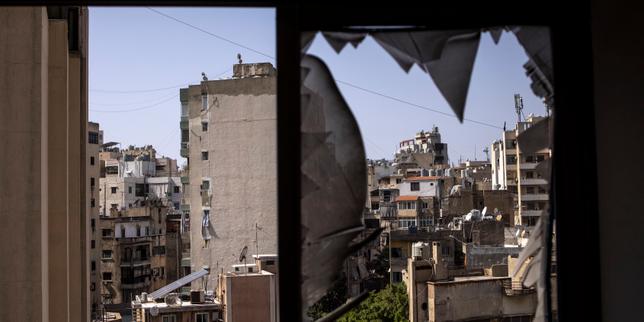
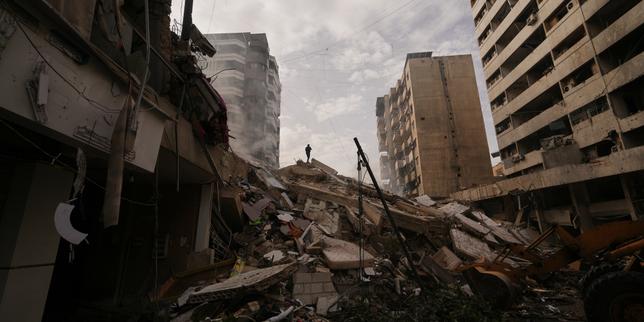
Across the water, the reality is different. In Beirut, the "Paris of the Middle East," the sound of life has been replaced by the rhythmic thud of strikes and the frantic sirens of ambulances. This is not a conflict of maps and arrows. It is a conflict of shattered glass, of children sleeping in cars because their bedrooms no longer have walls, and of a nation that has spent decades being the stage for everyone else’s tragedies.
When the French President calls for "direct discussions" between Israel and Lebanon, he isn't just proposing a meeting. He is trying to force a pause in a dance of death that has become terrifyingly predictable. He wants to host them in Paris. He wants to trade the scent of cordite for the neutral, cool air of a French boardroom.
The Weight of History on a Phone Line
Diplomacy often feels like a series of cold, mechanical gears turning. But look closer. It is actually a fragile web of human voices.
Imagine a diplomat in a dimly lit office. They have three phones. One connects to a government that believes its very existence depends on the total neutralization of a threat across the border. Another connects to a country that feels its sovereignty is a myth, its soil a playground for proxy militias and foreign interests. The third phone is silent. That silence represents the lack of a direct line between the two main actors.
France is trying to plug those wires together.
The proposal for direct talks is a gamble. It assumes that if you put people in a room—away from the adrenaline of the front lines—they might remember that the "enemy" also has a logistics problem, a grieving population, and a desire to see the sun rise without an explosion.
Lebanon is currently a ghost of its former self. To understand the stakes, you have to look past the headlines of "Hezbollah vs. IDF." You have to see the Lebanese citizen who has survived a port explosion, a currency collapse, and a pandemic, only to find their sky filled with iron once again. They are tired. The exhaustion is a physical weight. When Paris offers to host, it offers more than a venue. It offers a momentary escape from the gravity of a regional war.
The Architecture of a Ceasefire
Peace is rarely a sudden realization. It is a construction project.
First, you need a foundation of mutual exhaustion. Both sides are reaching that point. Israel’s northern communities are empty, their residents scattered in hotels, waiting for a safety that feels increasingly out of reach. Lebanon’s south is a landscape of displacement.
Macron’s move is to act as the architect. He is suggesting that the 1701 resolution—the old blueprint from 2006—isn't just a piece of paper. It is the only thing standing between the current chaos and a total regional firestorm. But blueprints are useless if the builders won't talk to each other.
The "Paris proposal" is an attempt to skip the middleman. For too long, messages have been shouted through the megaphone of military strikes or whispered through third-party intermediaries in Doha or Cairo. Macron is calling for the shortest distance between two points: a straight line.
There is a specific kind of bravery required to sit at a table with someone who was trying to kill you yesterday. It is much easier to keep firing. Firing requires only hate and ammunition. Talking requires a terrifying level of hope.
The Invisible Players at the Table
If these talks happen, the room will be crowded with ghosts.
There are the ghosts of the 1980s, the memories of a Lebanese Civil War that turned neighbors into nightmares. There are the more recent ghosts of the 2006 conflict. Every time a diplomat clears their throat, these memories rattle.
Then there is the shadow of Iran. No conversation about Lebanon is a private one. The influence of Tehran hangs over the Lebanese state like a heavy curtain, complicating every move. Israel knows this. France knows this. The challenge for Paris is to create a space where the Lebanese state—the actual, official government—can find its voice again.
Critics say Macron is chasing a legacy, or that France is clinging to its colonial-era ties to the Levant. Perhaps. But motives matter less than outcomes when the alternative is a ground invasion that could last years.
Consider the math of a modern missile strike. The cost of a single interceptor can exceed the annual income of a thousand Lebanese families. We are watching billions of dollars evaporate into clouds of dust and grief. Diplomacy, by comparison, is incredibly cheap. The cost of a flight to Paris and a few days in a hotel is nothing. The real price is the political capital. It is the risk of being seen as "weak" by a home audience that demands total victory.
The Human Cost of the Waiting Game
While the politicians decide whether to accept the invitation, the people on the ground live in the "in-between."
In the Galilee, an Israeli mother checks an app on her phone every ten minutes, wondering if the siren will sound before she finishes making lunch. In Tyre, a Lebanese father packs a bag he hopes he never has to use, filled with documents and the only photos he has of his parents.
These are the people Macron is actually inviting to Paris, even if they never board the plane. Their lives are the currency being traded.
The tragedy of the Middle East is that it is a land of "almosts." We have almost had peace dozens of times. We have almost seen a stable Lebanon. We have almost seen a secure Israel. Each "almost" leaves a scar.
Paris has seen this before. It has seen the signing of accords that ended wars and the failure of summits that started them. The city itself is a testament to the fact that you can rebuild after a catastrophe, but only if the catastrophe actually ends.
The Friction of Reality
We must be honest: the odds are stacked against a clean success.
Israel is currently locked into a doctrine of "escalate to de-escalate." They believe that only by hitting harder can they force a change in the status quo. Hezbollah, meanwhile, remains tied to the fate of Gaza, refusing to uncouple the two fronts. It is a knot made of razor wire.
Macron’s call for "direct discussions" is an attempt to cut that wire. It is a rejection of the idea that this war is inevitable. It is an assertion that human agency still exists, even in the middle of an exchange of fire.
If the talks happen, they won't be friendly. They will be bitter, tense, and perhaps even performative. But a performative argument in a Parisian palace is infinitely better than a "surgical strike" in a crowded neighborhood.
The stakes are not just about borders. They are about whether the international community still has the power to stop a landslide once it starts. If France can pull this off, it proves that the old world still has a role to play—not as an empire, but as a bridge.
The lights of Paris are beautiful, but they are also fragile. They rely on a grid that is stable and a peace that is maintained. In the coming days, we will see if that light can be shared, or if the darkness creeping in from the East will finally reach the shores of the Seine.
A diplomat once said that peace is just a period of cheating between two periods of fighting. But for the person huddled in a basement in Southern Lebanon or an air-raid shelter in Northern Israel, that "period of cheating" is called a life. It is the time when you get to grow up, fall in love, and grow old.
Paris is waiting. The table is set. The pens are ready. All that is missing are the people with the courage to stop the momentum of the machine and look each other in the eye.
The world is watching the door to the conference room, waiting for it to open or to be blown off its hinges.