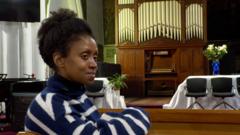
The king of instruments is losing its throne, and honestly, it’s a tragedy we’re letting happen through sheer laziness. You walk into a drafty parish church today and you're more likely to hear a tinny electronic keyboard or a poorly mixed backing track than the bone-shaking thunder of a pipe organ. It's not just a change in musical taste. It's a systemic collapse of craftsmanship, funding, and interest that threatens to turn thousands of historic instruments into expensive firewood.
We’re currently witnessing a quiet crisis in our local heritage. Church organs aren't just big boxes of whistles. They’re complex machines, often the most intricate piece of technology a village possessed for centuries. But as congregations dwindle and maintenance costs soar, these giants are falling silent. If we don’t change how we value them right now, the specific, physical chill of a 32-foot pipe vibrating in your chest will become a museum curiosity rather than a living experience.
The Cost of Silence
Maintenance isn't cheap. That’s the blunt reality every vicar faces. A minor tuning for a small organ can cost hundreds, while a full restoration—the kind needed every 50 years or so—frequently climbs into the six-figure range. When a roof is leaking or the heating bill is astronomical, the organ is usually the first thing to be sacrificed.
It's a short-sighted move. An organ is an investment in the building's soul. When you stop playing it, the leather parts in the bellows dry out and crack. Dust settles in the pipes. Rodents move into the console. A "silent" organ doesn't just sit there waiting; it actively decays. By the time a church decides they want the music back, the repair bill has tripled. I've seen beautiful instruments by builders like Henry Willis or William Hill left to rot because nobody thought to spend a few hundred pounds a year on basic preventative care.
Finding the Next Generation of Players
We have a massive "bench" problem. You can't have organ music without organists, and we're running out of them fast. The stereotypical image of an organist is someone’s great-aunt who’s been playing the same three hymns since 1974. While those dedicated volunteers have kept the lights on, we haven't done enough to make the instrument "cool" for kids.
Learning the organ is hard. You’re playing with two hands and two feet, often on three different keyboards at once. It’s the ultimate mental workout. Yet, access is a nightmare. Most kids don't have a pipe organ in their living room. If the local church is locked or the priest is protective of the "expensive toy," a potential prodigy never gets to touch the keys.
Organizations like the Royal College of Organists (RCO) are trying to bridge this gap, but they need more local support. We need "experience days" where teenagers can actually pull out the stops and feel the power. If you want to save the instrument, you have to let people play it. Even the loud, messy bits. Especially those bits.
The Digital Threat
Digital organs are the "fast fashion" of the liturgical world. They’re tempting. They’re cheap, they never go out of tune, and they take up zero space. Salespeople will tell you they sound "just like the real thing."
They don't.
A digital organ is a recording of a sound played through a speaker. It’s two-dimensional. A pipe organ is moving air. It’s an acoustic event that interacts with the specific stones and timber of the room. When you hit a low note on a real organ, the building itself becomes part of the instrument. You can't replicate that with a circuit board and a subwoofer. Choosing digital is a compromise that eventually leads to the removal of the original pipework to "make room" for chairs or a coffee station. Once those pipes are gone, they almost never come back.
A New Strategy for Survival
If we want to save these instruments, we have to stop thinking of them as purely religious objects. They are community assets. A church that only uses its organ for 45 minutes on a Sunday morning is failing its investment.
- Host non-religious concerts. Bring in silent film accompanists. Play Hans Zimmer scores. Let the local goth band use the pedals for their bass lines.
- Grant Funding. Look beyond church-specific grants. Organizations like the National Lottery Heritage Fund in the UK often support organ restorations if you can prove the instrument has historical significance or provides community value.
- Technical Education. Start treating the organ as a marvel of engineering. Invite schools for "physics of sound" field trips. Show them how air pressure and pipe length create pitch.
- Adopt an Organ. Smaller parishes should twin with larger cathedrals or well-funded city churches for "organist sharing" programs.
The neglect isn't always intentional, but the result is the same. We're losing a direct link to our musical past. Every time a pipe organ is replaced by a plastic keyboard, the world gets a little bit quieter and a lot more boring.
If your local church has an organ, go ask about it. Ask to see the pipes. Ask if they have an organist. Sometimes, just showing that someone in the community cares is enough to move the "organ fund" from the bottom of the priority list to the top. Stop waiting for a "pivotal moment" to save these instruments. The time to act is before the last bellows leak their final breath of air.
Check the National Pipe Organ Register to see what's in your area. If an instrument is listed as "derelict," call the building's trustees. Demand better. These aren't just relics; they're the loudest, most impressive machines humans ever built before the industrial revolution. Don't let them become silent monuments to our own indifference.