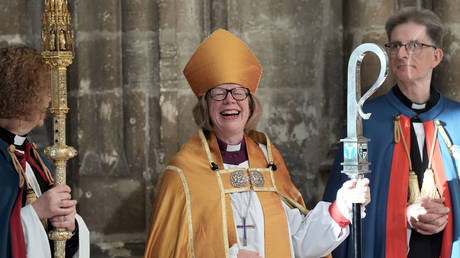
History doesn't always move in a straight line. Sometimes it drags its feet for centuries before taking a massive leap. We're seeing that play out right now as the Church of England prepares for its first female leader. It’s a moment that feels both inevitable and shockingly overdue. If you’ve followed the internal politics of the Anglican Communion, you know this isn't just a simple promotion. It’s a seismic shift in a structure that was, for a very long time, a literal boys' club.
For those watching from the outside, the headlines might seem like standard corporate progress. But the Church isn't a corporation. It’s a 500-year-old institution tied to the British state, laden with tradition, and split by deep theological rifts. Bringing a woman into the top spot—the role of Archbishop of Canterbury—changes the DNA of the organization. It isn't just about representation. It’s about how power is wielded in a faith that has struggled to stay relevant in a secular world.
Breaking the Stained Glass Ceiling
The journey to this point was messy. It was loud. It was frequently unkind. Women have been ordained as priests in the Church of England since 1994, but the path to the episcopacy—becoming a bishop—was blocked until 2014. That twenty-year gap tells you everything you need to know about the resistance within the ranks.
When Libby Lane became the first female bishop in 2015, the atmosphere was electric but tense. During her consecration at York Minster, a lone protester shouted "not in my name" from the pews. That’s the reality of this transition. It’s not a unanimous celebration. There are still "traditionalist" parishes that refuse to recognize the authority of women. They have their own "flying bishops" who travel around to perform rites so these congregations don't have to interact with a woman in a mitre.
Now, moving from being one of many bishops to being the leader is a different beast entirely. The Archbishop of Canterbury isn't just the head of the Church of England. They're the spiritual leader of 85 million Anglicans worldwide. Many of those global provinces, particularly in the Global South, are far more conservative than the UK branch. This appointment puts the new leader in a direct collision course with international leaders who view female headship as a departure from scripture.
The Politics of the Appointment
You might wonder how this actually happens. It’s a weirdly British blend of secret committees and government involvement. The Crown Nominations Commission (CNC) does the heavy lifting. This group includes bishops, laypeople, and a chair appointed by the Prime Minister. They come up with two names. These names go to the Prime Minister, who then passes the preferred choice to the Monarch.
It’s a process that usually happens behind heavy oak doors. But this time, the pressure was public. The outgoing leadership left a church that's shrinking in numbers but growing in internal conflict. The criteria for the "first female leader" weren't just about piety. The CNC needed someone who could play high-stakes diplomacy.
- Financial management: The Church sits on a massive investment fund but many local parishes are broke.
- Legal navigation: Balancing the Church's exemptions from equality laws with a public that demands modern values.
- Global mediation: Keeping the African and South American provinces from breaking away entirely.
Whoever takes this seat isn't just leading prayers. They're managing a fractured multi-national organization with a PR problem.
What This Changes for the Average Person
If you aren't someone who spends Sunday mornings in a pew, you might think this doesn't affect you. You'd be wrong. The Church of England is the "established" church. Its leaders sit in the House of Lords. They help craft the laws of the land. When the Church of England gets its first female leader, the voice representing "faith" in the British government changes overnight.
We should expect a different emphasis on social issues. Data from the last decade suggests that female clergy in the UK are often more focused on grassroots poverty, climate justice, and refugee rights than their male counterparts, who historically spent more time on doctrinal purity. This isn't a stereotype; it's reflected in the motions brought to the General Synod.
The tone of the national conversation will shift. A female Archbishop brings a different lived experience to the table when discussing maternity rights, domestic violence, or even the basic structure of the family. She'll be the one crowning monarchs or presiding over national funerals. That visual matters. It tells a young girl in a rural parish that there's no limit to her spiritual authority.
The Resistance Still Exists
Let’s be honest. This isn't a "happily ever after" moment. The Church is still deeply divided over same-sex marriage and gender identity. Part of the reason it took this long to get a female leader is that the Church spent years trying to "protect" the consciences of those who disagree with women’s ordination.
There's a fear that this appointment will trigger a mass exodus to the Catholic Church or the Free Churches. We've seen it before. When the first women were ordained, hundreds of priests left. The new leader has to decide: do I move forward with a progressive agenda and risk a smaller church, or do I stall to keep the traditionalists happy?
Honestly, the "middle ground" is disappearing. You can't be half-convinced that a woman can lead. You either believe in her authority or you don't. The incoming leader will likely face more scrutiny in her first six months than her predecessor did in six years. Every word she says about the Bible, every stance she takes on tax policy, will be viewed through the lens of her gender. It’s unfair, but it’s the reality of being the "first."
Modernizing a Medieval Brand
The Church of England is basically a legacy brand trying to survive the creator economy. Its buildings are beautiful but expensive to heat. Its language is poetic but often confusing. A female leader represents a massive rebranding effort.
It’s an attempt to say, "We see the 21st century."
But symbols only go so far. To actually save the institution, she’ll need to do more than just exist in the role. She’ll need to address the "safeguarding" scandals that have rocked the Church recently. Trust is at an all-time low because of how abuse claims were handled in the past. A fresh perspective at the top is the only way to clear out the old habits of silence and protectionism.
If she succeeds, she might actually stabilize the decline in attendance. If she gets bogged down in the same old theological bickering, the gender of the leader won't matter—the pews will keep emptying.
How to Follow the Transition
This isn't a one-day story. The transition period involves a lot of "enthronement" ceremonies and legal handovers. If you want to see how this actually changes the landscape, watch the General Synod votes over the next two years. That’s where the real power lies.
Don't just read the official press releases. Look at the reactions from the Global South Primates. Their response will dictate whether the Anglican Communion stays together or splits into two distinct churches.
Pay attention to the first few sermons. The choice of text and the focus of the message will set the tone for a new era. We’re moving past the "can a woman do this?" stage and into the "what will this woman do?" stage.
The wait is over. Now the real work starts.