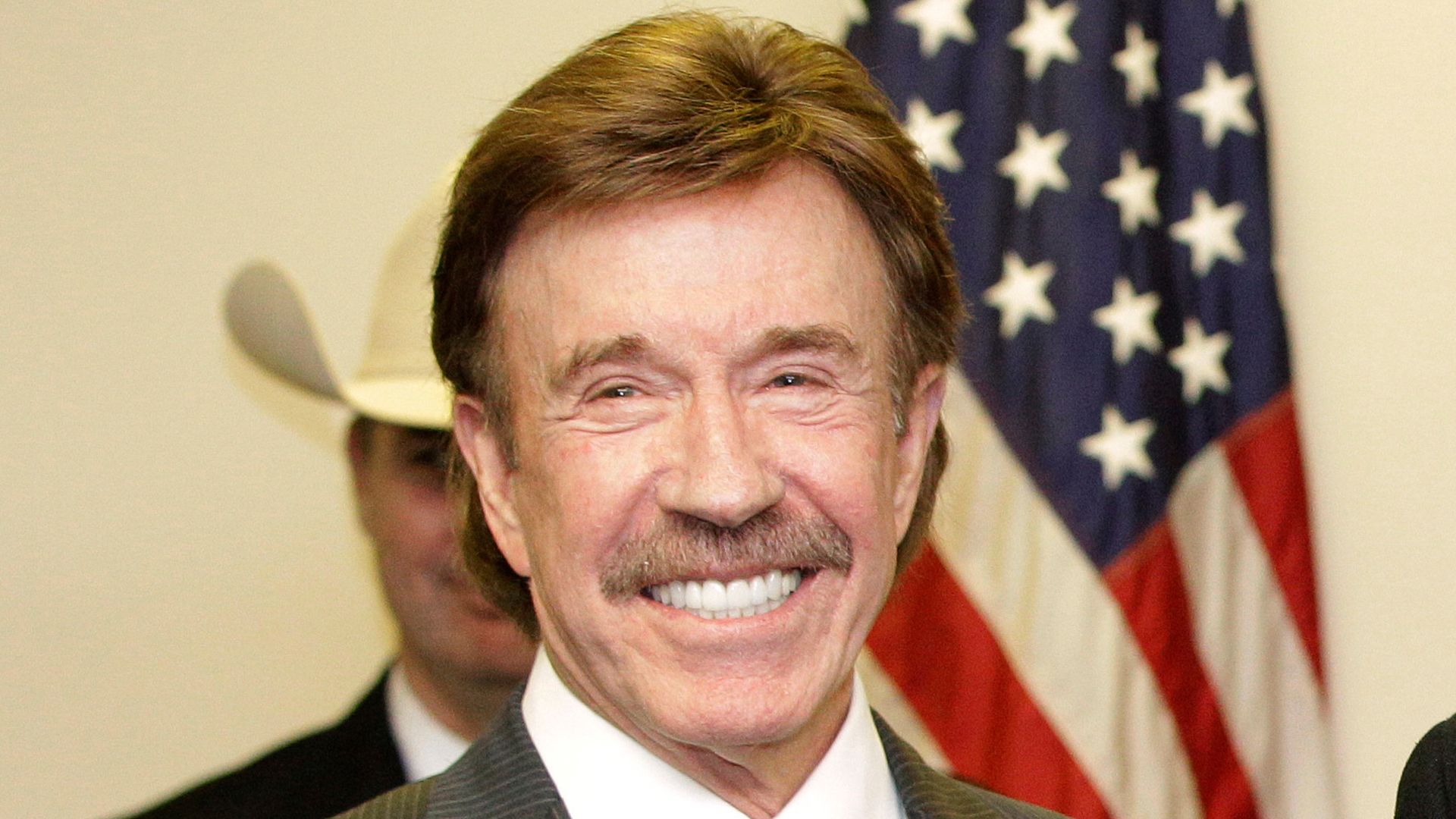
The internet is a graveyard of dead jokes, but none are as decomposed as the Chuck Norris "Fact."
For twenty years, we have been fed a diet of hyperbolic nonsense about a man who supposedly doesn't sleep but waits, or whose tears cure cancer. The world pays tribute to an icon, calling him a "tough cookie" and a pioneer. They are wrong. By canonizing Norris as a meme, we haven't just ignored his actual cinematic contributions—we’ve actively sanitized the gritty, desperate reality of 1970s martial arts for a cheap, digital punchline.
The "tough cookie" narrative is a lie. It’s a soft, commercialized version of a man whose real impact was far more technical and far less magical than the memes suggest. If you want to understand why modern action movies feel like weightless CGI festivals, look no further than our collective refusal to see Norris for what he actually was: a brutalist technician who got swallowed by his own shadow.
The Technical Reality vs. The Digital Hallucination
The common consensus treats Norris as a superhuman entity. This is the "lazy consensus." It’s easy to joke that Norris counted to infinity twice. It’s much harder to analyze the biomechanics of his roundhouse kick, which—contrary to popular belief—wasn't a mystical force of nature, but a result of rigorous, repetitive training in Tang Soo Do.
When Norris fought Bruce Lee in Way of the Dragon (1972), he wasn't an "icon." He was a sacrificial lamb. He was the "bad white guy" brought in to get his chest hair ripped out by a superior philosopher-athlete. That fight is the gold standard for action choreography because it relied on tension and physics, not invulnerability.
The Myth of Invulnerability
The "Chuck Norris Fact" phenomenon suggests that he cannot be beaten. This is the exact moment action cinema died. When a hero is perceived as untouchable, the stakes vanish.
- The Bruce Lee Era: Success was earned through suffering.
- The Norris Meme Era: Success is a foregone conclusion.
By celebrating Norris as an unbeatable god, we’ve signaled to Hollywood that we don't care about the struggle. We just want the result. This paved the way for the "invincible" superhero tropes that now clog our screens. We traded the sweat of the 1980s for the smugness of the 2000s.
The Cannon Films Trap: Selling the Soul for a Stunt
I’ve seen franchises blow millions trying to recreate the "Norris Magic" without understanding the machinery behind it. During his peak years at Cannon Films, Norris wasn't playing a character. He was playing a silhouette.
Missing in Action and Invasion U.S.A. weren't just movies; they were geopolitical fever dreams. The industry looks back on these with nostalgic goggles, but they represent a dangerous shift toward "action by numbers."
The Mid-Range Mediocrity
Norris was never the best actor. He wasn't even the most athletic martial artist on screen (that title belongs to the likes of Jackie Chan or Jet Li). What Norris had was efficiency. He moved with a lack of wasted motion that reflected his real-world tournament experience.
But efficiency makes for boring cinema.
The industry insiders who praise Norris today as a "tough cookie" are usually the same ones who can't tell you the difference between a side kick and a back piercer. They are praising the brand, not the body of work. They are validating a version of Norris that exists only in Twitter threads and t-shirts sold at mid-tier airports.
Why the Meme is a Disservice to the Martial Artist
Imagine a scenario where a world-class neurosurgeon is only remembered for a joke about how he can operate with his eyes closed. It trivializes the years of grueling labor.
Norris was the first Westerner to be awarded an eighth-degree black belt in Taekwondo. He founded United Fighting Arts Federation. He created Chun Kuk Do. These are tangible, hard-won achievements. Yet, when we "pay tribute," we talk about him roundhouse kicking the Big Bang into existence.
We have traded respect for irony.
This irony is a poison. It allows us to ignore the fact that Norris’s later work, like Walker, Texas Ranger, was essentially a live-action cartoon that stripped martial arts of its lethality and turned it into a Sunday morning morality play.
"The moment a martial artist becomes a caricature, the art dies."
This isn't just about Norris. It's about how we consume greatness. We find it too intimidating to acknowledge real discipline, so we wrap it in a layer of "too cool to care" sarcasm. We’ve turned a legitimate world champion into a mascot for "The Expendables" era of cinema—a retirement home for guys who used to matter.
The Counter-Intuitive Truth: We Need More Failure
If you want to truly honor the legacy of 70s and 80s action, stop sharing Norris memes. Stop pretending he’s an indestructible force.
The most "tough" thing about Norris wasn't his ability to win; it was his willingness to be the villain who lost to Bruce Lee. That took more guts than any of the "invincible" roles he took later.
Modern action stars are terrified of looking weak. Their contracts literally stipulate how many punches they can take (look at the Fast & Furious production notes). Norris, before he became a punchline, understood that the hero is only as good as the threat he faces. By turning him into the ultimate threat that can never be stopped, we’ve robbed the genre of its heart.
The Problem with "Icon" Status
- It freezes the performer in time.
- It prevents critical analysis of their failures.
- It encourages imitation of the surface-level tropes rather than the underlying discipline.
The world doesn't need more "tough cookies." It needs more technicians who aren't afraid to bleed on camera.
The Actionable Pivot: How to Watch Action Again
Stop looking for "badassery." Start looking for vulnerability.
The next time you see a tribute to Chuck Norris, ask yourself: "Am I celebrating a man's skill, or am I laughing at a 2005-era joke?" If it's the latter, you are part of the reason why action movies feel like they were written by an algorithm designed to maximize "viral moments."
If you want to see what made Norris actually dangerous, go back to the 1968 professional karate championships. Watch the grainy footage. See the footwork. Observe the way he manages distance. That man would find the "Chuck Norris Facts" as exhausting and reductive as I do.
We have turned a pioneer into a mascot. We have exchanged the grit of the dojo for the safety of the keyboard.
Put down the meme. Watch the mechanics. Admit that the "tough cookie" is a cardboard cutout of a much more complicated, much more human athlete who didn't need your jokes to prove he was there.
The meme is dead. Let the man be a human again.


:max_bytes(150000):strip_icc():focal(945x221:947x223)/jessi-ngatikaura-husband-jordan-main-052125-bd0568c580f74c049039b3faacb0b51f.jpg)
