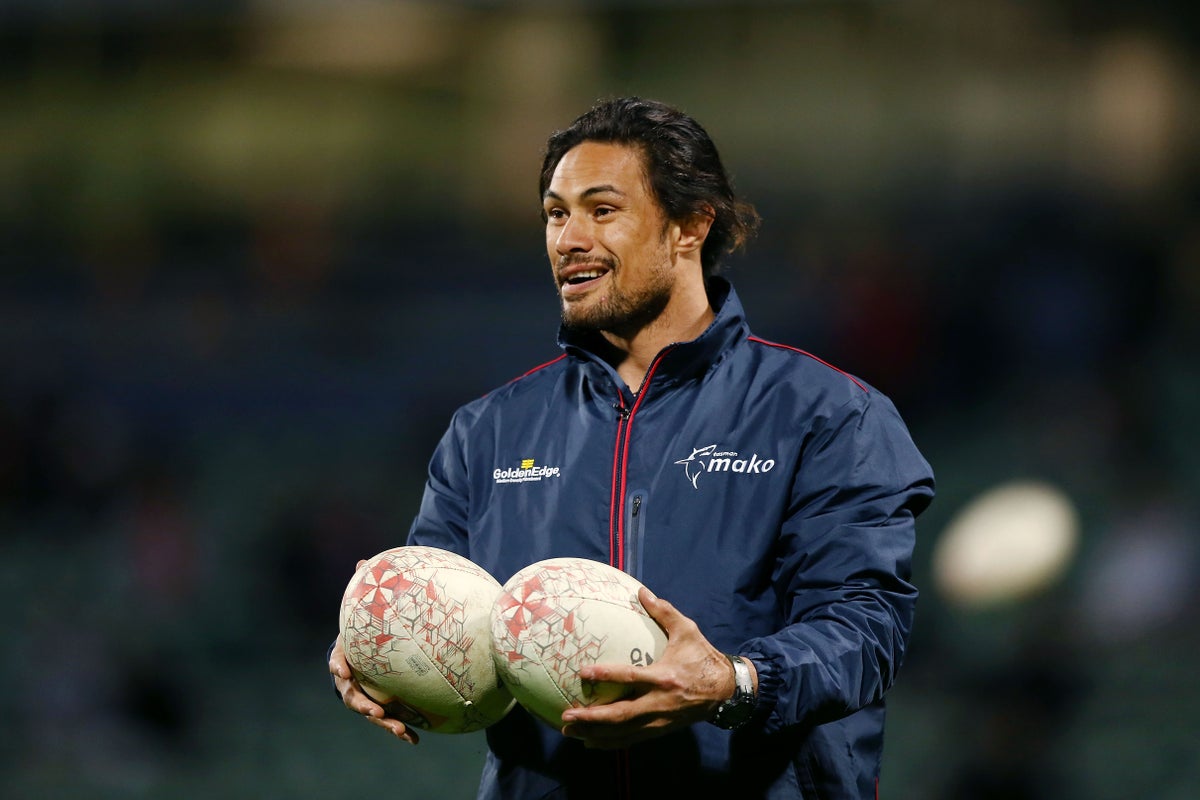
The post-mortem diagnosis of Chronic Traumatic Encephalopathy (CTE) in Shane Christie, a former Super Rugby captain who died at 38, exposes a systemic failure in how professional contact sports quantify risk. While media narratives often focus on the emotional tragedy of individual athletes, the underlying crisis is one of Kinetic Accumulation. The biological decay observed in Christie’s brain was not the result of a single catastrophic failure but a predictable outcome of a high-frequency, sub-concussive workload that the current professional rugby infrastructure is not designed to mitigate.
The Mechanopathology of Tau Protein Aggregation
CTE is defined by the deposition of hyperphosphorylated tau protein in a pattern that distinguishes it from other neurodegenerative diseases. In a healthy brain, tau proteins stabilize microtubules within axons. When the brain undergoes rapid acceleration or deceleration—typical in a rugby tackle or "clearing out" at a ruck—the shear forces stretch these axons.
The pathology follows a specific spatial distribution:
- Perivascular Focal Points: Tau buildup begins deep in the sulci (the grooves of the brain) around small blood vessels.
- Axonal Disruption: The mechanical strain causes the tau to detach and misfold, creating neurofibrillary tangles.
- Metabolic Cascade: These tangles disrupt nutrient transport, eventually leading to cell death and cortical atrophy.
In Christie’s case, the presence of Stage 2 or 3 CTE (on the McKee scale) indicates that the pathology had progressed from isolated focal points to widespread clusters affecting the frontal and temporal lobes. This structural degradation correlates directly with the behavioral shifts reported: cognitive decline, depression, and loss of executive function.
The Sub-Concussive Volume Trap
The current regulatory focus on "concussions"—defined as symptomatic events—is a flawed metric for long-term neurological health. Data indicates that the cumulative volume of sub-concussive impacts is a more accurate predictor of CTE than the number of recorded concussions.
Professional rugby players often participate in 25 to 30 matches per season, but the true risk resides in the Training-to-Match Impact Ratio. While match-day hits are high-intensity, the sheer volume of contact during mid-week training sessions creates a baseline of neuro-inflammation that never fully resolves.
The Kinetic Energy Function in Rugby Union
The energy transferred in a collision can be modeled through the relationship $E_k = \frac{1}{2}mv^2$.
In the modern professional era (post-1995), the variables have shifted dangerously:
- Mass ($m$): The average weight of a professional flanker has increased by approximately 15-20% since the game turned professional.
- Velocity ($v$): Improvements in strength and conditioning allow players to close distances faster, making the $v^2$ component of the equation the primary driver of brain trauma.
When a 105kg player like Christie engages in a tackle, the brain undergoes a "coup-contrecoup" motion. Even without a loss of consciousness, the brain strikes the interior of the skull. If the recovery window is shorter than the inflammatory cycle, the brain enters a state of Chronic Neuro-inflammation, where microglia (the brain's immune cells) remain permanently activated, inadvertently damaging healthy neurons.
Structural Vulnerabilities in the Return to Play Protocol
The World Rugby Head Injury Assessment (HIA) is a diagnostic tool designed for acute management, not long-term pathology prevention. It relies on symptomatic reporting and basic cognitive tests (like the SCAT5), which are susceptible to "baseline gaming"—where players intentionally underperform on pre-season tests to make their post-injury scores appear normal.
The fundamental flaw in this system is the Asymptomatic Pathology Gap. A player may pass all clinical tests and feel "fine" while their brain is still undergoing the tau-seeding process. By focusing on "Return to Play" instead of "Structural Recovery," the sport prioritizes short-term roster availability over the integrity of the athlete's neural architecture.
The Economic and Insurance Bottleneck
The professional rugby model operates on a high-depreciation asset strategy. Players are signed during their peak physical years, utilized at high intensity, and then exited from the system before the long-term "maintenance costs" (neurodegeneration) manifest.
This creates an Externalization of Risk:
- The Club: Reaps the immediate competitive value of the player’s physicality.
- The Player: Absorbs the physical "debt" that will be called due 10-15 years after retirement.
- The Healthcare System: Inherits the cost of managing dementia or early-onset Alzheimer’s-like symptoms.
Insurance providers are increasingly identifying this as an unquantifiable liability. If CTE becomes a "known risk" rather than an "accidental injury," the premiums for professional leagues will become unsustainable, potentially forcing a radical restructuring of the sport's contact rules.
Quantifying the "Safe" Career Duration
There is no "safe" level of repeated head trauma, but there is a clear Dose-Response Relationship. Research suggests that for every year played in professional contact sports, the risk of developing CTE increases by roughly 30%. Christie’s career, spanning over a decade of high-level rugby, placed him in a high-risk decile for tau accumulation.
The variable that most organizations fail to track is the Cumulative G-Force Load. While a single 80G hit is catastrophic, 1,000 hits at 20G may be more damaging over a three-year period due to the lack of "metabolic reset" time for the brain's mitochondria.
Redesigning the Contact Framework
To address the mortality of athletes like Shane Christie, the sport must move beyond the "concussion protocol" and toward a Neural Load Management model.
1. The Contact Ceiling
Governing bodies must mandate a hard limit on "live" contact minutes per week during the training cycle. Implementing instrumented mouthguards to track real-time G-force exposure would allow coaching staff to bench players not based on fatigue, but on "Brain Budget" exhaustion. If a player exceeds a specific cumulative G-threshold in a month, they are medically ineligible for the next fixture, regardless of symptoms.
2. Positional Decoupling
The risk profile of a front-rower or a loose forward is fundamentally different from a winger. The "clearing out" at the ruck—Christie’s primary role—is the highest-risk activity for sub-concussive load. Protocols must be differentiated by position, with shorter seasons or more frequent mandatory "brain-rest" cycles for high-contact roles.
3. Post-Career Neurological Audits
Professional leagues should be required to fund 20-year post-retirement longitudinal studies for every player. This includes regular MRI scans with Diffusion Tensor Imaging (DTI) to detect white matter changes before they manifest as clinical dementia.
The death of Shane Christie serves as a data point in an escalating trend. The transition from amateurism to professionalism increased the kinetic energy of the game, but the biological limits of the human brain remained static. Without a shift toward measuring cumulative kinetic load rather than symptomatic concussions, the professional rugby model remains a high-variance gamble with athlete longevity.
The strategic play for the sport's survival involves an immediate pivot to Decentralized Contact. This means reducing the number of rucks per game and strictly limiting the number of heavy-contact training sessions to under 15 minutes per week. Failure to implement these structural constraints will lead to a collapse in player participation rates as the correlation between professional longevity and neurological insolvency becomes impossible to ignore.