The pre-dawn light in Mumbai has a specific, heavy quality. It filters through the salt air of the Arabian Sea, catching the chrome of thousands of idling taxis and the steam rising from roadside tea stalls. For Rajesh, a delivery driver weaving through the early congestion, the price of a liter of petrol isn't an abstract economic indicator. It is the difference between a full bag of groceries and a calculated sacrifice at the market.
Thousands of miles to the west, a narrow strip of water holds the power to decide Rajesh’s fate.
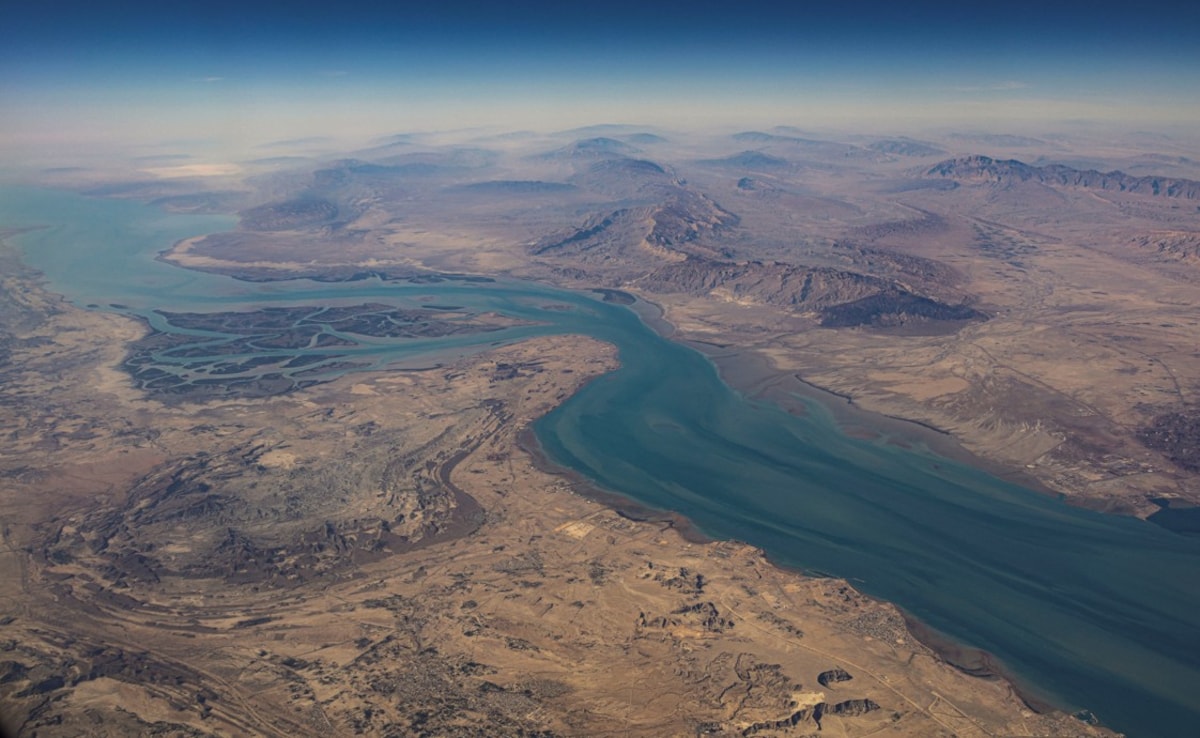
The Strait of Hormuz is a geographical anomaly. At its narrowest point, it is only about 21 miles wide. Yet, through this tiny throat of the world, nearly one-fifth of the planet's total oil consumption passes every single day. It is the world’s most sensitive valve. When the valve stays open, the global economy breathes. When it twitches, the world holds its breath.
Recently, the tension in those waters reached a fever pitch. Reports began to circulate that Iran, which sits on the northern coast of the strait, was considering a total blockade. For a country like India, which imports over 80% of its crude oil, such a move would be catastrophic. It would mean more than just expensive fuel; it would mean a systemic shock to everything from food transport to industrial manufacturing.
Then came a statement that shifted the gravity of the situation.
The Iranian leadership clarified a crucial distinction. The "closing" of the strait was not a blanket ban on all maritime traffic. Instead, it was framed as a targeted strategic lever. Tehran signaled that while the passage might become a no-go zone for the United States, Israel, and certain European interests, the gates would remain wide open for others. Specifically, for India.
The Geography of Anxiety
To understand why this matters, you have to look at the map through the eyes of a strategist. The Strait of Hormuz is not just a shipping lane; it is a geopolitical chessboard where the squares are made of water and the pieces are million-ton tankers.
On one side lies the Iranian coast, jagged and lined with batteries of anti-ship missiles and fast-attack boats. On the other, the Musandam Peninsula of Oman. Between them, two-mile-wide shipping channels serve as the only way out for oil from Saudi Arabia, the UAE, Kuwait, and Iraq.
If the strait were truly closed to everyone, the global price of Brent crude wouldn't just rise; it would leap. Analysts have long feared a "price spike to 200 dollars," a figure that sounds like a typo until you realize how little slack exists in the global energy supply chain. For a developing economy, that isn't a recession. It is a blackout.
But the recent Iranian stance introduces a new variable: the "Selective Chokepoint."
By suggesting that certain nations can pass while others are barred, Iran is attempting to decouple the global energy market. It is an invitation to countries like India to maintain a "business as usual" relationship while the West grapples with a supply vacuum. It is a tempting offer, wrapped in a terrifying premise.
The Invisible Stakes
It is important to understand the hidden costs of such a reality. Imagine the bridge of a Very Large Crude Carrier (VLCC). The captain, a seasoned professional with decades of experience, is navigating the narrow corridors of the strait. He knows that his cargo of two million barrels of oil is a prize in a game of high-stakes leverage.
For the captain of a tanker bound for Mumbai, the Iranian assurance is a lifeline. But for the global shipping industry, the risk is never that simple. Insurance is the silent hand that guides every vessel on the ocean. Even if the Iranian navy waves a tanker through, the cost of insuring that vessel in a "limited" conflict zone would be exorbitant.
The premium on a single voyage can skyrocket from 20,000 to 200,000 dollars in a single afternoon. That cost doesn't just vanish. It ripples through the supply chain. It ends up as a few more rupees on a gallon of gas at a Mumbai petrol station. It becomes a surcharge on the price of bread in a Delhi market.
The Indian government has long walked a tightrope. It is a nation that needs energy more than almost any other on the planet. Its growth is fueled by fossil fuels, even as it pivots toward renewables. To keep the lights on and the buses running, it must maintain a delicate dance between its historical ties with Iran and its modern strategic partnership with the United States.
When Iran says the strait is "open to India," it isn't just an economic statement. It is a diplomatic maneuver. It is an attempt to create a buffer zone of friendly, oil-hungry nations that will not support international sanctions or military action.
The Architecture of Influence
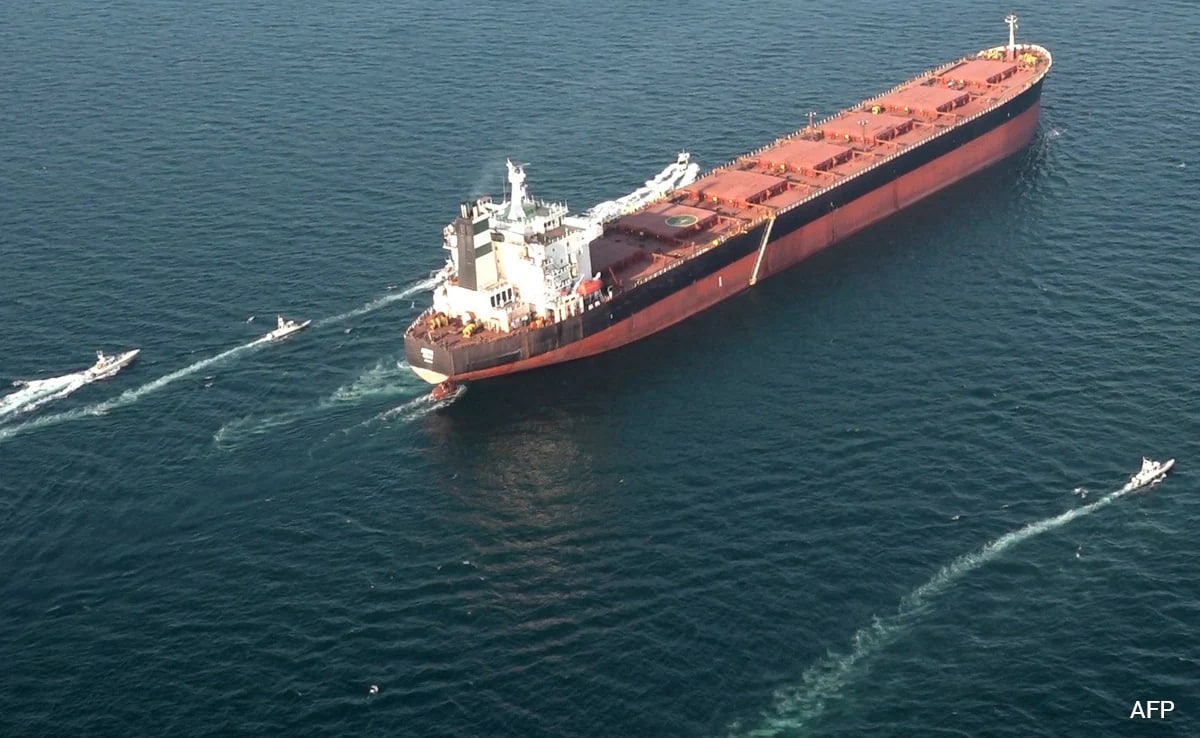
Consider the sheer scale of the operation. Every 15 to 20 minutes, a massive vessel enters or leaves the Persian Gulf. These are not boats; they are floating steel islands, some as long as the Empire State Building is tall. They cannot stop quickly. They cannot turn easily. They are vulnerable.
The Iranian strategy is based on this vulnerability. By claiming the right to filter who passes through, they are asserting a kind of sovereignty that the West has spent decades trying to deny. To the United States and Europe, the Strait of Hormuz is an "international waterway," a commons that belongs to no one and everyone.
To Iran, it is their front yard.
This clash of definitions is where the danger lies. If a U.S. destroyer tries to escort a "banned" tanker through the strait, and an Iranian fast-boat intercepts it, the results are unpredictable and immediate. The world’s oil supply hangs by a thread of restraint that is thinner than it has been in years.
For India, the choice is not just about oil. It is about sovereignty. If India accepts the "special status" offered by Tehran, it risks the ire of Washington. If it joins the Western chorus of condemnation, it risks its energy security. It is a classic trap of the 21st century: a choice between the light of the morning and the heat of the fire.
The Fragility of the Status Quo
There is a certain irony in our modern world. We have satellites that can read a license plate from space and computers that can simulate the entire climate. Yet, we are still fundamentally dependent on a single, narrow strip of water in a volatile region. Our high-tech civilization is built on a foundation of 19th-century geography.
Every time a politician in Tehran or a general in Washington makes a statement about the strait, the numbers on a trading screen in London or New York begin to dance. The volatility is a tax on everyone. It is a tax on the truck driver in Texas and the factory worker in China.
The Iranian offer to keep the strait open for India is a recognition of this reality. It is a way of saying: "We know you need us as much as we need you."
But the reality is that a "partially closed" strait is like being "partially pregnant." It is an unstable state. If the waters become a battleground for some, they become a risk for all. The sea does not distinguish between "friendly" and "enemy" oil when a missile is in the air.
The Long Road to Certainty
Back in Mumbai, Rajesh doesn't know the specifics of the Iranian naval doctrine. He doesn't follow the intricacies of maritime law or the debates over "territorial sea" versus "innocent passage." But he knows when his fuel tank is empty. He knows when the price of onions goes up because the transport trucks are paying more for diesel.
The "Oil Hope" for India that Iran is offering is a complicated gift. It is a promise of stability in an unstable world, but it comes with strings that are tied to a much larger and more dangerous game. It is a reminder that in our interconnected world, no country is an island, and no waterway is just a path.
The true cost of the Strait of Hormuz is not measured in dollars per barrel. It is measured in the anxiety of a billion people who depend on its flow. It is the invisible stake in every political speech and every naval exercise.
As the sun sets over the Persian Gulf, the silhouettes of the great tankers are visible against the orange sky. They move slowly, laden with the lifeblood of modern civilization. They pass through the narrowest part of the strait, where the mountains of Oman look across at the coast of Iran.
In that silence, the world waits. It waits for the next statement, the next move, and the next flicker of the valve. Because in the end, whether the strait is open or closed, the tension itself is a burden that the whole world must carry. The water is narrow, but the shadow it casts is long enough to reach every kitchen table on the planet.
The oil continues to flow, for now. But the gates of Hormuz are no longer just a passage; they have become a prism, refracting the light of global power into a spectrum of risk that we are all still learning to navigate. Rajesh starts his engine, the low hum of the motor a small, singular vibration in a world held together by the thin, dark line of the sea.