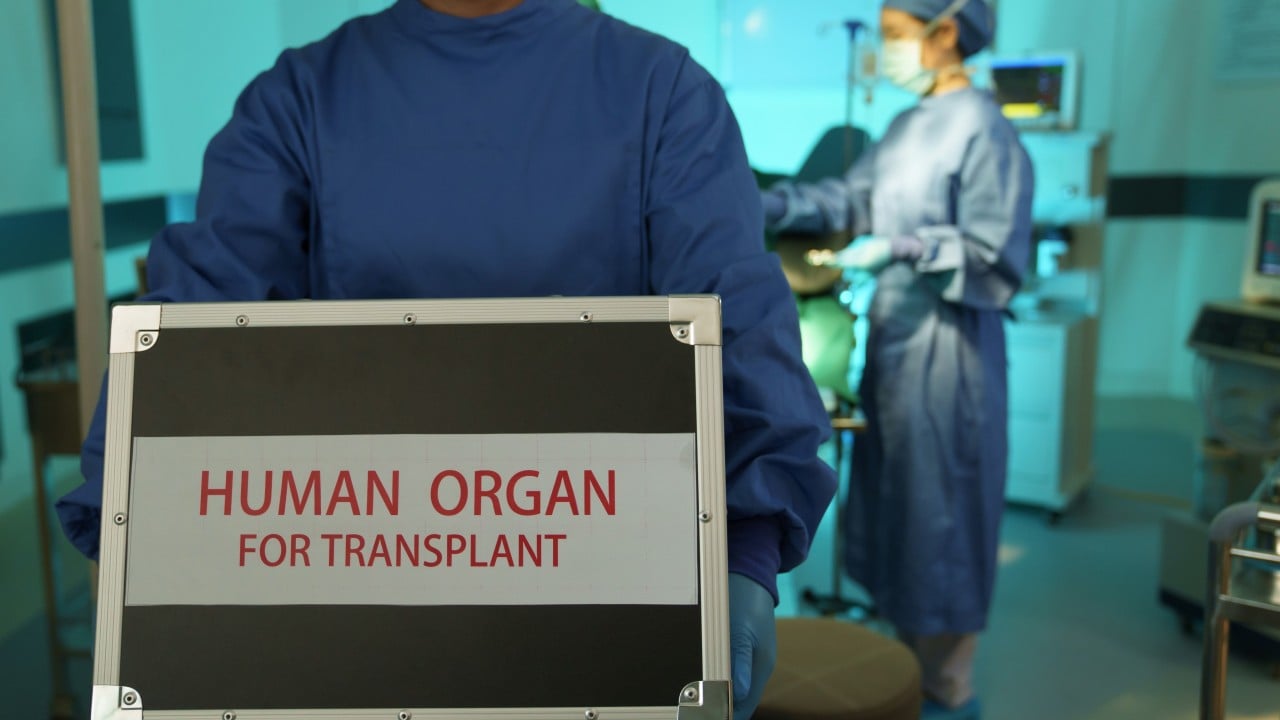
The headlines are screaming about a "miracle" in Xi'an. A team at Air Force Medical University successfully grafted a genetically modified pig liver into a brain-dead human recipient. The press is swooning. They’re calling it the dawn of a global organ bank. They’re wrong.
What the mainstream media paints as a "breakthrough" is actually a massive misdirection of capital and scientific talent. We are chasing a 19th-century solution—physical organ replacement—using 21st-century tools. It’s like trying to build a better steam engine to solve the climate crisis. It doesn't matter how many genes you knock out of a pig; you are still trying to shove a foreign biological machine into a body designed to kill it.
The "lazy consensus" suggests that the only thing standing between us and an infinite supply of organs is a few more CRISPR snips. That is a fantasy.
The Rejection Myth
The industry likes to talk about "hyperacute rejection" as if it’s the final boss of xenotransplantation. They tell you that if we remove the alpha-gal sugars from the pig cells, the human body won't notice the difference.
That is biological malpractice.
The human immune system is not a simple lock-and-key mechanism. It is an adaptive, aggressive, and paranoid surveillance network. Even if you manage to bypass the immediate antibody attack, you are left with chronic rejection and "ischaemia-reperfusion injury."
When you take a pig liver and hook it up to human blood, you aren't just dealing with a "part" that doesn't fit. You are introducing a different metabolic rate, different hormonal signals, and a different coagulation temperature. Pig blood stays at about 39°C. Human blood sits at 37°C. That two-degree gap is a chasm. The enzymes don't work the same. The proteins don't fold the same. We aren't just swapping batteries; we are trying to run a Tesla on a diesel generator.
The Infection Shadow
Everyone ignores the PERVs. Porcine Endogenous Retroviruses are baked into the pig’s DNA. The advocates say they can "edit them out." I’ve spent enough time in labs to know that "editing out" every single viral sequence in a living tissue mass is a game of whack-a-mole where the hammer eventually breaks.
By pushing for a global xenotransplantation system, we are effectively building a bridge for zoonotic diseases to cross into the human population at scale. We spent the last few years terrified of respiratory viruses; imagine a retrovirus that integrates into your genome because you wanted a "bridge" liver.
The Logistics of a Pipe Dream
Let's talk about the money. The "breakthrough" in China relies on hyper-sterile, pathogen-free (DPF) facilities. These aren't farms. They are high-security bio-vaults.
To satisfy the global organ deficit using pigs, you would need:
- Millions of square feet of DPF housing.
- Constant genetic sequencing of every litter.
- A cold-chain logistics network that makes the vaccine rollout look like a lemonade stand.
The cost per organ would be astronomical. This isn't a solution for the "global south" or the "underserved." It’s a luxury boutique product for the top 0.1% that will never scale. If you think the current organ transplant waitlist is unfair, wait until you see the subscription model for "Gen 3 Porcine Hearts."
The Real Pivot: Bio-Printing and In-Situ Regeneration
If we actually want to solve the organ shortage, we need to stop looking at the farm and start looking at the printer.
The future isn't a pig liver. It’s a scaffold made of decellularized human tissue or synthetic hydrogels, seeded with the patient's own induced pluripotent stem cells (iPSCs).
Why are we wasting billions on "humanizing" a pig when we could be "industrializing" human cell growth? When you use a patient's own cells, the rejection risk is zero. The need for life-long, kidney-destroying immunosuppressants vanishes.
The Chinese experiment is a feat of surgery, but a failure of vision. It’s a spectacular way to keep the old infrastructure of "harvesting and hauling" alive when we should be "growing and installing."
The Bioethical Smoke Screen
The "global organ transplant system" mentioned in the headlines is a euphemism. What they are actually proposing is a world where we maintain vast colonies of sentient animals as spare parts warehouses.
Even if you have zero empathy for the animal, consider the human cost. Xenotransplantation recipients become permanent bio-hazards. In many proposed clinical trials, these patients would be barred from ever having children or traveling freely due to the risk of PERV transmission. You aren't giving someone their life back; you are giving them a life sentence of surveillance.
Stop Celebrating the Wrong Wins
I’ve seen this pattern before. A flashy animal-to-human experiment gets a press release, stock prices in biotech firms jump, and the actual hard work of regenerative medicine gets sidelined.
We are obsessed with the "Frankenstein" approach because it feels like progress. It’s visceral. It’s cinematic. But it is fundamentally flawed. We are trying to force a biological mismatch to work through sheer brute force and genetic duct tape.
Instead of cheering for a pig liver that lasted a few days in a brain-dead body, we should be asking why we aren't pouring that same funding into lab-grown organoids. We should be perfecting the "organ-on-a-chip" technology to bypass animal testing entirely.
The "breakthrough" in Xi'an isn't the beginning of a new era. It’s the final, desperate gasp of a dying methodology.
The solution to the organ crisis won't be found in a pen. It will be found in a petri dish. If we don't stop chasing the pig, we’re going to spend the next fifty years wondering why the waitlist never got any shorter.
Stop looking for a better donor. Start looking for a better factory.
Move your capital into autologous cell therapy. Fund the bioprinting startups that are actually trying to eliminate the concept of "rejection" rather than just managing it.
The pig is a distraction. The lab is the cure.