The coffee in the Situation Room is notoriously bad, but nobody drinks it for the flavor. They drink it to stay awake while the world tilts on its axis. Across the ocean, in the sun-bleached outskirts of Beirut, a mother named Layla isn’t thinking about geopolitics or the price of Brent crude. She is looking at a piece of paper—an evacuation order dropped from the sky—and wondering if her grandmother’s sewing machine is worth the weight it will add to her flight.
This is the dissonance of modern conflict. On one side, the high-stakes rhetoric of world leaders; on the other, the frantic packing of suitcases.
The latest reports from the frontlines of the Iran-US standoff don’t just describe a diplomatic stalemate. They describe a hardening of hearts. Donald Trump has made it clear: he is not ready for a ceasefire. Not yet. Not while the leverage is still being applied, and certainly not while the regional architecture is being dismantled brick by agonizing brick.
The Gravity of No
When a leader says they are "not ready" for peace, it sounds like a delay. In reality, it is a choice. For the current American administration, a ceasefire isn't a humanitarian goal; it’s a commodity. It has a price. Until Iran meets that price—likely involving total nuclear capitulation and a dismantling of its regional proxies—the pressure remains.
But pressure isn't an abstract noun. It is a physical force.
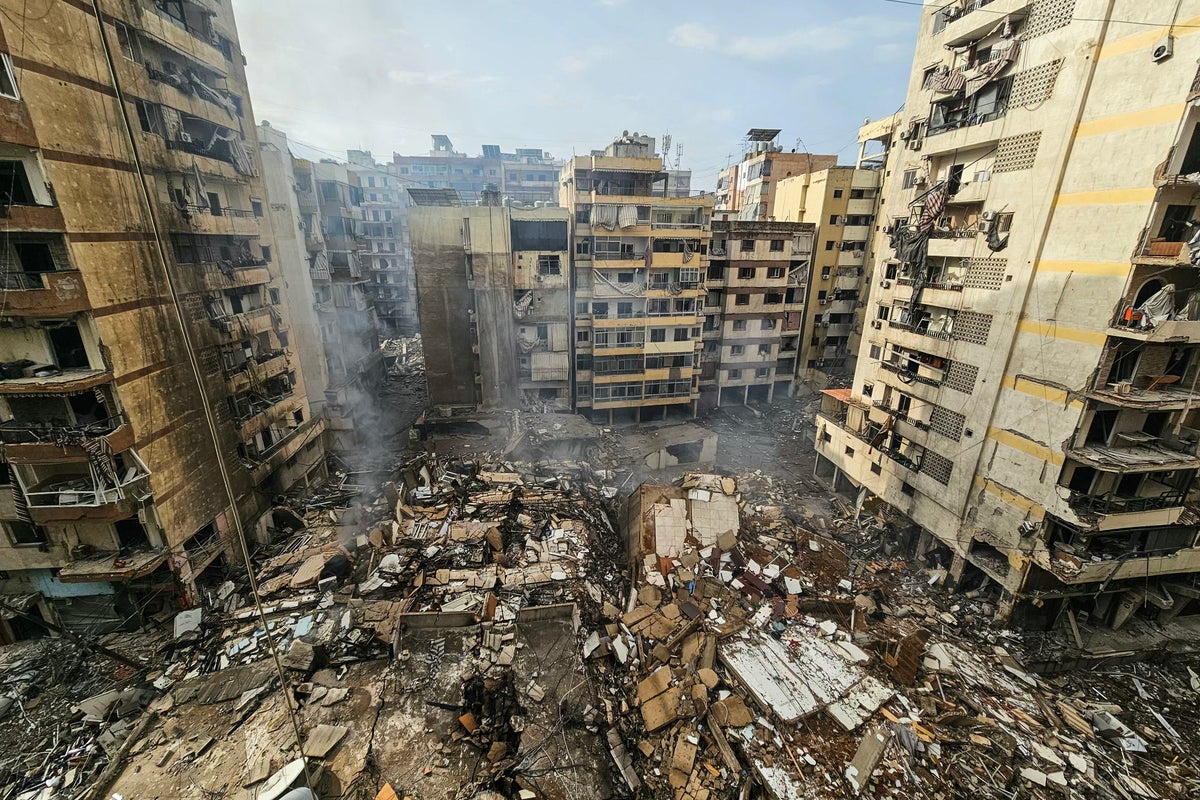
In Lebanon, that force manifests as the roar of engines and the dust of collapsing concrete. Israel’s evacuation orders have expanded, pushing deeper into territories once considered safe. These aren't suggestions. They are the final warnings before the landscape is rewritten by high-explosive ordnance.
Consider the mechanics of an evacuation. It starts with a buzz on a smartphone or the fluttering of a flyer. Then comes the silence. A neighborhood that held the laughter of children and the smell of roasting chickpeas suddenly turns into a ghost town. The "invisible stakes" here aren't just the borders on a map; they are the social fabrics being shredded in real-time. Every family that leaves a home in Southern Lebanon carries a seed of resentment that will grow for decades.
The Architecture of Brinkmanship
Tehran watches this unfold with a calculated, albeit desperate, stoicism. The Iranian leadership knows that Trump’s refusal to engage in a ceasefire is a tactic designed to provoke a mistake. If Iran lashes out, the justification for a full-scale regional war becomes "defensive." If they remain silent, they watch their influence in Lebanon and Syria evaporate under the weight of Israeli strikes.
It is a trap. A sophisticated, brutal, and highly effective trap.
The logic of the Trump administration follows a specific, ruthless pattern. It is the "Maximum Pressure" campaign reborn, but this time with a shorter fuse. By refusing to signal an end to hostilities, the U.S. is essentially telling the Iranian regime that the only way out is through a door that leads to their own obsolescence.
Money. Power. Survival.
These are the three pillars of the current crisis. For the average citizen in Mashhad or Isfahan, the "war" is already happening in the grocery store. Inflation is the silent artillery. When the U.S. signals that a ceasefire is off the table, the rial devalues further. The price of bread climbs. The "human element" isn't just a soldier in a trench; it’s a father who can no longer afford his daughter’s asthma medication because the economy is bucking under the weight of global isolation.
The Lebanese Pivot
While the eyes of the world are often fixed on the direct exchange between Washington and Tehran, the most immediate suffering is concentrated in the Levant. Lebanon is the anvil upon which this geopolitical hammer is falling.
The evacuation orders issued by the Israeli military are technically designed to "minimize civilian casualties." That is the clinical, military-grade explanation. The human reality is a massive internal displacement that Lebanon—a country already reeling from economic collapse and political paralysis—cannot sustain.
Imagine a country the size of Connecticut trying to absorb hundreds of thousands of traumatized people overnight. Schools become shelters. Parks become campsites. The "ceasefire" that Trump isn't ready for is the only thing that could stop this hemorrhaging. But in the cold calculus of the White House, the suffering of the Lebanese population is seen as a secondary effect of a primary objective: the neutralization of Hezbollah.
Hezbollah, Iran’s most potent "crown jewel" of deterrence, is being systematically degraded. The U.S. gamble is that if you break the proxy, you break the patron.
The Ghost of 2015
To understand why we are here, we have to look back at the scar tissue of previous deals. The U.S. establishment—or at least the wing currently in power—views the previous nuclear agreements as a historic failure. They see a world where Iran was allowed to grow its influence while the West looked the other way.
They aren't going to make that mistake again.
This explains the "not ready" stance. It’s an admission that they don't want a return to the status quo. They want a new reality. They want an Iran that is contained, a Lebanon that is neutralized, and a Middle East where the old rules of engagement are buried under the rubble of the Bekaa Valley.
But what happens when you push a cornered adversary too far?
There is a psychological threshold in every conflict where the fear of loss is replaced by the nihilism of having nothing left to lose. We are approaching that line. Iran’s "strategic patience" has limits. If they believe that Trump will never offer a fair deal—no matter what concessions are made—then their only logical move is to escalate to a point where the cost of war becomes unbearable for the West as well.
The Human Cost of Delay
Every day that a ceasefire is delayed, the "human-centric narrative" grows darker.
It’s the surgeon in Beirut operating by flashlight because the power grid has failed.
It’s the merchant in Tel Aviv watching the sky for the streak of an interceptor missile.
It’s the American sailor in the Persian Gulf, thousands of miles from home, wondering if a drone will hit his ship before his shift ends.
We talk about "leverage" and "geopolitical maneuvers" as if they are pieces on a board. They aren't. They are people. They are lives. They are the collective trauma of a generation that has known nothing but the threat of an "imminent" war that never quite starts but never truly ends.
The current trajectory is one of escalation by omission. By refusing to speak the language of de-escalation, the U.S. is allowing the momentum of the conflict to dictate the outcome. It is like a train moving toward a broken bridge; the engineer isn't accelerating, but he isn't hitting the brakes either. He’s just waiting to see if the bridge heals itself.
The bridge isn't healing.
The evacuation orders in Lebanon are spreading. The rhetoric from Tehran is sharpening. The "not ready" stance from Washington is hardening into a permanent position.
Somewhere in a dusty apartment in Tyre, a man is locking his front door for what might be the last time. He doesn't have a seat at the table in the Situation Room. He doesn't have a direct line to the White House. He just has a key in his pocket and a long road ahead of him.
The silence that follows a rejected ceasefire isn't peaceful. It is the heavy, suffocating silence of a deep breath taken right before a plunge into the unknown. We are all holding that breath now, waiting to see who blinks, who breaks, and who is left to pick up the pieces when the dust finally settles on a landscape that used to be home.
The chessboard is set. The pieces are moving. But the players seem to have forgotten that when the board is flipped, everyone loses.
The dust is rising. The fire is coming. And the world is still waiting for someone to be "ready" for the one thing that actually matters: an end to the dying.
The key turns in the lock. The suitcase hits the pavement. The clock keeps ticking.


