The liver is a silent, heavy organ, usually the size of a football, tucked under the right ribs. It is the body’s chemist, a tireless filter. Most people don’t think about their liver until it fails, and most doctors don't look at a hundred-year-old liver and see a lifeline. They see history. They see a century of wear and tear, a map of every meal, every glass of water, and every illness a person has ever weathered.
Harold Knight’s liver was different.
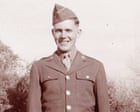
When Harold passed away last year at the age of 100, he wasn’t just a centenarian who had survived a global pandemic, the Great Depression, and the brutal theater of the Second World War. He became a record-breaker in a field defined by the quiet exchange of life. He became the oldest known organ donor in United States history.
We have a collective habit of writing off the elderly. We see a triple-digit birthday and assume the story is over, that the biological machinery is spent, and that the only thing left is a peaceful exit. We operate under a biological prejudice that suggests after 70 or 80, we are no longer "useful" in the clinical sense. Harold Knight shattered that. His life ended, but his chemistry kept going.
Consider the logistics of a miracle.
For an organ to be viable for transplant, it has to be more than just functional; it has to be resilient. It has to withstand the trauma of retrieval, the cold uncertainty of transport, and the violent shock of being sewn into a stranger’s circulatory system. Usually, donors are young. They are the victims of sudden tragedies—motorcycle accidents, strokes, or falls—whose youth provides a robust insurance policy for the recipient.
Harold was the opposite of a tragedy. He was a triumph of longevity.
The Soldier Who Kept Guard
Harold served in the Army during World War II, a time when the world was tearing itself apart. He saw the fragility of life firsthand on the battlefields of Europe. Perhaps that is where the seed was planted—the understanding that a body is a vessel, and when the vessel can no longer carry the soul, its parts might still carry someone else.
He lived his life with a quiet discipline that translated into remarkable health. He didn't smoke. He stayed active. He maintained a clarity of purpose that lasted until his final days in West Virginia. When he finally succumbed to the natural progression of age, his family didn't just see a loss. They saw an opportunity he had already cleared for them. He had checked the box. He was a donor.
But even with that checked box, the medical community had to make a choice.
There is a rigorous screening process for any donor. Surgeons look at "expanded criteria" donors—people over 60 or those with certain health conditions—but a 100-year-old was uncharted territory. The team at the Center for Organ Recovery & Education (CORE) had to look past the birth certificate. They looked at the numbers. They looked at the bile production, the enzyme levels, and the sheer structural integrity of the tissue.
What they found was a liver that didn't look a day over sixty.
This isn't just a feel-good story about a generous veteran. It is a fundamental challenge to how we view aging and the "waste" in our medical system. Currently, more than 100,000 people in the U.S. are on the national transplant waiting list. Every day, 17 of them die. They die because the math doesn't work; there are more failing bodies than there are available parts.
We often ignore the elderly as a source of these parts because we assume "old" means "broken." Harold proved that "old" can sometimes mean "durable."
The Invisible Recipient
Imagine a man in his 70s. Let’s call him Arthur.
Arthur has spent the last three years watching his skin turn the color of a bruised lemon. His abdomen is swollen with fluid. He is exhausted by the simple act of breathing. He has been told his only hope is a transplant, but his age makes him a lower priority for the "perfect" organs. He is waiting for a miracle, but he’s also waiting for a phone call that usually never comes.
Then, the phone rings.
The surgeon tells Arthur they have a liver. He doesn't tell Arthur it belonged to a man who saw the liberation of Europe. He doesn't mention that the liver is 25 years older than Arthur is. He just says it’s a match.
The surgery is a delicate dance of plumbing. The old liver is removed—a scarred, grey lump of useless tissue—and Harold’s liver is nestled into the void. The surgeons stitch the hepatic artery, the portal vein, and the bile duct. They release the clamps.
Blood rushes in.
In a matter of seconds, the organ turns a deep, healthy purple. It begins to produce bile. It begins to filter toxins. A century-old organ starts working for a new master. It is a literal passing of the torch, a relay race where the baton is made of flesh and blood.
The recipient of Harold’s liver was a 74-year-old man. Because of a 100-year-old soldier, that man got to go home. He got to see another Thanksgiving. He got to breathe without the crushing weight of hepatic failure pressing against his lungs.
The Science of the Second Chance
We are entering an era where chronological age is becoming less relevant than biological age. This is the "hidden stake" in Harold's story. If we can successfully transplant organs from centenarians, the pool of available donors expands exponentially.
Recent studies have begun to track these "ultra-aged" donors. While the heart and lungs are notoriously finicky and age quickly, the liver is a regenerative powerhouse. It is the only internal organ capable of natural regeneration of lost tissue; as little as 25% of a liver can grow back into a whole liver. This resilience is what allowed Harold to bridge the gap between 1923 and 2023, and then into the future of another man's life.
The medical community is now forced to ask: How many other "Harolds" have we missed? How many viable kidneys or livers have been buried or cremated because we were too polite or too biased to ask a grieving family if their 90-year-old patriarch wanted to be a hero?
Trust is the currency of organ donation. We have to trust that the doctors will fight for us until the very end, and we have to trust that our final gift will be treated with dignity. Harold’s family trusted the process. They knew that his legacy wasn't just in the stories he told about the war, but in the physical reality of his health.
It is a strange, beautiful thought. Somewhere right now, a man is walking around with a piece of a World War II soldier inside him. That liver has seen the invention of the television, the moon landing, the rise of the internet, and the fall of the Berlin Wall. It has survived through decades of change, and now, it is quietly performing its chemical duties in a new body, unaware that it has become a piece of medical history.
Death is usually a period. A hard stop. For most, it is the end of the narrative. But for Harold Knight, death was a semicolon.
He didn't just leave a memory; he left a working part of himself to keep the world turning for someone else. He proved that even at the very end of a very long road, there is still something left to give. He reminded us that the human body is not just a machine that wears out, but a collection of potential miracles waiting for the right moment to be shared.
The man who lived for a hundred years is gone, but his life—quite literally—goes on.
He is still on guard.