The Canada Border Services Agency (CBSA) is currently patting itself on the back for identifying "industry pressure" as the hurdle to banning veterinary tranquillizers. They’ve framed the narrative as a classic David vs. Goliath battle: brave regulators fighting against greedy pharmaceutical lobbyists to save lives from the "zombie drug" xylazine.
It’s a convenient, tidy, and dangerous lie.
The obsession with choking off the supply of xylazine—a non-opioid sedative used in cattle and horses—is the latest chapter in the failed "Iron Law of Prohibition." When you squeeze the supply of a known substance, the market doesn't disappear. It mutates. By the time the CBSA successfully bans xylazine, the illicit labs in Guangdong and Sinaloa will have already pivoted to something five times more corrosive and ten times harder to detect.
We are watching a slow-motion car crash of public policy where the "solution" is guaranteed to increase the body count.
The Industry Pressure Myth
The CBSA’s internal reports suggest that the "legitimate" use of xylazine in the veterinary world is the only thing standing between us and a clean sweep of the drug from our streets. This assumes that the xylazine currently rotting the limbs of users in Vancouver or Toronto is being diverted from local vet clinics.
It isn't.
I have spent a decade analyzing supply chain logistics in the grey market. The vast majority of xylazine found in the fentanyl supply is imported as bulk technical-grade powder. It isn't coming from a stolen vial at a horse ranch in Alberta. It’s coming through the same shipping containers that carry your dishwasher parts and fast-fashion hauls.
Even if the government enacted a total ban tomorrow, the "industry pressure" they complain about would be replaced by a massive, unregulated vacuum. Legitimate veterinarians would lose a vital tool for animal surgery, and the illicit market would simply switch to medetomidine or dexmedetomidine—analogues that are already showing up in toxicology reports and are significantly more potent.
The Iron Law of Prohibition is Undefeated
The Iron Law of Prohibition, coined by Richard Cowan in 1986, states that the more intense the law enforcement, the more potent the drugs will become.
- Step 1: Ban opium? You get heroin.
- Step 2: Ban heroin? You get fentanyl.
- Step 3: Ban fentanyl precursors? You get nitazenes.
- Step 4: Ban xylazine? You get a chemical arms race that the CBSA is mathematically incapable of winning.
By focusing on "industry pressure," the CBSA is distracting the public from their own failure to secure the border. They want us to believe that if they just had more legislative power to crush the veterinary supply chain, the fentanyl crisis would soften.
It’s the opposite. Xylazine was introduced into the supply chain precisely because fentanyl is too "short-acting." Dealers added the sedative to "legs"—to make the high last longer so users wouldn't have to inject as often. When you remove the sedative, users inject more frequently, increasing the risk of overdose from the primary opioid.
The Necrosis Narrative and the Reality of Harm
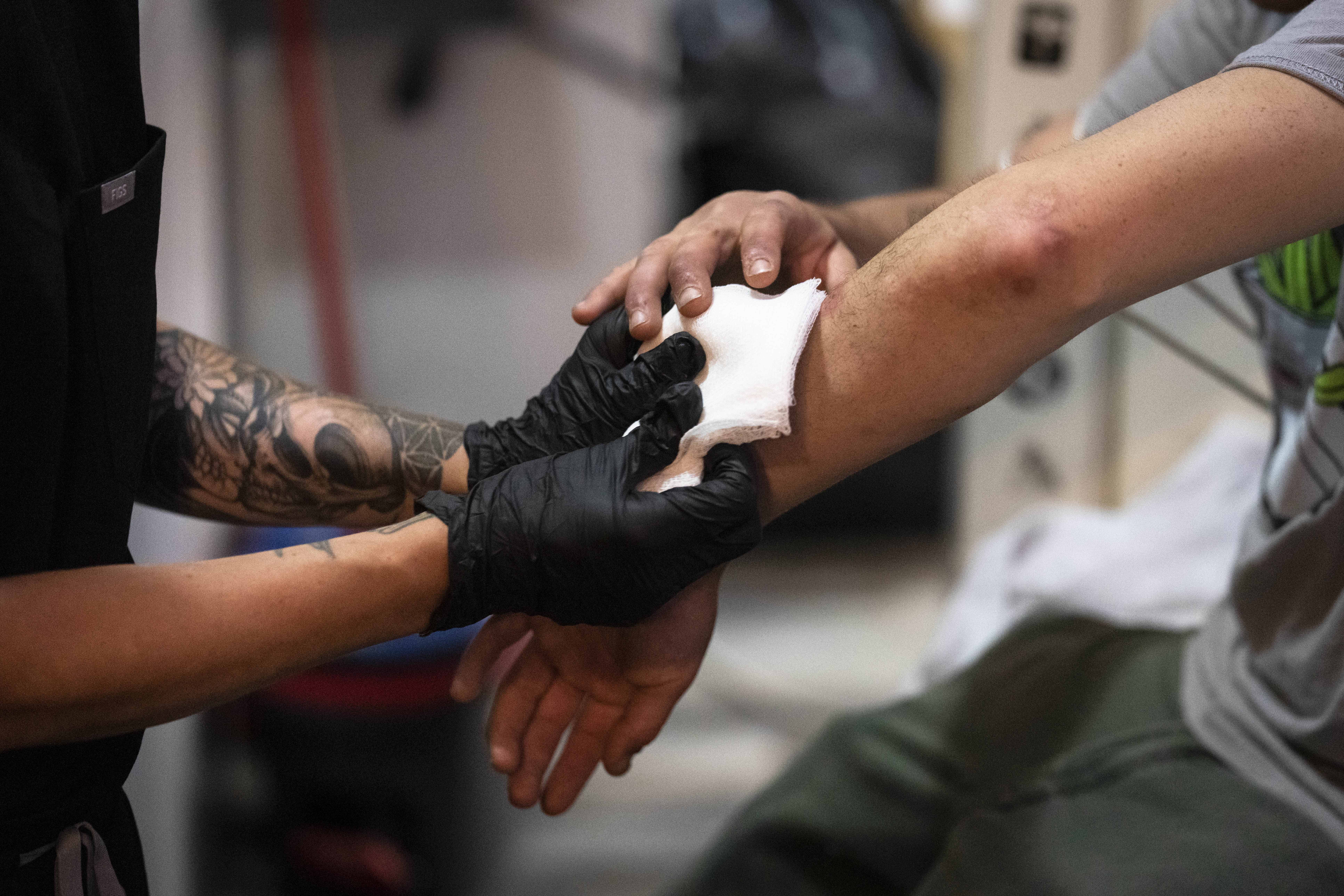
The media loves the "zombie drug" headline because it’s visceral. Xylazine causes severe skin ulcers and necrosis. It’s horrific.
However, the CBSA’s proposed "crackdown" ignores the biological reality of withdrawal. Xylazine is not an opioid; it’s an alpha-2 adrenergic agonist. This means standard overdose reversal agents like naloxone (Narcan) do nothing for the sedative component.
If the CBSA actually cared about the "industry," they would be pressuring the medical industry to legalize and distribute pharmaceutical-grade alternatives. Instead, they are trying to use the hammer of customs enforcement to fix a complex pharmacological shift.
I’ve seen this play out in the tech sector with encrypted hardware. Governments try to ban a specific chip or protocol, and within six months, the underground has developed a decentralized, un-trackable alternative that makes the original problem look like child's play. The chemical world is no different.
Why "Scheduling" is a Death Sentence
When a substance is "scheduled" or banned, it doesn't leave the street; it leaves the lab.
In a regulated environment, we know exactly what the $LD_{50}$ (the dose required to kill half a tested population) of a substance is.
$$LD_{50} \text{ of Xylazine (Rat, IV)} \approx 25 \text{ mg/kg}$$
In the illicit market, there is no $LD_{50}$ because there is no consistency. By forcing xylazine further underground, the CBSA is ensuring that the concentration in any given "hit" of fentanyl is a total mystery.
We are currently seeing the rise of "Nitazenes"—synthetic opioids that are potentially 40 times stronger than fentanyl. Why are they here? Because regulators got "better" at tracking fentanyl precursors. The smugglers didn't quit; they just upgraded to a more lethal, more compact product that is easier to hide in a standard envelope.
The Wrong Question
People ask: "How can we stop the flow of xylazine into our communities?"
This is a fundamentally flawed question. It assumes that the drug is the problem, rather than the symptom of a supply chain that has been squeezed until it became toxic.
The real question is: "Why is the illicit market so desperate for a sedative additive that they are willing to use a horse tranquillizer?"
The answer is that the current fentanyl supply is garbage. It is volatile, short-acting, and lethal. The market is attempting to stabilize a broken product. If the CBSA "succeeds" in removing xylazine, the market will stabilize fentanyl with something even more obscure.
The Actionable Truth
If you want to reduce the harm of "tranq-dope," you don't do it by empowering customs agents to harass veterinary supply companies. You do it by:
- Mass-distributing Xylazine test strips: Not to stop use, but to allow for informed dosing.
- Implementing "Drug Checking" at scale: Real-time mass spectrometry at every major hub.
- Decoupling the sedative from the opioid: Providing a regulated, safe supply of long-acting opioids that don't require "legs" from a veterinary sedative.
The CBSA’s "industry pressure" excuse is a smokescreen for a failed strategy. They are fighting a 20th-century war against 21st-century chemistry. Every shipment they seize is a signal to the cartels to move to a smaller, more potent molecule.
Stop cheering for the "crackdown." The more "successful" the CBSA is at the border, the more funerals we will attend.
Prohibition doesn't end the trade; it just raises the price and the potency. The "industry pressure" they are complaining about is actually the last thread of sanity in a supply chain that is about to go completely dark.
If you take the horse tranquillizer away from the smugglers without addressing why they need it, they will give you something that makes xylazine look like baby aspirin.
Be careful what you wish for.