Geography was once Canada’s greatest defense. For nearly a century, the vast, frozen expanse of the High North acted as a natural moat, while the neighbor to the south provided a comfortable, if sometimes overbearing, security umbrella. That era ended this week in a drafty airplane hangar in Yellowknife.
Prime Minister Mark Carney’s announcement of a $35 billion Arctic defense surge is not just a budgetary adjustment. It is a desperate pivot. For the first time since the Cold War, Ottawa is operating under the assumption that the United States is no longer a guaranteed protector, but a potential territorial claimant.
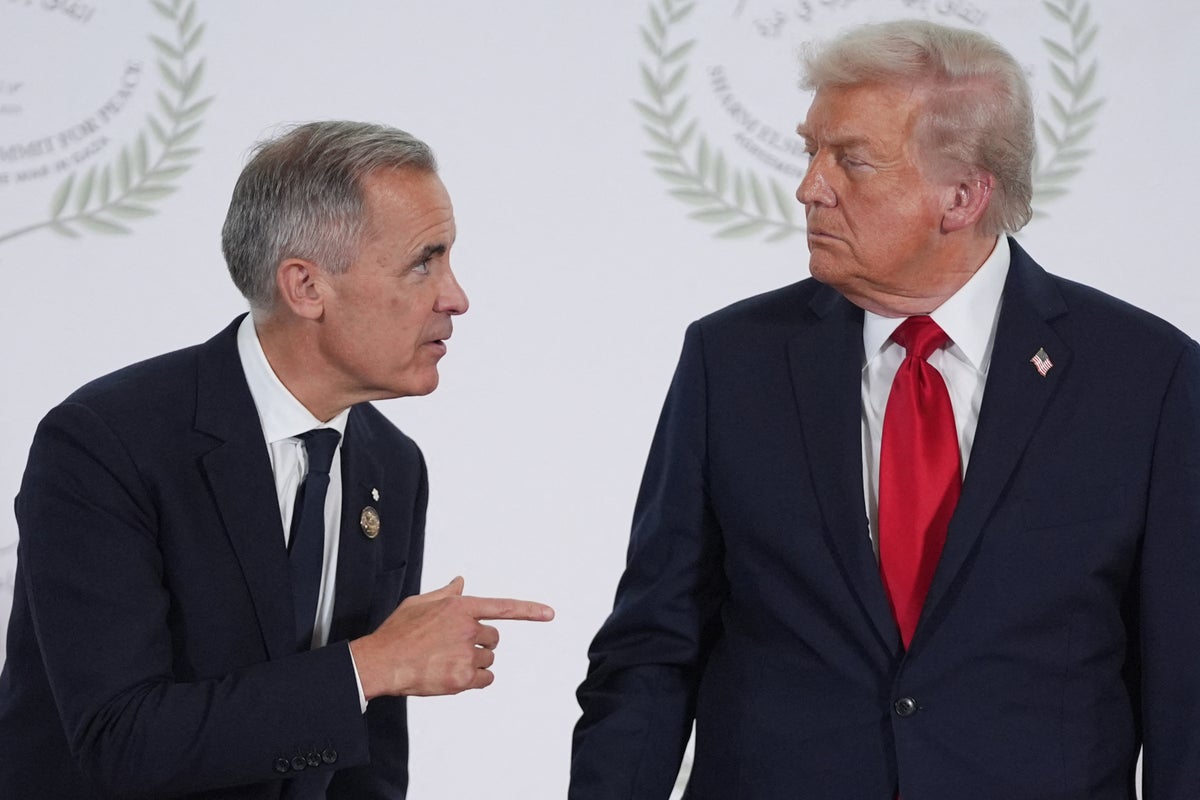
The catalyst is a series of escalating provocations from the Trump administration. What started as "trolling" about Greenland has metastasized into a formal foreign policy stance that views the North American continent through the lens of a property developer. By referring to Carney as the "Future Governor of Canada" and repeatedly floating the "51st State" concept at the World Economic Forum in Davos, Donald Trump has forced Canada to militarize a region it has historically neglected.
The End of the Arctic Moat
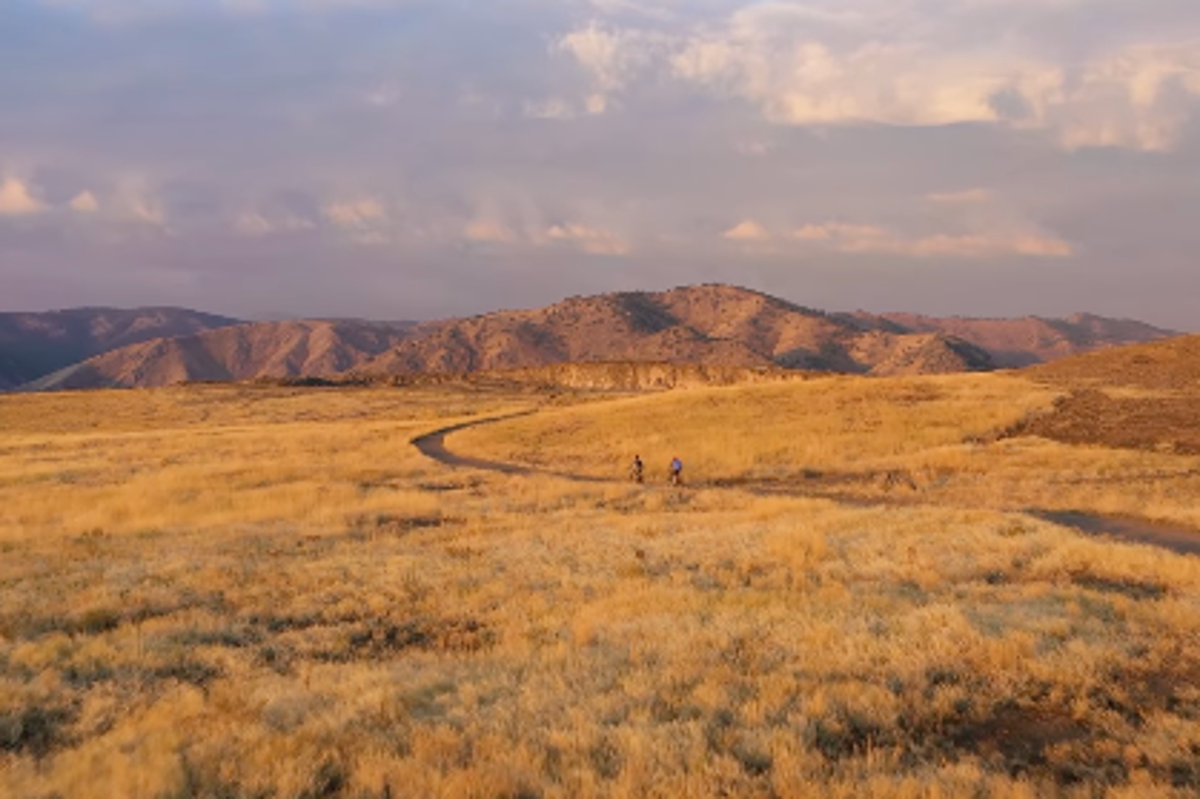
The $32 billion earmarked for military "Forward Operating Locations" in Yellowknife, Inuvik, Iqaluit, and Goose Bay represents a fundamental shift in how Canada views its own map. Historically, these outposts were skeletal, designed for search-and-rescue or occasional sovereignty patrols. The new plan envisions them as "fortress hubs" capable of supporting F-35 fighter jets and sustained troop deployments.
But the sheer math of the Arctic is brutal. Canada is attempting to secure 4.4 million square kilometers of land and sea—an area larger than India—with a military that is currently 15,000 members short of its recruitment targets. You cannot hold a frozen frontier with press releases and promises of "multi-billion dollar" spending that hasn't even begun to flow.
The threat isn't just a rhetorical one from Washington. While the White House muses about annexation, Russia has spent thirteen years bristling its own Arctic coast with hypersonic missile sites and deep-water ports. Canada is caught in a pincer. To the East, a Russia that views the Arctic as its private backyard; to the South, an American president who views Canadian sovereignty as a "concept" subject to negotiation.
The BOREALIS Initiative and the Technology Gap
A centerpiece of the Carney plan is BOREALIS, a project intended to bridge the massive gap in Arctic surveillance through artificial intelligence and quantum computing. The logic is sound: if you don’t have the boots to put on the ground, you need the sensors to watch the horizon.
Current Canadian capabilities are dangerously thin. The aging North Warning System is effectively blind to modern threats like low-flying cruise missiles or the "shadow fleet" of tankers navigating the increasingly ice-free Northwest Passage. The $2.67 billion dedicated to "remote operating hubs" is intended to fix this, creating a digital tripwire across the High North.
However, technology in the Arctic must survive 180 days of darkness and temperatures that can plummet to -50°C. Infrastructure in the North isn't just about pouring concrete; it’s about battling permafrost that is rapidly melting due to climate change. Every hangar built in Inuvik today must be engineered to stand on ground that is literally turning into mud.
The $35 Billion Breakdown
| Project Location | Primary Function | Estimated Investment |
|---|---|---|
| Yellowknife, NWT | Arctic Command & Control | $8.5 Billion |
| Inuvik & Iqaluit | F-35 Forward Operating Bases | $12.4 Billion |
| Goose Bay, NL | Strategic Airlift & Logistics | $6.2 Billion |
| Whitehorse & Resolute | Operational Support Hubs | $2.67 Billion |
| Rankin Inlet | Airport Modernization | $294 Million |
The Greenland Complication
The most volatile variable in this geopolitical equation is Greenland. Trump’s fixation on the Danish territory is not merely about real estate; it is about controlling the GIUK Gap (Greenland, Iceland, United Kingdom), the strategic naval chokepoint through which Russian submarines must pass to enter the Atlantic.
By signaling a desire to "take" Greenland, the U.S. has effectively declared the North Atlantic a unilateral security zone. For Canada, this is an existential threat. Many of Canada’s Arctic islands abut Greenland’s western coast. If the U.S. establishes a permanent, aggressive presence in Nuuk, the "51st State" rhetoric stops being a joke and starts looking like a tactical encirclement.
The Prime Minister’s decision to open a new consulate in Greenland is a rare bit of proactive diplomacy, but it is a soft-power tool in a hard-power fight.
Sovereignty via Supply Chain
Beyond the fighter jets and radar arrays, the Carney administration is attempting to use "Sovereignty via Infrastructure." Projects like the Mackenzie Valley Highway and the Grays Bay Road and Port are designed to connect the North to the national grid for the first time.
The goal is to unlock the "Golden Triangle" of critical minerals—copper, gold, and zinc—needed for the global energy transition. If Canada can make the Arctic economically indispensable to the world, it becomes much harder for a neighbor to annex it without triggering a global financial meltdown.
But this "Resilience over Reliance" strategy comes with a staggering price tag. Canada is vowing to hit NATO’s 2% military spending target five years early, a move that will require gutting domestic programs or taking on massive amounts of new debt. It is a "sovereignty tax" that the Canadian public is only just beginning to grasp.
The reality of 2026 is that the rules-based order which allowed Canada to be a "middle power" has collapsed. In its place is a raw, transactional environment where borders are only as solid as the force used to defend them. Canada is finally building the bases, but it remains to be seen if it has the political will to man the walls.
The "True North, Strong and Free" is currently neither strong enough to deter its enemies nor free from the whims of its closest ally.
Would you like me to analyze the specific impact of the Mackenzie Valley Highway on Canada’s critical mineral supply chain?
.png?width=1200&auto=webp&trim=0%2C113%2C0%2C87)