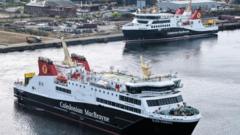
The Scottish islands are currently facing a logistical nightmare that feels more like a slow-motion collapse than a temporary glitch. If you've tried to book a crossing lately, you know the frustration. CalMac, the state-owned ferry operator, recently issued a stark warning that "almost every island" in their network is now staring down the barrel of major service disruptions. This isn't just about a few delayed holidaymakers or a missed dinner reservation. We're talking about a fundamental breakdown in the "marine motorway" that keeps these communities alive.
The reality on the ground is grim. When a ferry breaks down in the Hebrides, it isn't like a bus skipping a stop. It's a severed artery. Groceries don't arrive. Pharmacies run out of essential meds. Farmers can't get livestock to market. Small businesses, already fighting thin margins, watch their seasonal revenue vanish because tourists can't actually get to their hotels. The current fleet is so old it's basically held together by hope and expensive, last-minute repairs.
The Aging Fleet Crisis No One Can Ignore
The average age of a CalMac vessel is now well over 20 years. In the shipping world, that’s ancient. Some ships, like the MV Isle of Mull or the MV Caledonian Isles, have been in service so long they’ve become iconic—and notoriously unreliable. When these "veterans" go into dry dock for scheduled maintenance, they often don't come back out on time. Engineers find more rust, more engine fatigue, and more obsolete parts that are nearly impossible to source in 2026.
This creates a domino effect. If a large vessel on a major route like Ardrossan to Brodick fails, CalMac has to "shuffle the deck." They pull a smaller boat from a different route to cover the gap. That smaller boat can’t carry the same volume of traffic. Suddenly, a secondary route like the one serving South Uist or Mull gets its capacity slashed by 50%. One breakdown in the Clyde ripples all the way to the Outer Hebrides. It’s a systemic failure, not an isolated incident.
Why The Replacement Program Is Stalled
You can't talk about the ferry shortage without mentioning the political elephant in the room. The construction of new vessels at the Ferguson Marine shipyard has been a saga of delays and skyrocketing costs. The two most famous "missing" ships, the MV Glen Sannox and the MV Glen Rosa, are years behind schedule.
While the Scottish Government has funneled hundreds of millions of pounds into these projects, the islands are still waiting. It’s a classic case of over-promising and under-delivering. Islanders are tired of hearing about "investment" when they’re standing on a pier watching an empty horizon. The lack of a coherent, long-term replacement strategy over the last decade has left CalMac with a fleet that is statistically more likely to fail than to sail on any given day during the winter storm season.
The Human Cost of Travel Uncertainty
Imagine being a student on Islay with an exam on the mainland, or a patient in Stornoway with a specialist hospital appointment in Glasgow. You can’t just "leave a bit earlier." If the ferry is cancelled due to a technical fault—which is happening with increasing frequency—you’re stuck.
Community leaders have been vocal. They’re reporting a sense of "managed decline." People are moving away. Young families don't want to live somewhere where they can't rely on getting their kids to a doctor or getting to work. It’s an existential threat to Gaelic culture and the very survival of these remote outposts. The Scottish Islands Federation and various community transport groups have repeatedly warned that the current level of service is "sub-standard and discriminatory."
Managing the Chaos During Peak Season
If you're planning to travel to the islands this year, you need to be aggressive with your planning. The days of rolling up to the terminal and buying a ticket are largely over for the major routes.
- Book months in advance. This sounds obvious, but even "confirmed" bookings are being cancelled 24 hours out when a ship is pulled for emergency repairs.
- Check the service status page every hour. Don't wait for an SMS or email. CalMac’s digital updates are often the only way to catch a sudden "vessel cascade" announcement.
- Have a Plan B for accommodation. If you get stranded on the mainland, hotels near the ports fill up instantly. Know where the nearest campsites or alternative lodgings are.
- Use the smaller crossings. Sometimes, taking a longer drive to a less-popular port with a smaller, more reliable boat is safer than betting on the big "prestige" routes.
What Needs To Change Right Now
Throwing money at a sinking ship doesn't work. The Scottish Government needs to stop treating the ferry network like a political football and start treating it like essential infrastructure. We need a standardized fleet. Instead of building bespoke, over-complicated ships that take a decade to finish, the focus should be on "off-the-shelf" designs that are proven and easier to maintain.
Chartering external vessels has been a temporary band-aid, but it's expensive and those ships often aren't suited for the specific pier layouts of the Scottish west coast. There needs to be a hard look at the management structure of both CalMac and CMAL (the body that owns the ships). The current split between who operates the boats and who owns them creates a bureaucratic nightmare where no one takes full responsibility for the state of the fleet.
The situation is urgent. "Almost every island" is a terrifying statistic for the people who call these places home. Without a radical shift in how these services are funded and managed, the disruption we're seeing now is just a preview of a total shutdown. Keep your eyes on the daily service alerts and don't expect a smooth ride. The "ferry crisis" isn't coming—it's already here, and it's parked at the pier with its engines off.
If you’re traveling, verify your booking status directly through the CalMac app or website before leaving home. Don't rely on third-party travel aggregators for real-time status updates.