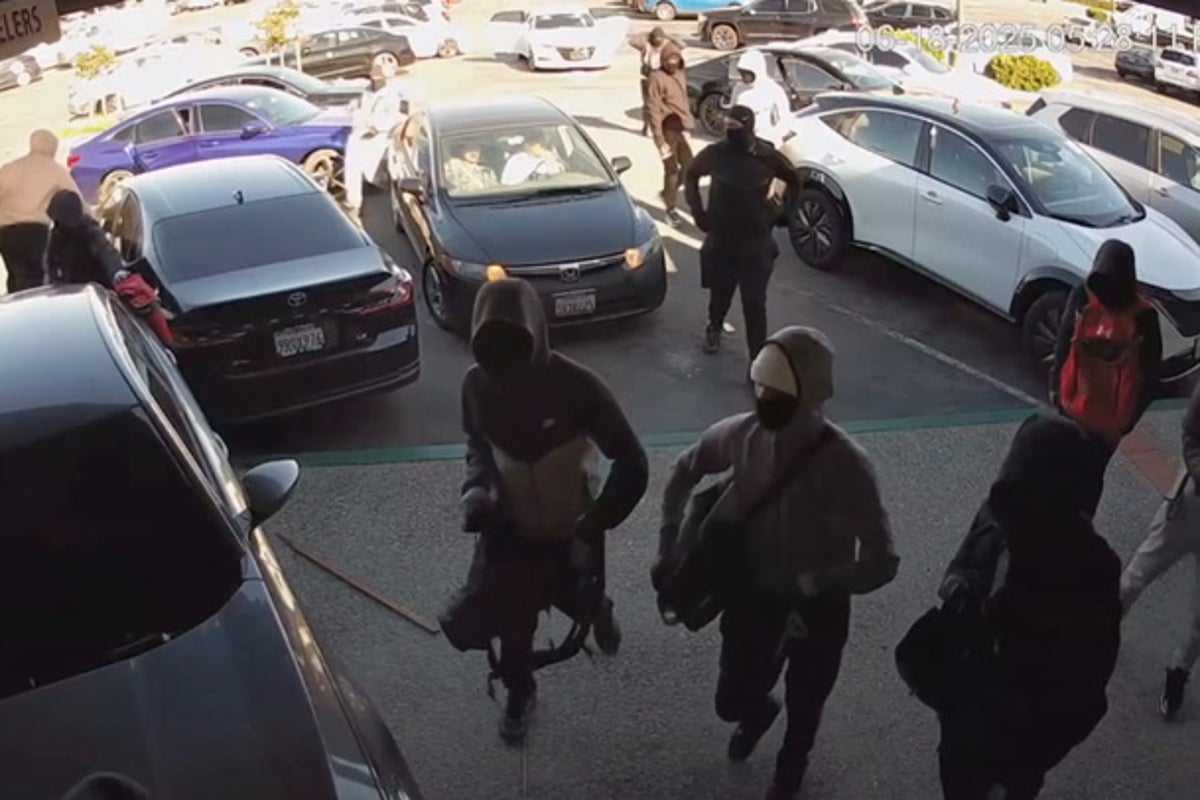
Seventy seconds. That’s all it took for a swarm of nearly 20 masked men to turn a high-end California jewelry store into a graveyard of shattered glass and empty velvet trays. If you think your deadbolt and a couple of cameras are going to stop a coordinated mob, you’re dreaming. This wasn't a stealthy Ocean’s Eleven operation. It was a blitzkrieg.
The recent raid on PNG Jewelers in Sunnyvale wasn't just another retail theft. It was a terrifying display of how fast a "smash and grab" can escalate when the numbers are on the side of the criminals. We’re talking about $1.7 million in inventory gone before the police even had a chance to put their sirens on. When you see twenty people charging through a front door with sledgehammers, the rulebook on security gets tossed out the window. You might also find this connected article insightful: Strategic Asymmetry and the Kinetic Deconstruction of Iranian Integrated Air Defense.
Why the Sunnyvale heist is a wake up call for retail
Most people think of robberies as two guys in hoodies pointing a gun at a cashier. That’s old school. The new reality involves massive groups—sometimes called "flash robs"—that use sheer volume to paralyze store employees and security. In the Sunnyvale case, the sheer audacity of the attack at a busy shopping center shows that these crews don't fear the light of day.
The group used heavy tools to bypass reinforced glass. They didn't pick locks. They didn't hack systems. They just broke things. This brute force approach is becoming the standard because it works. If you have five seconds to react and twenty targets to track, you aren't stopping anyone. You're just a witness. As reported in detailed reports by NBC News, the implications are significant.
The reality of the situation is that $1.7 million is a massive haul for a minute's work. It sets a dangerous precedent for other crews looking for a payday. The police managed to apprehend five of the suspects after a high-speed chase through the Bay Area, but the bulk of the group? They're gone. And so is the jewelry.
The breakdown of a seventy second execution
When you watch the footage of these raids, you notice a pattern. There’s a "breacher" who goes in first, usually with a sledgehammer or a heavy crowbar. Once that first case cracks, it’s a free-for-all. In Sunnyvale, the suspects didn't waste time looking for the most expensive pieces. They grabbed everything in sight.
Speed is their only armor. They know that the average police response time in a crowded metro area like the Bay Area is several minutes. By the time the first patrol car rounds the corner, the stolen vehicles are already on the freeway. It’s a calculated risk that unfortunately keeps paying off.
It’s worth noting that the suspects abandoned their getaway vehicles and tried to flee on foot through industrial areas. That’s where the cops finally got a few of them. But five out of twenty? That’s an 75% success rate for the rest of the gang. Those aren't great odds for the justice system.
The myth of the bulletproof display case
Jewelers spend thousands on "shatter-resistant" glass. But here’s the thing—shatter-resistant isn't the same as unbreakable. With enough force and enough people swinging hammers, that glass eventually gives way. Once there's a hole, the integrity of the entire case is compromised.
I’ve seen stores rely on film coatings that are supposed to hold the glass together. They help, sure. But against a coordinated attack of twenty men? They’re basically just keeping the shards from flying too far. The thieves still get the gold.
How the black market absorbs 1.7 million in jewelry
You might wonder how someone sells $1.7 million in stolen necklaces and rings without getting caught. It’s easier than you’d like to believe. Professional theft rings don't walk into a local pawn shop with a bag of loot. They have "fences"—middlemen who specialize in moving hot merchandise.
- The Melt Down: High-purity gold is melted into generic bars within hours. Once it’s a brick, there’s no serial number. There’s no history. It’s just metal.
- The Stone Swap: Diamonds are popped out of their settings. Large stones might be re-cut to change their facets, making them impossible to identify via GIA registries.
- International Shipping: A lot of this stuff ends up overseas. Once it leaves the country, the trail goes cold for local PD.
This isn't a crime of passion. It’s a business model. The Sunnyvale heist was a logistics operation that just happened to involve sledgehammers.
Stop relying on cameras to save your business
If you own a business, you've probably been told that 4K cameras are your best defense. Honestly? Cameras are for the trial, not the crime. The suspects in the California raid were covered head-to-toe. Masks, gloves, hoodies. Unless they trip or lose a shoe, that footage is mostly just a record of your loss.
Real security requires physical barriers that don't rely on "detecting" a crime but on "preventing" entry. We’re talking about heavy-duty rolling shutters that can be triggered by a panic button. We’re talking about fog systems that fill a room with thick, non-toxic smoke in three seconds, making it impossible for a thief to see their own hand, let alone a diamond ring.
If your security plan doesn't account for 20 people entering at once, you don't have a security plan. You have a hope. And hope doesn't stop a sledgehammer.
What needs to change in retail protection
The legal system in California has been under fire for being "soft" on retail theft. Whether you agree with that or not, the criminals clearly aren't intimidated. When the potential reward is $1.7 million and the risk is a few years in a system that’s already overcrowded, the math favors the criminal.
Business owners are now having to turn their stores into fortresses. You see it in San Francisco, you see it in Los Angeles, and now you see it in Sunnyvale. Appointment-only shopping, double-entry "man-traps," and armed guards are becoming the norm for anyone selling high-value goods. It's an expensive, annoying way to do business, but it's the only way to survive this current wave.
If you’re a business owner, stop waiting for the police to solve the "crime wave." They’re reactive by nature. You need to be proactive. Bolster your physical perimeter. Invest in a "smoke cloak" or similar active deterrent system. Most importantly, train your staff to get out of the way. No amount of jewelry is worth a life, and these groups are unpredictable and dangerous.
Focus on time-delay safes for your most expensive inventory. If it takes more than 70 seconds to get to the "good stuff," most of these crews will move on. They aren't looking for a standoff; they’re looking for a sprint. Make the sprint impossible and you might just keep your storefront intact.