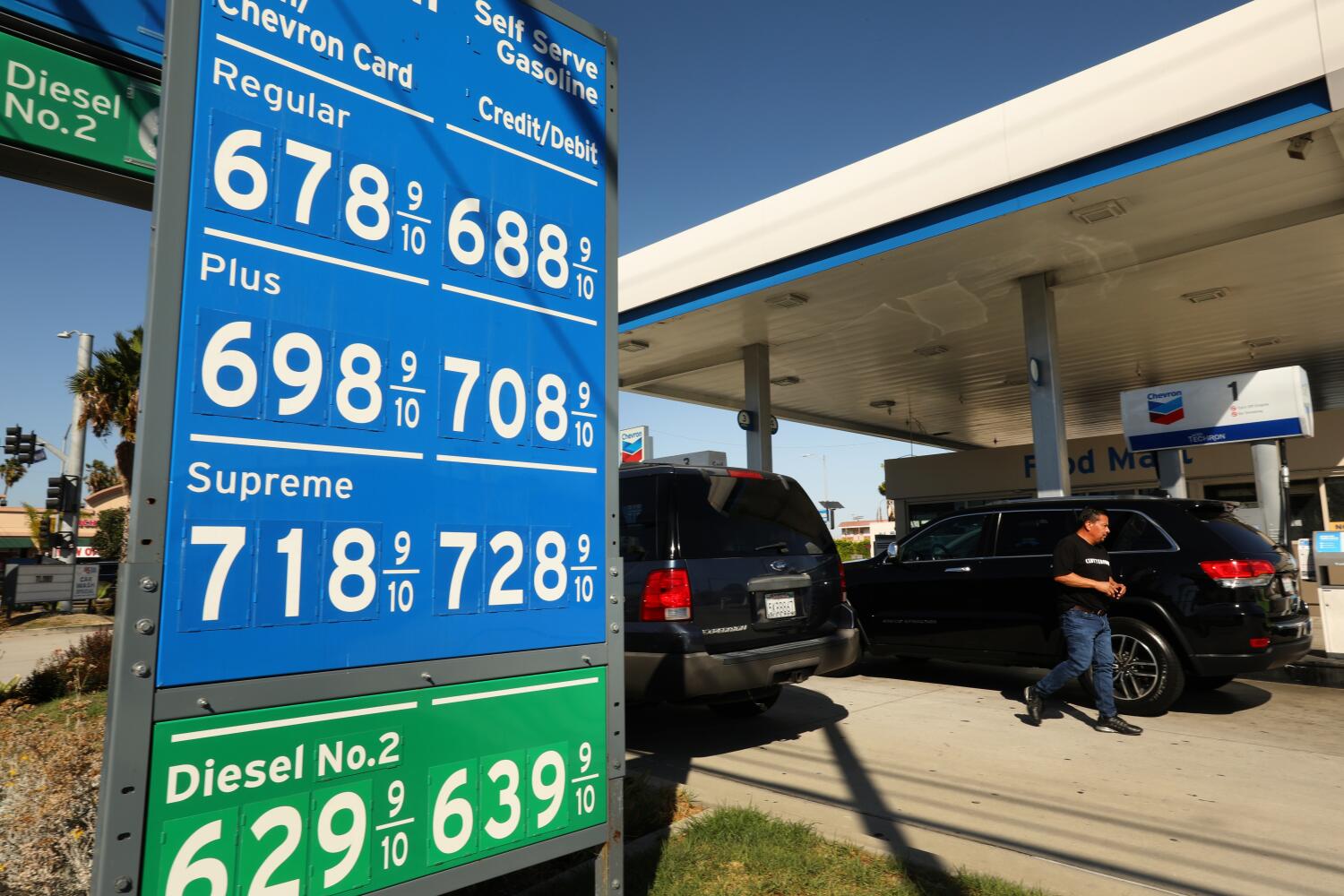
California drivers are currently trapped in a unique economic pincer movement. While the rest of the country watches local gas prices fluctuate based on global crude markets, the Golden State operates on what is effectively a functional island. This isn't an accident of geography. It is the result of a deliberate, decades-long policy framework designed to phase out fossil fuels by making them prohibitively expensive.
The core reason gas prices in California remain the highest in the nation—often $1.50 to $2.00 above the national average—has little to do with a shortage of raw oil. Pumping more crude from the Central Valley wouldn't move the needle. The bottleneck is not at the wellhead; it is at the refinery and the tax collector's office. California requires a specific, boutique "summer blend" of oxygenated gasoline to meet stringent air quality standards. This fuel is produced by only a handful of refineries within the state. When one of these facilities goes offline for maintenance, supply vanishes, and prices spike. Because no other state uses this specific recipe, California cannot simply "import" gas from Texas or Arizona to cover the shortfall.
The Architecture of an Isolated Market
To understand the price at the pump, you have to look at the "mystery surcharge." This is the gap between California’s prices and the rest of the US after accounting for known taxes and environmental fees. For years, the industry has pointed to high costs of doing business. Regulators have pointed to price gouging. The truth is more structural.
California has not built a new refinery since the 1960s. Instead, the state has seen a steady contraction of refining capacity as companies like Phillips 66 convert facilities to process renewable diesel or shut them down entirely. When supply is capped by a shrinking number of specialized plants, any hiccup in the system creates an immediate price explosion. This is the "island effect" in action.
The state’s Greenhouse Gas Reduction Program and the Low Carbon Fuel Standard (LCFS) add significant layers to the cost. These aren't just line items on a corporate ledger; they are passed directly to the consumer. Estimates suggest these programs, combined with the highest state gas tax in the country, add roughly $1.20 to every gallon before a single drop of profit is even considered.
Why Crude Production is a Red Herring
Politicians often demand more drilling to lower costs. This is a fundamental misunderstanding of how the California market functions. Global crude prices are set on the international market (Brent or WTI). Even if California doubled its local oil production tomorrow, that oil would be sold at global prices. Furthermore, California refineries are configured to handle specific grades of crude, much of which is actually imported from overseas because it is cheaper or more compatible than local heavy oil.
The problem isn't the availability of the raw material. The problem is the specialized "cooking" required to turn that material into California-legal fuel. Since the state has signaled a total ban on the sale of new internal combustion engine vehicles by 2035, energy companies have zero incentive to invest billions in expanding or upgrading gasoline refineries. They are harvesting what profit remains from a dying infrastructure.
The Role of Carbon Transparency
In 2023, California passed Senate Bill X1-2, which gave the California Energy Commission (CEC) the power to set a "maximum refining margin" and penalize companies that exceed it. The goal was to stop price gouging. The reality is that such caps often discourage production. If a refinery knows it will be penalized for high margins during a supply crunch, it might choose to prolong maintenance or reduce output rather than risk the fine.
Transparency reports now required by the state show that refinery margins in California are indeed higher than in other regions. However, those margins cover the increased cost of compliance, electricity, and labor unique to the state. We are witnessing a standoff between a state government that wants to punish "Big Oil" and an industry that is already packing its bags.
The Ethanol and Logistics Burden
Another overlooked factor is the logistics of the "California Blend." Because the state prohibits the use of certain cheaper additives to meet its air quality goals, the resulting fuel is more volatile and harder to transport. The state’s pipeline infrastructure is aging and isolated.
Breaking Down the Cost per Gallon
| Component | Estimated Cost Impact (Per Gallon) |
|---|---|
| State Excise Tax | $0.58 |
| Federal Excise Tax | $0.18 |
| Cap-and-Trade Program | $0.25 - $0.30 |
| Low Carbon Fuel Standard | $0.20 - $0.25 |
| Underground Storage Fee | $0.02 |
| Boutique Refining Premium | $0.40 - $1.00+ |
These figures fluctuate, but the baseline remains the same. California has built a regulatory fortress that keeps prices high by design.
The Transition Conflict
The state’s policy is working exactly as intended, even if the political optics are bad. High gas prices are the most effective way to nudge consumers toward electric vehicles. If gas were $3.00 a gallon in Los Angeles, the urgency to switch to a Tesla or a Rivian would evaporate for a large segment of the population.
This creates a massive equity issue. Low-income residents who cannot afford a $45,000 EV, or who live in apartments without charging infrastructure, are the ones footing the bill for the climate transition. They are paying the highest taxes and the highest premiums to commute in older, less efficient vehicles. It is a regressive tax hidden behind environmental virtue.
The Path to Lower Prices
If the goal were truly to lower prices immediately, the state would have to suspend the gas tax and the LCFS requirements. This is unlikely to happen. The tax revenue is earmarked for transportation projects and high-speed rail, and the environmental programs are the crown jewels of California’s climate policy.
Instead, the state is doubling down on oversight. But oversight doesn't create supply. To fix the California gas crisis, the state would need to provide a "regulatory peace treaty" to refiners—offering them a clear, stable path to operate for the next 20 years without the threat of sudden new mandates or profit caps. This would encourage the investment needed to keep plants running efficiently and prevent the "scarcity spikes" that currently plague the market.
The Refinery Cliff
We are approaching a "refinery cliff." As more plants convert to biofuels, the remaining gasoline refineries gain more market power. They become "natural monopolies" in their specific regions. When the number of players in a specialized market drops below a certain threshold, price discovery breaks down.
Drivers should prepare for $6.00 to be the new "floor" for gasoline in major California metros. The seasonal transition from winter to summer blends will continue to cause 50-cent jumps overnight. The volatility is not a bug; it is a feature of a market that is being intentionally phased out.
The only way to win the California gas game is to stop playing it. For those who can’t afford to quit, the road ahead is paved with increasingly expensive receipts.
Would you like me to analyze the specific impact of the 2025 LCFS amendments on projected pump prices for next year?