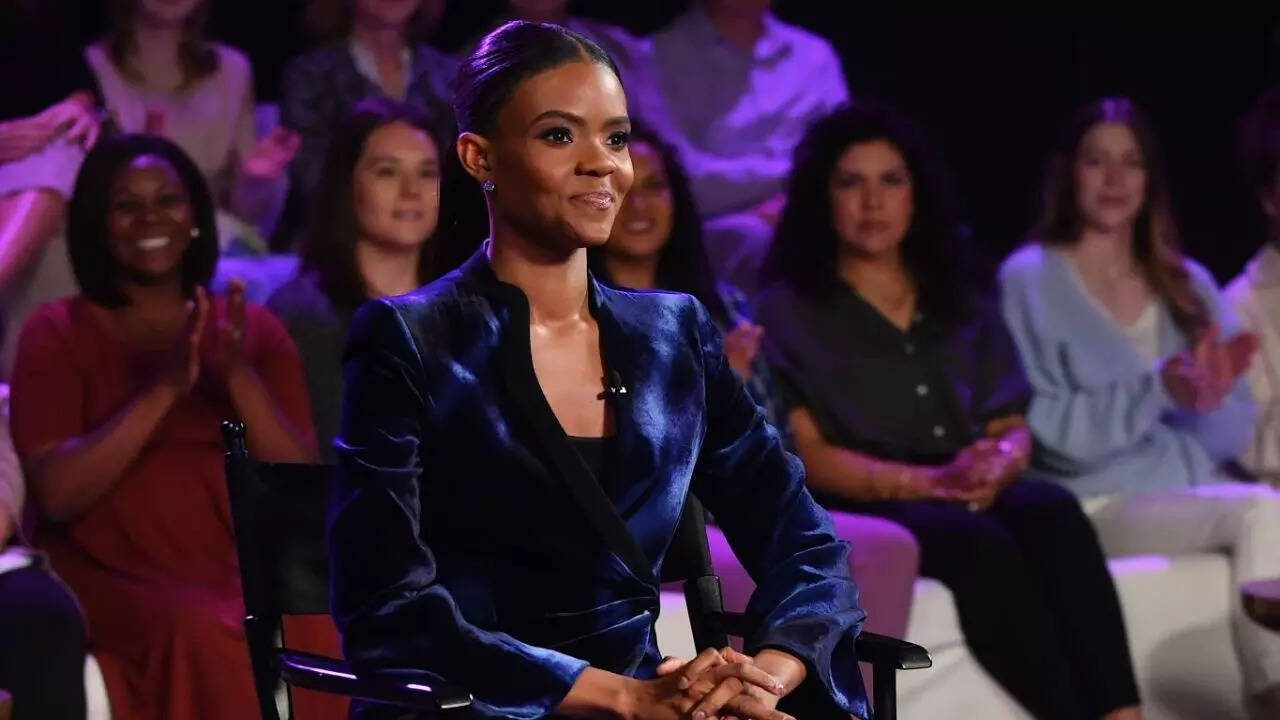
The recent friction between Candace Owens and Charlie Kirk over his marriage to Erika Frantzve isn't just a spat between two pundits. It is a collision of business models. When Owens recently suggested that Kirk—a man she once labeled a "genius"—was effectively outmaneuvered or "scammed" by his wife’s aesthetic and lifestyle choices, she wasn't just gossiping. She was poking at the structural integrity of the "Traditionalist" brand that Turning Point USA has spent millions to build.
At the center of this controversy is a specific, high-stakes definition of the modern conservative family. For Kirk, his marriage is a core part of his professional identity. It serves as the living proof of the "Traditional Values" he sells to Gen Z and Millennials. When Owens publicly questions the authenticity of that union, she is attacking the product. This isn't about romantic compatibility. It is about market positioning.
The Architecture of the Modern Trad Wife Brand
To understand why Owens’ comments cut so deep, you have to look at the "Trad Wife" phenomenon as a commercial asset. Erika Kirk represents a very specific archetype: the polished, photogenic, and ideologically aligned spouse who validates her husband’s political platform.
Owens' critique hinges on the idea that this persona is a performance. By using the word "scam," she implies that the marriage was a strategic move by Erika to secure a position of influence within the conservative ecosystem. This exposes a massive vulnerability in the movement. If the leaders of the traditionalist revival are seen as falling for "performative" tradition rather than the real thing, the entire narrative begins to fray.
The reality is that these domestic "brands" are often built with the same precision as a corporate PR campaign. The lighting is perfect. The messaging is disciplined. The children are curated. When a peer like Owens—who knows exactly how the sausage is made—points out the casing, the audience starts to look closer at the ingredients.
Why High Level Pundits Turn on Their Own
The right-wing media landscape is currently a zero-sum game for attention. For years, Owens and Kirk were the dual pillars of youth conservatism. However, as Owens moved toward a more independent, fringe-adjacent media model after her exit from The Daily Wire, her interests stopped aligning with the institutional stability that Kirk represents.
Owens is now in the business of "truth-telling" at all costs, even if those truths are purely subjective or incendiary. Kirk, meanwhile, is the CEO of a massive non-profit that relies on donor trust and a "clean" image. By targeting Kirk’s personal life, Owens is signaling that she is no longer bound by the unspoken rules of the movement's inner circle.
- Institutional Conservatism: Relies on stable, repeatable archetypes (The Nuclear Family, The Patriot).
- Independent Firebrands: Rely on disruption, "red-pilling," and the destruction of those same archetypes to prove their independence.
This isn't a disagreement over theology or tax policy. It is a civil war over who gets to define what is "authentic." If Kirk is a "genius" who can be easily fooled by a woman’s social media presentation, his credibility as a leader of men is naturally called into question. That is the tactical objective of Owens’ rhetoric.
The High Cost of Public Virtue
There is a specific danger in making your private life your primary marketing tool. When Charlie Kirk integrated his marriage into the Turning Point USA brand, he turned his domestic life into a public utility.
Every anniversary post, every photo of a home-cooked meal, and every "pro-family" speech adds value to the brand. But it also creates a liability. In the world of high-stakes political commentary, your personal choices become fair game for "investigative" gossip. Owens is simply the first one with enough platform power to say the quiet part out loud.
She is betting that her audience craves "raw" reality more than "curated" tradition. By mocking the Kirks' relationship, she positions herself as the person who sees through the filter. It’s a classic power move: devaluing the competitor's most prized asset.
The Gender Dynamics of Political Influence
The "scam" narrative Owens is pushing relies on a very old trope: the manipulative woman and the naive man. It is a strange line for a female commentator to take, but it fits perfectly into the "Manosphere" adjacent content that is currently booming.
Owens is speaking directly to a disillusioned segment of young men who are terrified of being "trapped" or "tricked" by modern women. By framing Erika Kirk as a master manipulator, Owens validates the anxieties of that audience. She is telling them, "If even a genius like Charlie can be fooled, you need to be even more careful."
This strategy turns Kirk into a victim of his own ideology. He preaches marriage and family, yet his peer suggests he has failed the most basic test of discernment. It is a brutal, effective way to undermine his authority without ever having to debate a single policy point.
The Frailty of the Influencer Alliance
For years, the conservative movement operated like a big tent where everyone agreed to ignore the cracks in the foundation for the sake of the cause. Those days are over. The fragmentation of media means that there is more money in conflict than in cooperation.
The Owens-Kirk fallout is a preview of the next decade of political media. It will be characterized by internal purges and "vibe checks." We are moving away from a world where people are judged by their voting record and into a world where they are judged by the perceived "purity" of their lifestyle.
If you cannot maintain the standard of the brand you sell, your "friends" will be the first ones to sell the story of your downfall. The business of tradition is, ironically, one of the most cutthroat markets in the world.
How to Spot the Performance
The audience is getting smarter. They are beginning to recognize the difference between a life lived and a life posted. To stay relevant, influencers are going to have to move beyond the "filtered" version of traditionalism.
- Look for the gaps: Does the public persona match the historical record?
- Follow the funding: Who benefits from the "perfect family" narrative?
- Watch the peers: When long-term allies start pointing out inconsistencies, there is usually a reason beyond simple jealousy.
Owens didn't start this fire because she cares about Charlie Kirk's happiness. She started it because she knows that in the current attention economy, being the one who breaks the glass is more profitable than being the one who helps clean it up.
The "scam" isn't necessarily the marriage itself. The scam is the idea that any of these public figures are giving you a 100% honest look at their lives. They are all selling something. Candace Owens just decided that today, she’s selling the demolition of Charlie Kirk’s pedestal.
Verify the source of the "traditional" advice you consume. If the messenger is more focused on the aesthetic of the family than the actual sacrifices required to maintain one, you are looking at a commercial, not a lifestyle.