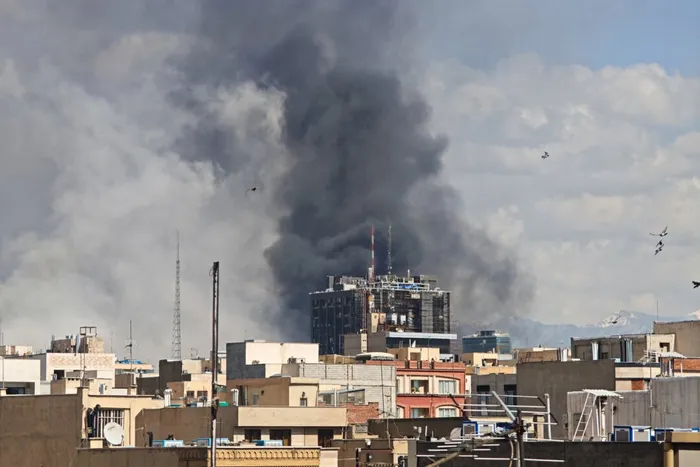
The smoke rising from the tarmac at Bushehr Airport isn't just another headline in a long string of Middle East skirmishes. It's a signal that the rules of engagement just got shredded. On Tuesday, an Iran Air passenger jet—a civilian Airbus A319—was blown apart while sitting idle on the ground. This happened during a wave of joint US-Israeli strikes that didn't just target military bunkers; they hit the heart of Iran’s civilian infrastructure.
If you're wondering why a parked airliner matters when missiles are flying, here’s the reality: striking a civilian airport and destroying a commercial aircraft is a line that hasn't been crossed like this in decades. It’s messy, it’s loud, and it tells us that the "strategic patience" era is officially dead.
The Tarmac Disaster at Bushehr
Bushehr isn't some backwater landing strip. It’s a dual-use facility on the Persian Gulf that handles both commercial travelers and military logistics. More importantly, it sits right next to Iran’s only operational nuclear power plant. While the nuclear facility itself wasn't directly hit this time, the proximity is terrifying.
The aircraft destroyed was an Airbus A319-100, registration EP-IEP. I’ve looked at the tracking data, and this plane was a workhorse for Iran Air. It had just landed a few days prior after a flight from Tehran. Now, it's a charred skeleton. Iranian media and social media clips show the fuselage ripped open, likely by the shockwave of a nearby precision strike or a direct hit.
The strike also hammered the airport terminal itself. When you start blowing up the places where grandmothers wait for their flights and businessmen check their bags, you’re not just fighting a war against a military; you’re paralyzing a nation's ability to move.
Why the US and Israel Are Hitting Airports Now
You might ask why an airport is a "priority target." From a tactical perspective, it’s about "denial of access."
- Logistics Chokehold: Airports like Bushehr and Mehrabad (which was also hit) are vital for moving IRGC personnel and hardware quickly across the country.
- Signaling: By hitting a civilian-adjacent target, the US-Israeli alliance is proving that no location is off-limits. They're basically saying, "We can touch anything, anywhere."
- The Nuclear Shadow: Bushehr is a sensitive zone. Russia’s Rosatom just suspended construction on new units at the nuclear plant because the neighborhood is getting too hot. That’s a massive blow to Iran’s long-term energy and "research" goals.
The White House and Israeli officials have been fairly blunt. They claim these strikes are a direct response to Iranian "aggression" and proxy activities. Donald Trump even went on record claiming that the "layers of defense" in Iran are gone. Whether that’s hyperbole or not, the images of a burning Iran Air jet suggest he isn't entirely bluffing about the intensity of the campaign.
The Civilian Cost and the Global Fallout
Let's be honest: hitting a passenger jet is a PR nightmare, regardless of the "dual-use" excuse. Tehran is already screaming "war crimes" to anyone who will listen. They’re pointing to other recent strikes, like the one on a school in Minab, to build a narrative of "deliberate terror."
For the average traveler or the global aviation industry, this is a nightmare scenario. If civilian airports are now fair game, the risk profile for flying anywhere in the region just skyrocketed. We’re seeing airlines reroute flights in real-time, avoiding Iranian airspace like the plague. It reminds me of the tensions in the 1980s, but with much more precise—and therefore much more destructive—weaponry.
What Happens Tomorrow
The situation is moving fast. Iran has already threatened to shut down the Strait of Hormuz. If they do that, oil prices won't just rise; they'll explode. The IRGC has warned that any vessel in the waterway is a target. We’re looking at a potential total blockade of one of the world’s most important energy corridors.
Russia is also backing away. When Rosatom pulls workers out of a multi-billion dollar project, you know the intelligence suggests things are going to get worse before they get better. There are still hundreds of Russian personnel on the ground, and their evacuation is a loud "exit" sign for anyone else hoping for a de-escalation.
If you’re tracking this, keep your eyes on the satellite imagery coming out of Natanz and Isfahan. The reports suggest those nuclear complexes are the next logical targets if Tehran decides to retaliate for the Bushehr airport hit. This isn't just a "tit-for-tat" anymore. It's a full-scale dismantling of Iran’s strategic infrastructure.
Watch the flight tracking apps. If you see the remaining Iran Air fleet moving to "safe" airbases or leaving the country entirely, you'll know they expect the next wave to be even more surgical—and even more devastating. Keep your bags packed but your tickets cancelled. The Persian Gulf is no place for a civilian tail number right now.