The air inside the Situation Room doesn't circulate like the air in a normal office. It feels heavy, filtered through layers of history and the crushing weight of binary choices. Somewhere in the middle of a Friday, while the rest of the world was checking lunch menus or scrolling through weekend plans, a finger hovered over a digital trigger.
The decision to strike Major General Qasem Soleimani wasn't a spreadsheet calculation. It was a gamble on the "what if."
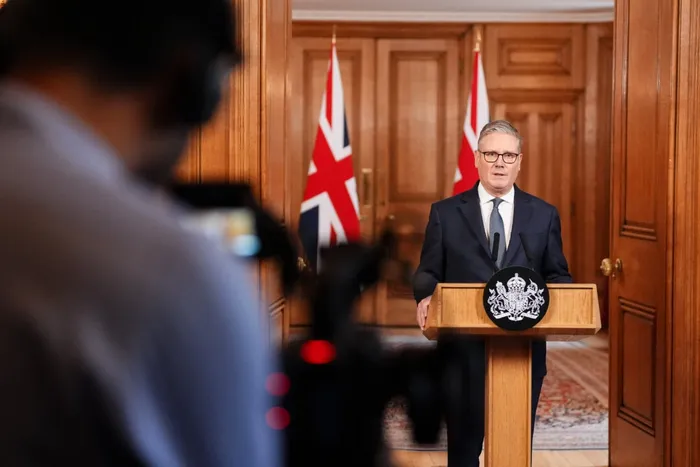
When President Trump spoke about the strike, he didn't lead with tactical logistics or the specific yield of the munitions used. He led with a justification as old as warfare itself: preemptive necessity. "We took action last night to stop a war," he told the cameras. "We did not take action to start a war."
It is a paradox that keeps diplomats awake at night. To prevent a ghost, you must create a martyr. To stop a shadow from falling, you must strike the person casting it.
The Calculus of the Invisible
Imagine a man standing in a crowded marketplace. He is holding a match. He hasn't struck it yet. You know his history; you know he has burned down three buildings in the last year. You see the sulfur in his pocket. Do you wait for the spark to catch the wood, or do you break his arm before he moves?
This is the agonizing reality of intelligence-led warfare. The public sees the explosion. They see the charred remains of a convoy near Baghdad International Airport. What they don't see—what they can never truly see—is the "imminent attack" that stayed in the realm of the hypothetical because of that explosion.
Trump’s argument rested entirely on this invisible timeline. He claimed Soleimani was plotting "broad and sinister" attacks against American diplomats and personnel. This wasn't just about what the General had done in the past—though the Pentagon was quick to list the hundreds of American service members killed by Iranian-backed improvised explosive devices. This was about the next seventy-two hours.
The weight of the presidency is often described as the power to act. In reality, it is the burden of the "pre-act."
The Human Toll of Strategy
Behind every headline about "de-escalation through strength," there are families on both sides of the digital divide who feel the vibration of the blast.
Consider a hypothetical young drone operator in Nevada. To them, the "target" is a thermal signature on a high-definition screen. They see the heat of the engine, the movement of the figures, the cold geometry of the strike zone. They are the scalpel in a surgery performed from three thousand miles away.
Then consider the civilians in Baghdad. For them, the strike isn't a "geopolitical shift." It is a thunderclap that shatters windows and wakes sleeping children. It is the sudden, terrifying realization that their backyard is the chessboard for two giants who haven't spoken a civil word to each other in forty years.
Soleimani was a shadow commander. To the West, he was the architect of chaos, a man who moved militias like chess pieces across Lebanon, Syria, and Iraq. To many in Iran, he was a folk hero, the "living martyr" of the revolution. When the missiles hit, they didn't just destroy a vehicle. They collapsed a bridge of possible, albeit slim, diplomatic outcomes.
The Mirror of Preemption
The danger of "doing it because they would have done it first" is that it creates a hall of mirrors.
If Nation A strikes because they believe Nation B is about to strike, Nation B views that strike as unprovoked aggression. They then justify their own "retaliatory" strike, which Nation A views as the very "imminent threat" they were trying to prevent in the first place.
It is a circular logic that feeds on itself.
Trump’s rhetoric was designed to break that circle with a sledgehammer. He wasn't interested in the delicate dance of the JCPOA or the slow grind of economic sanctions. He chose the most direct path. He bet that by removing the head of the snake, the body would wither.
But history is a messy teacher.
When we look back at the 1914 assassination of Archduke Franz Ferdinand, nobody thought it would lead to the muddy trenches of the Somme. They thought it was a localized surgical strike against a political problem. The problem with surgical strikes is that the patient rarely stays on the table. They bleed. The blood soaks into the carpet, and soon, everyone in the room is slipping on it.
The Silence After the Blast
In the days following the strike, the world held its breath. The "imminent attacks" Trump cited remained classified, a secret kept in the vaults of Langley and the Pentagon. We are asked to trust the hunters that the wolf was truly at the door.
Trust is a rare commodity in modern politics.
For the American soldier stationed at a remote base in Iraq, the strike didn't bring a sense of safety. It brought a "high alert" status. It meant sleeping in gear, scanning the horizon for the inevitable swarm of retaliatory rockets, and wondering if the "prevention of a war" just made their specific corner of the world a lot more dangerous.
The President stood behind a podium and spoke of peace. He spoke of a world made safer by the absence of a single man. Yet, the flags at the funerals in Tehran told a different story. They told a story of a wound that wouldn't close, a grudge that had just been handed a fresh set of reasons to exist.
We live in an era where the "first move" is everything. Our technology allows us to see the match before it strikes the box. Our satellites can hear the whisper of a conspiracy before the words are even finished. But having the ability to see the future doesn't mean we know how to change it without breaking it.
The strike on Soleimani was a definitive statement that the United States would no longer wait for the smoke to rise before it fired. It was a pivot toward a world where "maybe" is enough to justify "definitely."
Somewhere in a quiet hallway in the White House, the echoes of that January night still linger. The war that was supposedly stopped is still being fought in the shadows, in the cyber-grids, and in the hearts of those who remember the flash of the explosion.
The match was broken, yes. But the marketplace is still full of sulfur. The air remains heavy. And the next person with a match is already walking through the crowd, watching the sky, waiting for their own turn to claim they are only acting because we did.
The cycle doesn't end with a strike. It only changes its shape.
Would you like me to analyze the long-term diplomatic shifts in the Middle East that followed this event?