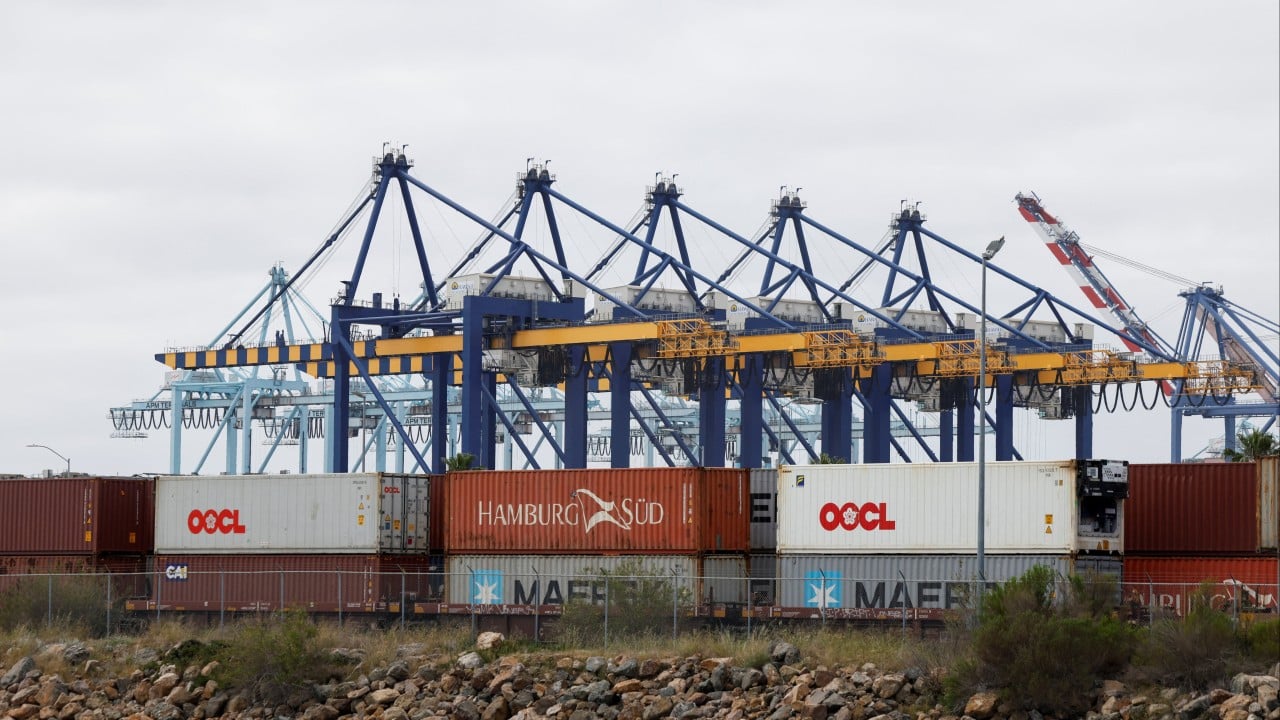
The arithmetic of the Pacific has changed, and it isn't just because of a few signatures on a tariff schedule. As we move into the second quarter of 2026, the data confirms a reality that many in Washington and Beijing tried to ignore for years: the economic bridge between the world’s two largest superpowers is not just cracking, it is being systematically dismantled. While the upcoming summit between President Trump and President Xi is being billed as a "thaw" by optimistic diplomats, the ledger tells a different story. US goods imports from China tumbled nearly 30% over the last calendar year. American exports to the mainland didn't fare much better, dropping by 17%.
This is the sharpest contraction in trade volume since the global financial crisis, but this time, the cause is an intentional policy of friction. The "Liberation Day" tariffs, which saw effective rates on Chinese goods surge toward 50% last year, have effectively priced out the traditional high-volume, low-margin trade that defined the last three decades. Businesses are no longer asking if they should diversify away from China; they are calculating how fast they can do it before the next executive order hits.
The Mirage of the 47 Percent
In late 2025, a headline-grabbing agreement suggested the US would lower overall tariff rates from a staggering 57% to roughly 47%. To the casual observer, a 10% reduction looks like a de-escalation. To a CFO managing a global supply chain, it is a rounding error on a catastrophe. A 47% tariff is still a wall.
The "truce" reached during the last leaders' summit was less about restoring trade and more about managing its decline. China’s pledge to resume soybean purchases and keep rare earth elements flowing is a temporary patch, not a repair. These are strategic commodities used as leverage, not the foundation of a healthy, integrated trade relationship. While Trump touted the meeting as a "12 out of 10," the markets reacted with a collective shrug. Gold prices ticked up and the dollar dipped, a classic signal that investors are hedging against further volatility rather than betting on a recovery.
The Rise of the Middlemen
If you look at the official trade deficit, it appears to be narrowing. The gap shrunk from $262 billion to approximately $168 billion in the last year. On paper, this is a win for the "America First" agenda. In reality, the trade is simply being rerouted through a growing network of "bypass" countries.
Vietnam and Thailand have seen their imports from China jump by more than 20%. This isn't because of a sudden explosion in Southeast Asian domestic demand. It is the footprint of transshipment—the process of sending Chinese components to a third country for minimal processing before slapping on a "Made in Vietnam" label to dodge US duties.
- Mexico's New Role: Under the pressure of the 2026 USMCA review, Mexico has become the primary theater for this industrial shell game.
- The Semiconductor Squeeze: In January 2026, the US imposed a fresh 25% tariff on specific semiconductors, forcing tech companies to find even more creative—and expensive—ways to move silicon across borders.
- The De Minimis Death: The August 2025 elimination of the de minimis exemption effectively killed the business models of e-commerce giants like Shein and Temu in the US market, with low-value shipments dropping 30% almost overnight.
These maneuvers don't bring manufacturing back to the American Midwest. They just add layers of cost and complexity that eventually show up on the price tags at big-box retailers.
The Manufacturing Jobs That Didn't Show Up
The core promise of the aggressive tariff regime was a renaissance in American manufacturing. However, the 2026 labor data suggests a different outcome. Between April and December of last year, manufacturing employment in the US fell every single month. We lost 77,000 jobs in the sector while production volume remained essentially flat.
The problem is that tariffs act as a tax on inputs. When a US factory has to pay 50% more for the steel or the specialized electronics it needs to build a finished product, its global competitiveness vanishes. We are seeing a "double squeeze" where companies are hit by higher costs at home and retaliatory barriers abroad. Construction spending and private fixed investment have both trended downward, as the uncertainty of trade policy makes it impossible to plan a five-year capital project.
The Rare Earth Trap
Beijing knows exactly where the pressure points are. While they have agreed to keep the "rare earths flowing" for now, the agreement is a one-year renewable lease on life. This is not a resolution; it is a leash.
China still controls the vast majority of the processing capacity for the minerals required for everything from EV batteries to F-35 fighter jets. By keeping the supply line open but precarious, they ensure that Washington cannot push too hard on strategic issues like Taiwan or high-end AI chip restrictions without risking a total industrial blackout.
The Operating System of Global Trade
We are witnessing the transition from an economy based on maximum efficiency to one based on strategic resilience. In the old world, a company would source a part from whoever could make it cheapest and fastest. In the 2026 world, that same company now has to account for "political cost."
Politics is no longer an external factor for businesses; it is a permanent line item on the balance sheet. The IMF may have slightly upgraded the global growth outlook to 3.3%, but that growth is happening around the US-China corridor, not through it. Trade between China and the European Union, Latin America, and ASEAN is surging as Beijing diversifies its outlets to offset the American lockout.
The April Summit Reality Check
As the two leaders prepare for their April meeting, do not expect a return to the status quo. The goal of this summit isn't to tear down the tariff wall; it is to decide where the windows will be. Both sides are looking for "carve-outs" and exemptions that serve their immediate domestic needs—agricultural sales for the US, and market access for high-tech "New Energy Vehicles" for China.
The fundamental decoupling is already too far gone to be reversed by a single handshake. The supply chains have been rewired, the warehouses have been moved, and the trust has been incinerated. We are moving into a period of "managed friction," where the best-case scenario is a predictable decline rather than a chaotic collapse.
Watch the implementation details of the rare earth renewal and the specific semiconductor exemptions. If those don't materialize with concrete language, the April summit will be nothing more than a high-stakes photo op.
Would you like me to analyze the specific impact of these 2026 semiconductor tariffs on the US consumer electronics market?