The nightmare scenario for any island nation is the sudden severing of its aerial lifelines. For the Philippines, that scenario is no longer a boardroom white-paper exercise. On March 24, 2026, President Ferdinand Marcos Jr. confirmed what industry insiders have whispered for weeks: the grounding of domestic and international flights is a "distinct possibility."
This is not a simple case of prices ticking up at the pump. It is a structural failure of energy security meeting a geopolitical buzzsaw. As the conflict in the Middle East chokes the Strait of Hormuz, the Philippines finds itself at the end of a very long, very fragile whip. The country imports nearly 98% of its fuel requirements. When the world’s taps tighten, Manila is often the first to feel the dry heat of a shortage.
The Tankering Trap
The most immediate and visible symptom of this crisis is a practice known as fuel tankering. Under normal conditions, an aircraft flies to a destination, refills its tanks at the local airport, and returns. Today, Philippine carriers are being told by several foreign hubs that there is simply no fuel available for them.
To keep the propellers turning, airlines are forced to carry enough fuel for the entire round trip from Manila. This is a logistical disaster. Fuel is heavy. Carrying the extra weight of "return fuel" means the aircraft burns significantly more fuel just to transport that weight. It reduces passenger capacity and kills the economics of long-haul routes. If a flight to the Middle East or Europe cannot refuel at the other end, the payload penalty becomes so severe that the flight loses money before it even leaves the tarmac.
This is why "grounding" is the word of the day. It is not just that the fuel is expensive; it is that the physics of carrying it yourself makes the mission impossible.
Why the Buffer is Bleeding Out
The Department of Energy (DOE) currently estimates the national jet fuel supply at approximately 38 days. On the surface, a month-long cushion sounds manageable. In reality, it is a razor-thin margin. Jet A-1 is not a commodity you can simply substitute or conjure overnight. It requires specific refining parameters and a stringently maintained supply chain.
Several factors have converged to turn a tight market into a vacuum:
- Regional Protectionism: On March 11, China implemented a ban on refined fuel exports to safeguard its own recovery. Thailand followed suit days later. These are the traditional "safety valves" for Southeast Asian energy needs.
- Refinery Run Cuts: In Singapore, the region's primary trading hub, refineries have slashed production by 25% due to the scarcity of Middle Eastern crude.
- The Lack of Strategic Reserves: Unlike many of its neighbors, the Philippines possesses no state-owned Strategic Petroleum Reserve (SPR). The country relies entirely on the commercial inventories of private players like Petron and Shell Pilipinas. When those private stocks hit the "dead bottom" of the tank, the government has no emergency lever to pull.
The Economics of a Forced Descent
Aviation analyst George Dimitroff recently noted that the global airline industry effectively stops making a profit when jet fuel exceeds $76 per barrel. As of mid-March 2026, prices have rocketed toward $157. For a budget carrier like Cebu Pacific, where fuel accounts for nearly 40% of operating costs, these numbers are a death sentence for thin-margin routes.
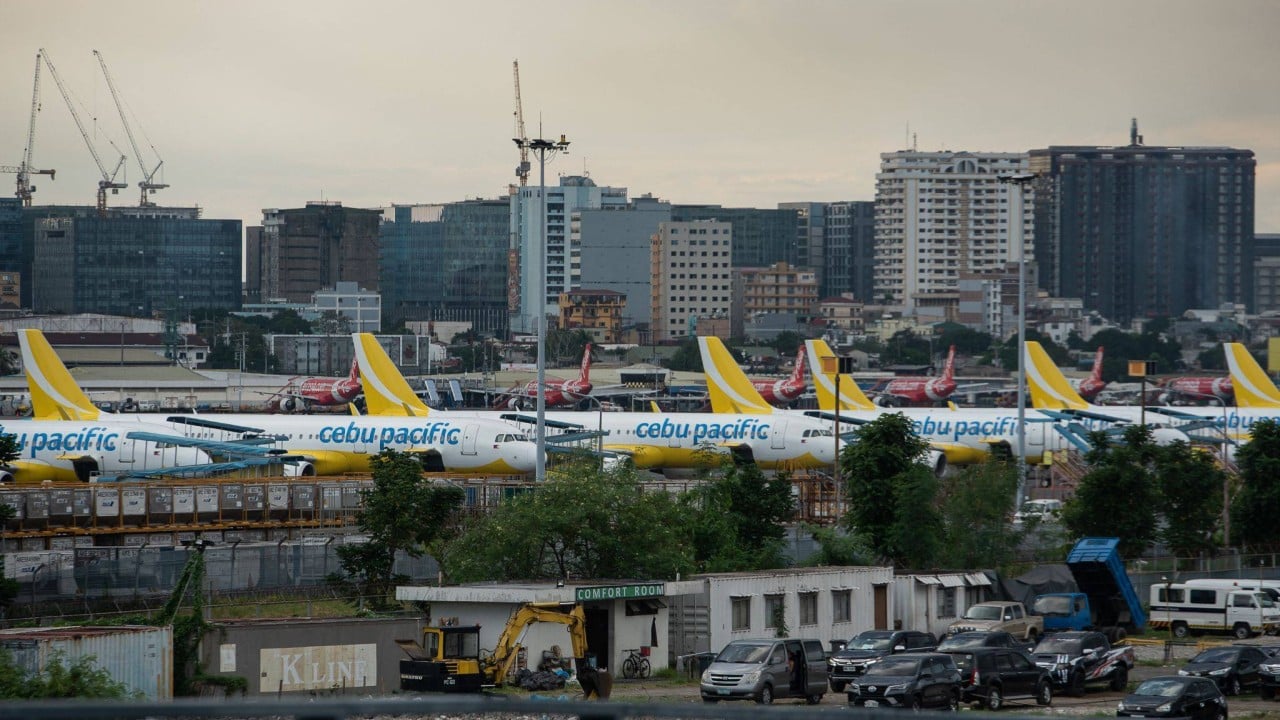
We are already seeing the retreat. Cebu Pacific has announced a sweeping suspension of routes from April through October 2026. Philippine Airlines (PAL) has followed suit, temporarily axing flights to Doha and Dubai—hubs that were once the bread and butter of the overseas Filipino worker (OFW) market.
The "temporary" nature of these suspensions is optimistic. If the conflict in Iran persists and the US sanctions waivers expire in April as scheduled, these suspensions will likely harden into permanent cancellations.
The Russian Gamble
Desperation breeds unlikely alliances. In a move that would have been unthinkable two years ago, the Philippines is currently awaiting the arrival of the tanker Sara Sky, carrying 750,000 barrels of Russian ESPO crude. This shipment, destined for Petron’s Bataan refinery, represents a high-stakes play to bypass the Middle Eastern bottleneck.
While a US sanctions waiver currently protects this transaction, that window is closing on April 11. This is a "one-off" fix for a systemic wound. Even if the Russian crude arrives and is refined into Jet A-1, it barely covers a week of national demand. It is a finger in a collapsing dam.
Beyond the Tarmac
The fallout of grounded flights extends far beyond frustrated tourists. The Philippines relies on air connectivity for high-value exports like semiconductors and fresh produce. If the belly-hold capacity of passenger planes vanishes, the cost of dedicated air freight will skyrocket, further fueling an inflation rate that is already threatening to breach 4% for the year.
The government is currently scrambling for emergency powers to slash fuel excise taxes. While this may provide some relief to the consumer's wallet, it does nothing to address the physical absence of the product. You cannot burn a tax break to reach Los Angeles.
The hard truth is that the Philippines is currently a passenger in its own energy destiny. The aviation sector is being forced into a defensive crouch, waiting for a geopolitical resolution that may not come before the tanks run dry in late April.
Airlines are now prioritizing "critical connectivity"—diplomatic routes and essential domestic links. Everything else is on the chopping block. For the millions of Filipinos who rely on the "open skies" policy of the last decade, the horizon is becoming remarkably small.
Would you like me to analyze the specific impact of these flight cancellations on the Philippine semiconductor export industry?