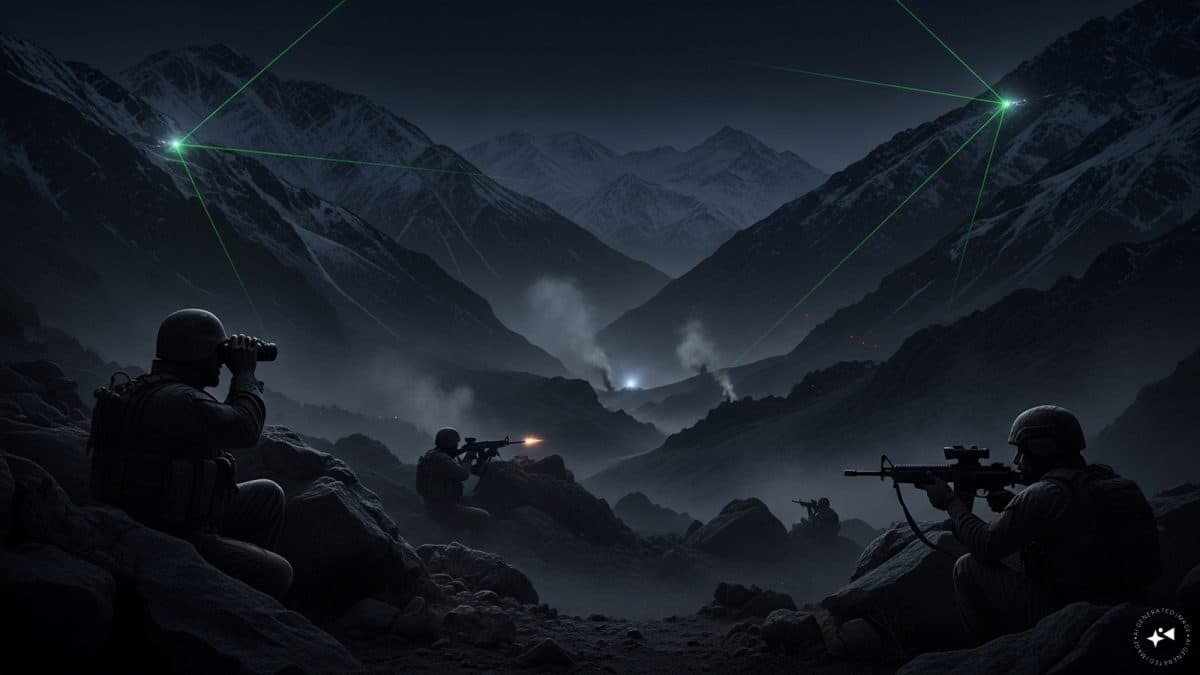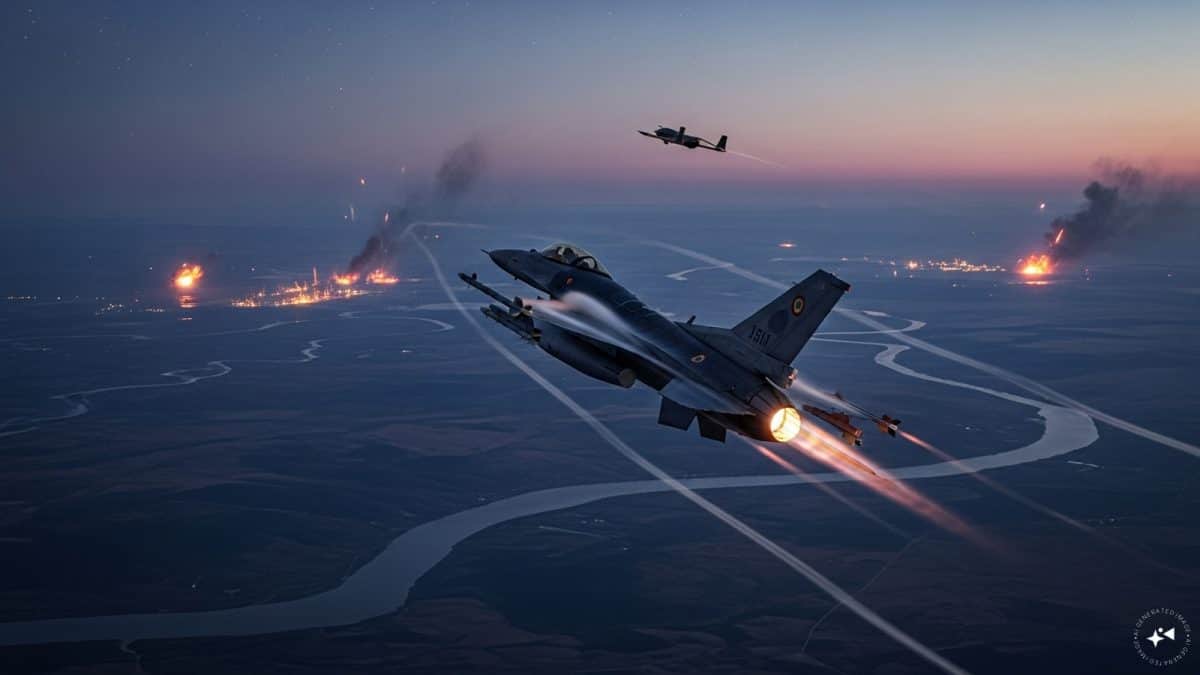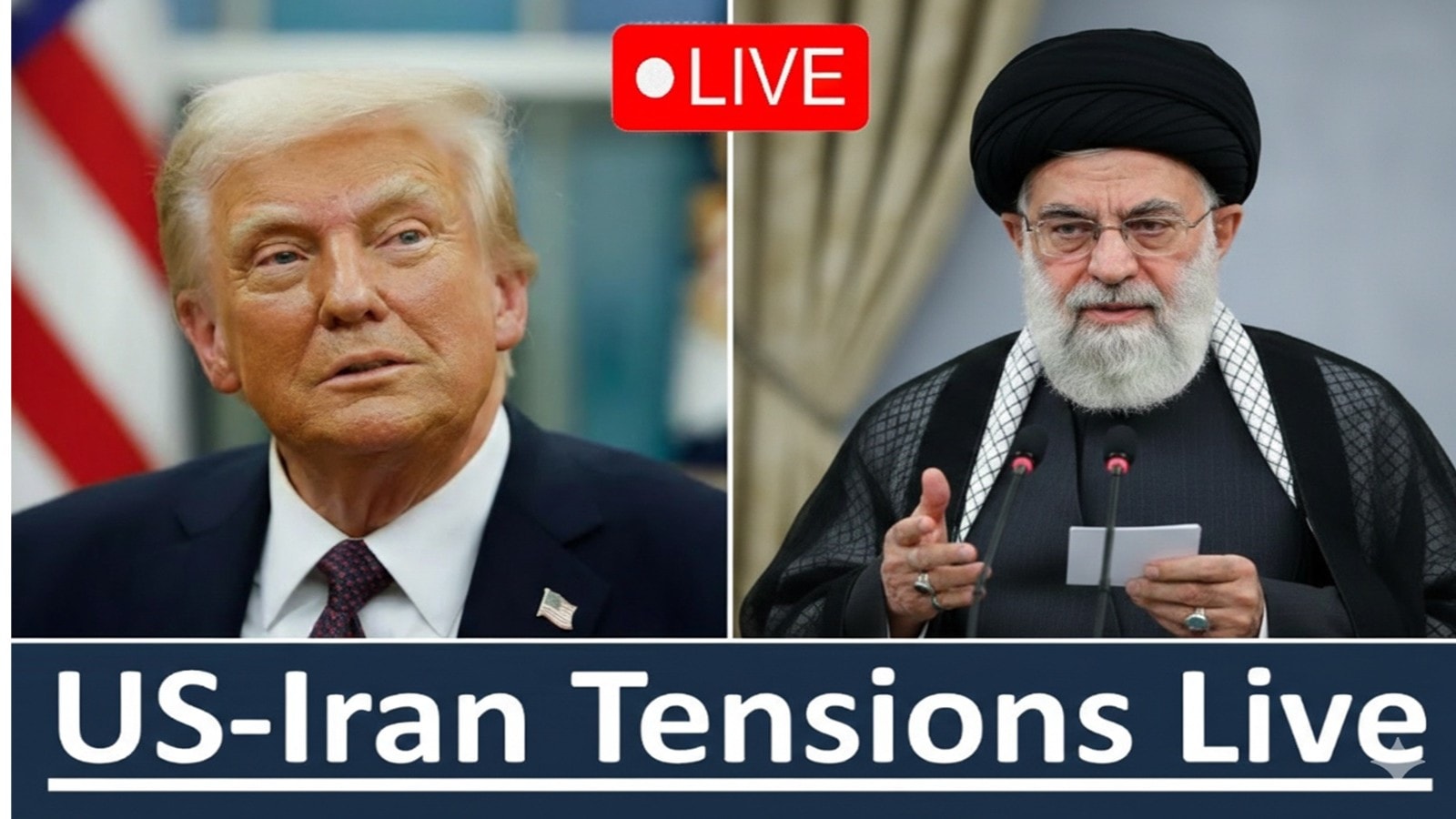
The Middle East has crossed a rubicon from which there is no discernible return. Following the joint U.S.-Israeli assassination of Supreme Leader Ayatollah Ali Khamenei on February 28, 2026, the Islamic Republic is no longer merely threatening "strong retaliation" via diplomatic cables to the United Nations; it is actively attempting to set the region on fire. While a competitor's headline might frame this as a series of "highlights" or a formal exchange of letters, the reality on the ground is a chaotic, multi-front war that has effectively decapitated the Iranian leadership and triggered a desperate, lash-out response from a regime fighting for its survival.
The letter sent by Iran’s permanent mission to UN Secretary-General António Guterres was not a starting point, but a frantic after-action report. In it, Tehran invoked Article 51 of the UN Charter, claiming an inherent right to self-defense. But by the time the ink was dry, Iranian ballistic missiles were already screaming toward U.S. assets in Iraq and Jordan, and striking civilian infrastructure in Gulf states like the UAE and Bahrain. This is not a controlled escalation. It is the death rattle of a 47-year-old theocracy.
The Decapitation of the Clerical State
Operation Epic Fury, the official designation for the U.S.-Israeli campaign, achieved what decades of sanctions could not. By targeting the "heart of Tehran," including the presidential palace and the Supreme Leader’s compound, the coalition successfully removed Ali Khamenei from the board. For forty years, the West treated the Supreme Leader as a permanent fixture of the geopolitical landscape. His sudden removal has created a power vacuum that the newly named interim leader, Ayatollah Alireza Arafi, is struggling to fill.
Arafi’s appointment is a stopgap. The internal mechanics of the Islamic Republic are designed for stability through a singular, absolute authority. Without Khamenei, the Islamic Revolutionary Guard Corps (IRGC) is operating without its traditional leash. This explains the scattershot nature of the retaliatory strikes. Rather than a coordinated military response, we are seeing a "fire everything" policy intended to cause enough regional pain to force a ceasefire.
Beyond the Diplomatic Posturing
The formal letter to the UN warned that "all bases, facilities, and assets of the hostile force in the region" are now legitimate targets. In plain English, this means the IRGC has abandoned any pretense of avoiding collateral damage. The strikes on Dubai’s Al Nahda industrial area and the targeting of oil tankers off the coast of Oman are not accidents. They are deliberate attempts to weaponize global energy markets and international shipping.
- Economic Sabotage: By hitting the Port of Duqm and the Musandam peninsula, Iran is choking the Strait of Hormuz.
- Regional Hostage-Taking: The missile alerts sent to millions of phones in the UAE on March 1st were a psychological operation as much as a physical threat.
- Proxy Activation: While Tehran is direct-firing missiles, its "Axis of Resistance" in Lebanon and Yemen is expected to saturate regional air defenses to the breaking point.
The U.S. position, articulated by President Donald Trump, is equally uncompromising. This is not the "limited strike" strategy seen in previous administrations. The objective is the total destruction of Iran’s missile industry and the annihilation of its navy. Trump’s rhetoric—calling for the IRGC to "lay down your arms"—suggests that Washington is no longer interested in a nuclear deal. They are interested in a new government.
The Human Cost of Miscalculation
The reports of 85 children killed in an airstrike on a girls' school in Minab provide a grim counter-narrative to the "surgical" precision claimed by the Pentagon. While U.S. Central Command insists it does not target civilians, the sheer scale of the bombardment—hitting 20 cities including Isfahan, Qom, and Tabriz—makes "unintended harm" a mathematical certainty.
In Tehran, the atmosphere is one of claustrophobic terror. Internal security forces are flooding the streets on motorbikes, guns visible, attempting to prevent the very thing the U.S. is hoping for: a popular uprising. The regime knows that if it loses control of the streets while its leadership is in shambles, the Islamic Republic ends not with a bang at the UN, but with a whimper in the alleys of North Tehran.
The Failed Diplomacy of Geneva
It is a bitter irony that these strikes occurred only 48 hours after high-stakes negotiations in Geneva. Mediated by Oman, those talks were the last exit ramp. The U.S. demand was total: the dismantling of Fordow, Isfahan, and Natanz, and the surrender of all enriched uranium. Iran’s counter-offer—reducing enrichment to 1.5%—was viewed by Washington as a stalling tactic.
The failure of the Geneva talks reveals a fundamental shift in American foreign policy. The "maximum pressure" of 2018 has evolved into "maximum kinetic action" in 2026. The U.S. buildup of a massive fleet, the largest since the Iraq War, was not a deterrent. It was a preparation for the inevitable.
A Region Without a Safety Net
The United Nations is currently powerless. Secretary-General Guterres can "implore all parties to see reason," but the Security Council is hopelessly fractured. Russia and China have already condemned the killing of Khamenei as a "trampling" of international law. Their support for Tehran, however, is likely to remain rhetorical. Neither Moscow nor Beijing wants to be dragged into a hot war with a U.S. administration that has shown it is willing to kill a head of state in broad daylight.
The real danger now lies in the "unpredictable and uncontrolled consequences" mentioned in Iran's letter. If the IRGC decides that the regime is doomed, they have little incentive to remain within the bounds of conventional warfare. The specter of chemical or biological desperation, or the total destruction of the Gulf’s desalination plants, hangs over the coming weeks.
This is the end of the shadow war. The era of deniable sabotage and proxy skirmishes has been replaced by a direct, bloody confrontation between a superpower and a wounded, leaderless revolutionary state. The letters to the UN are just the paper trail for a history that is being written in fire across the Persian Gulf. There is no going back to the status quo of February 27th. The board has been cleared, and the new players are moving with a ferocity that the world hasn't seen in generations.
Would you like me to analyze the specific impact of these strikes on global oil prices and the stability of the Strait of Hormuz?