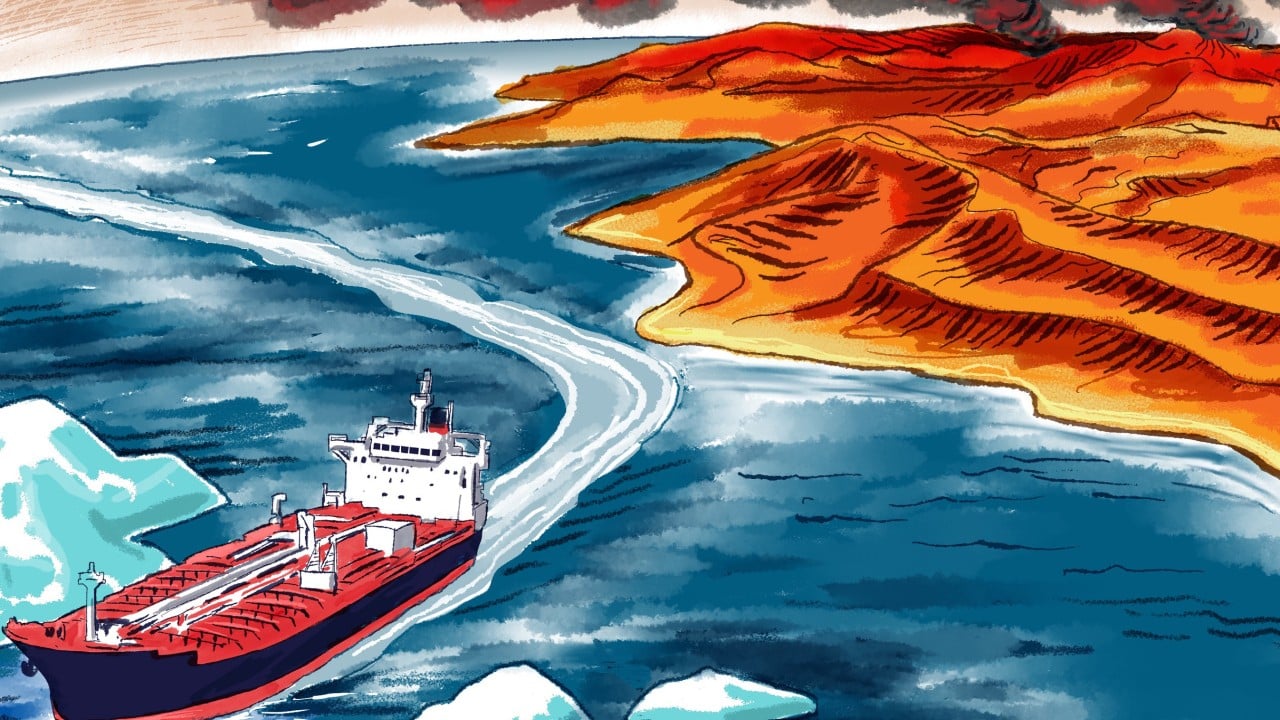
The second Trump administration has fundamentally dismantled the concept of "managed competition" with Beijing, replacing it with a volatile, high-stakes economic assault that leaves global markets and former diplomats in a state of whiplash. By April 2025, the average US tariff on Chinese imports had skyrocketed to 74%, a figure that reflects a move away from strategic pressure and toward an outright attempt at economic severance. While former Biden officials decry the lack of a "coherent framework," the reality is simpler and more dangerous. The new policy is not a traditional strategy; it is a series of blunt-force economic shocks designed to force an immediate, massive realignment of global supply chains.
The Death of Gradualism
For four years, the previous administration operated under a philosophy of "de-risking." It was a surgical approach intended to protect sensitive technology while maintaining broad trade ties. That era ended on January 20, 2025. The current White House has discarded the scalpel for a sledgehammer.
Early 2025 saw a rapid-fire succession of executive actions that caught even seasoned analysts off guard. First came the fentanyl-related tariffs in February and March, adding a combined 20% to existing duties. This was followed by the "Liberation Day" announcement on April 2, which slapped a 34% reciprocal tariff on dozens of trading partners, with China bearing the brunt.
The velocity of these changes has created a "lightning" effect in trade data. While the initial decoupling from 2018 to 2024 was a slow burn, the 2025 data shows a precipitous drop. Real US imports from China plummeted by 28% in just one year. This isn't just a policy shift; it is a forced evaporation of a multi-decade economic partnership.
Chaos as a Feature Not a Bug
Critics from the previous administration, speaking at recent forums in Washington, argue that this approach lacks the institutional capacity to succeed. They point to the "Mar-a-Lago Court Society" as the new center of gravity for trade policy, where decisions are influenced by individual pitches rather than interagency reviews.
They are missing the point. To this administration, the "discipline" and "coherence" of the past are synonyms for stagnation. The goal is to be unpredictable. By oscillating between extreme tariff escalations and sudden, effusive praise for Xi Jinping, the White House keeps Beijing in a defensive posture, unable to settle into a long-term retaliatory rhythm.
However, this unpredictability comes with a staggering bill for the American consumer. Unlike the first trade war, where many consumer electronics were spared to avoid political fallout, the 2025 tariffs are comprehensive.
The Cost of the Shock
- Electronics: Prices for laptops, smartphones, and monitors have surged by an estimated 10%.
- Automotives: The average price of a new vehicle has jumped by roughly $2,900 due to the exposure of parts and assembly to the new tariff regime.
- Household Burden: Current estimates from the Yale Budget Lab suggest the 2025 measures represent an average loss of $1,600 to $2,000 per US household.
The Taiwan Pawn and the G2 Mirage
Perhaps the most jarring shift is the move away from ideological Great Power Competition. The administration has signaled a willingness to treat even the most sensitive geopolitical flashpoints as bargaining chips.
The 2025 National Security Strategy famously omitted standard references to the "One China" policy, leading to intense speculation about a "Grand Bargain." In this scenario, Washington might trade concessions on Taiwan—such as reducing arms sales or softening diplomatic support—in exchange for massive Chinese purchases of American energy, semiconductors, and agricultural products.
This "transactional realism" views Taiwan not as a democratic outpost to be defended at all costs, but as a high-value asset in a broader trade negotiation. For allies like Japan and South Korea, this is a nightmare scenario. It suggests that American security guarantees are now subject to a cost-benefit analysis conducted in real-time.
China’s New Playbook of Resilience
Beijing is no longer the reactive player it was in 2018. Having spent years bracing for this exact scenario, the Chinese Communist Party has implemented a "Fortress China" strategy. This involves two primary prongs:
- Direct Diversification: China has successfully rerouted exports to the Global South and Europe, attempting to position itself as the champion of "free trade" against American protectionism.
- Market Backdoors: Significant portions of Chinese manufacturing have migrated to Vietnam, Mexico, and Taiwan. While the US claims to be importing less from China, it is often importing the same Chinese components via a different port of origin.
Despite the 2025 tariff barrage, the US goods deficit actually increased by $25.5 billion year-over-year. The "decoupling" is happening in name and in direct trade stats, but the underlying dependency on Chinese industrial capacity remains stubbornly intact.
The Fragility of the New Order
The Supreme Court’s 2025 ruling against the use of the International Emergency Economic Powers Act (IEEPA) for certain tariffs threw a temporary wrench into the gears. The administration was forced to pivot, reframing the duties under Section 232 and Section 122 to keep the pressure on.
This legal maneuvering highlights the core fragility of the current policy. It relies almost entirely on executive whim rather than legislative permanence. If the legal foundations crumble or the domestic political cost of inflation becomes too high, the entire structure could vanish as quickly as it appeared.
For now, the era of "managing" the relationship is dead. We have entered a period of raw, unmediated economic power where the only certainty is that the old rules no longer apply. The board has been flipped, and both sides are now playing a game where the winner is whoever can withstand the most pain for the longest period.
Check your supply chain's exposure to Section 122 "emergency" duties, as these are the most likely to be renewed or expanded without warning in the coming fiscal quarter.