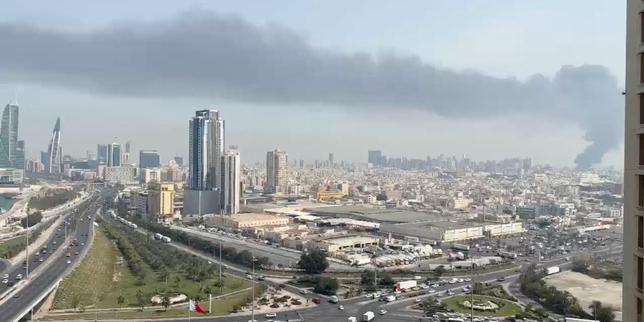
In the early hours of March 1, 2026, the Middle East witnessed a seismic shift in regional warfare as Iran launched its most aggressive missile and drone offensive to date. Codenamed Operation Truthful Promise 4 by Tehran, the barrage targeted 27 U.S. military installations and several Israeli strategic sites. This was not a symbolic gesture of defiance. It was a high-stakes retaliatory strike following the death of Supreme Leader Ali Khamenei during the joint U.S.-Israeli air campaign, Operation Epic Fury. By Saturday evening, the U.S. Department of Defense confirmed the deaths of three American servicemen, marking a grim milestone in a conflict that has rapidly spiraled from "coercive diplomacy" into a full-scale regional war.
The intelligence failure that preceded this escalation will be studied for years. While the U.S. and Israel achieved a tactical victory with the decapitation of the Iranian leadership, they underestimated the automated, decentralized nature of Iran’s retaliatory protocols. Tehran’s response proved that a regime in its death throes can still project devastating power across thousands of miles. You might also find this similar coverage interesting: Strategic Asymmetry and the Kinetic Deconstruction of Iranian Integrated Air Defense.
The Strategy of Saturation
The Iranian Islamic Revolutionary Guard Corps (IRGC) utilized a "saturation" doctrine designed to overwhelm the world’s most sophisticated air defense systems. By launching hundreds of low-cost, one-way attack drones simultaneously with precision-guided ballistic missiles, they forced regional batteries—including the U.S. Patriot and the Israeli Arrow systems—to make split-second choices.
- Al Dhafra Air Base (UAE): A focal point of the attack where significant damage was reported.
- U.S. Fifth Fleet (Bahrain): The command center in Manama faced multiple direct hits, disrupting naval communications.
- Al Udeid (Qatar): This critical hub for U.S. air operations saw its runways temporarily disabled by shrapnel and debris.
Unlike previous skirmishes, this offensive specifically targeted the logistical "nervous system" of the U.S. presence in the Gulf. This wasn't just about hitting barracks; it was about blinding the radar systems and grounding the tankers that sustain American air superiority. As reported in latest articles by The New York Times, the implications are worth noting.
Precision Over Proximity
The images surfacing from Dubai and Sharjah tell a more complex story than simple military aggression. Shrapnel from intercepted missiles rained down on the Burj Al Arab and the Jumeirah hotel district. While the UAE Ministry of Defense claims to have intercepted the majority of the 167 missiles and 541 drones, the "successful" interceptions themselves became lethal. Falling debris in Sharjah resulted in three civilian fatalities and dozens of injuries.
The Iranian tactical shift involved utilizing the Ghadr medium-range ballistic missiles, which possess a terminal guidance system far more advanced than the older Scud variants. These weapons are designed to adjust their trajectory in the final seconds of flight, making them a nightmare for traditional interceptors. The reality is that no defense shield is 100% effective when the volume of fire reaches these levels.
Military Casualties vs. Operational Readiness
| Location | Reported U.S. Casualties | Operational Impact |
|---|---|---|
| Manama, Bahrain | 1 Killed | Severe communication lag |
| Al Dhafra, UAE | 2 Killed | 40% reduction in sortie rate |
| Al Udeid, Qatar | 0 Killed | Temporary runway closure |
The loss of three American lives is a tragedy that will dominate the news cycle, but the deeper concern for the Pentagon is the degradation of operational readiness. If Iran can consistently force U.S. bases into a defensive crouch, the ability to support the ongoing internal Iranian uprising—a key goal of the Trump administration’s "Operation Genesis"—is severely compromised.
The Fragile Illusion of Gulf Stability
For decades, the Gulf monarchies have sold themselves as a safe harbor for global capital. That illusion shattered this weekend. The strike on a residential building in Dubai and the industrial zones in Sharjah sends a message to international investors: no one is out of range.
The Iranian strategy targets the economic heart of the U.S. alliance. By hitting civilian infrastructure and international airports in Kuwait and the UAE, Tehran is betting that the cost of defending these nations will eventually outweigh the benefits for Washington. The closure of the Strait of Hormuz—which handles a third of the world's sea-borne oil—has already sent global energy markets into a frenzy.
The Technological Brink
The use of Task Force Scorpion Strike drones by the U.S. and the IRGC’s deployment of swarm technology represents a new chapter in kinetic conflict. We are seeing a transition where the speed of software outpaces the speed of command.
Western officials are particularly concerned about the "decentralized launch" capability Iran displayed. Even with the Tehran command structure in disarray, localized IRGC units were able to coordinate these strikes with frightening efficiency. This suggests that the "decapitation" of the regime may have removed the head, but the body is still moving with lethal, pre-programmed intent.
The war began on February 28, but the events of March 1 have rewritten the rules of engagement. As the U.S. deploys a second carrier strike group to the region, the question is no longer whether the regime will fall, but what it will take down with it. The objective of removing a nuclear threat is being weighed against the immediate reality of a burning Middle East.
Contact your local representatives to stay informed on the evolving War Powers Resolution debate in Congress as the scale of this intervention becomes clear.