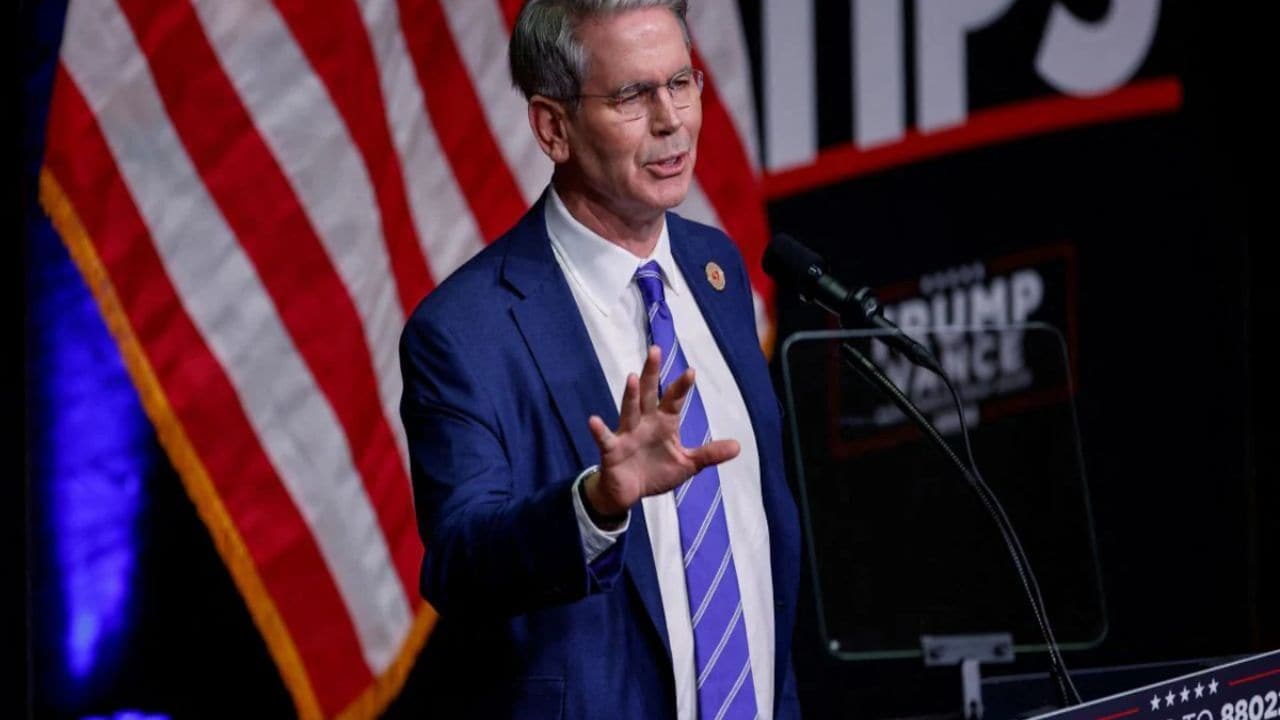
The White House is attempting a high-wire legal act to save its trade agenda from total collapse. Treasury Secretary Scott Bessent confirmed on Wednesday that a hike in universal import tariffs from 10% to 15% is imminent, likely arriving by the end of this week. This is not just a policy adjustment; it is a desperate structural pivot. After the Supreme Court gutted the administration’s previous tariff regime, the Treasury is now leaning on a 150-day "emergency bridge" under Section 122 of the Trade Act of 1974. Bessent predicts that by the time this temporary clock runs out in five months, the administration will have successfully resurrected its full, aggressive tariff rates using more permanent, investigation-heavy legal authorities.
But the reality on the ground is far messier than the calm delivery on cable news suggests. Businesses are currently operating in a vacuum of certainty, trying to price goods against a shifting target while the White House races to outrun the courts.
The 150 Day Sprint to Permanent Protectionism
The use of Section 122 is a strategic retreat disguised as an escalation. When the Supreme Court ruled that the previous "Liberation Day" tariffs exceeded executive authority under the International Emergency Economic Powers Act (IEEPA), it effectively wiped the slate clean. The current 10% surcharge—soon to be 15%—is a stopgap.
Under Section 122, the President can impose a temporary surcharge for only 150 days to address "serious broad-base's balance of payments" problems. This is a ticking clock. Bessent's "strong belief" that rates will return to their prior, higher levels within five months rests entirely on the speed of two other legal mechanisms: Section 301 (unfair trade practices) and Section 232 (national security threats).
- Section 301: Requires the U.S. Trade Representative (USTR) to conduct detailed studies and public comment periods.
- Section 232: Requires the Commerce Department to prove that specific imports threaten national security.
These are the "robust" authorities Bessent mentioned. They are slower, but they have survived thousands of legal challenges over decades. The administration is essentially trying to swap the engine of a moving car, hoping the new one kicks in before the momentum of the 150-day surcharge stalls out.
War and Trade Under a Single Banner
The timing of this tariff hike cannot be separated from the escalating conflict in the Middle East. As the U.S. and Israel engage in active strikes against Iran, the Treasury is using trade as a secondary theater of war. Bessent notably pointed to China’s energy dependence on the Persian Gulf, suggesting that the tariff regime serves as a squeeze on Beijing’s ability to fund or support regional adversaries.
The rhetoric has already claimed its first victims in Europe. Spain is currently facing threats of a total trade embargo after refusing to allow U.S. forces to use joint bases for the Iran campaign. This isn't just about protecting American steel or aluminum anymore. It is the total weaponization of the U.S. consumer market. If a country doesn't align with the administration's military objectives, it faces an immediate, punitive exit from the American economy.
The Spain Embargo Hypothetical
If the administration moves forward with an embargo against Spain, it would likely use a combination of the same authorities Bessent is currently rebuilding. While a full embargo is a radical step, the precedent of using "national security" to justify broad economic decoupling is already being set with this week’s 15% hike.
Market Friction and the Logistics of Chaos
For the average importer, "this week" is an agonizingly vague timeline. Customs and Border Protection cannot collect a dime until a formal proclamation is signed and published. We have already seen the friction this causes. When the 10% rate was first announced in late February, there was nearly a week of confusion where customs officials were still processing goods at the old, lower rates because the paperwork hadn't caught up to the President’s social media posts.
The 15% hike will likely face the same lag.
More importantly, the Supreme Court's recent ruling didn't just stop future tariffs; it opened the door for massive refund claims. While Bessent is focused on the next five months, corporate legal departments are looking at the last twelve. Billions of dollars in previously paid duties are now arguably illegal. The administration's response has been to ignore the refund question entirely, focusing instead on the new "Section 122" bridge.
The Fragile Global Alliance
There is also the matter of "exemptions." While the 15% is billed as a "global" tariff, it is anything but universal. The European Union has reportedly received quiet assurances that they might be spared the jump to 15%, maintaining the 10% floor. This creates a tiered system of global trade where "loyalty" to Washington's current military and energy policies is the only way to avoid the highest duties.
This selective enforcement makes the "balance of payments" justification for Section 122 legally flimsy. If the goal is truly to fix a national economic imbalance, exempting the world's largest trading bloc based on backroom diplomatic deals makes the tariff look more like a political tool than an economic necessity.
The Supply Chain Breaking Point
The 150-day window is intended to give the USTR and Commerce time to finish their homework. However, these investigations usually take a year or more. Compressing them into five months suggests the "findings" are already written, and the investigations are merely a formality to satisfy the courts.
Retailers and manufacturers are not waiting for the "robust" version of the tariffs to arrive. They are already diverting shipments, front-loading inventory, and, in many cases, passing the 10%—and soon the 15%—directly to the consumer. The inflation "noise" that Bessent dismisses is a very real signal for anyone managing a bottom line.
The administration is betting that they can rewrite the rules of global trade faster than the legal system can strike them down. It is a race against time, the courts, and the patience of the American consumer.
Reach out to your customs broker today to confirm if your current "entered for consumption" filings are locked in before the 15% proclamation hits the Federal Register.