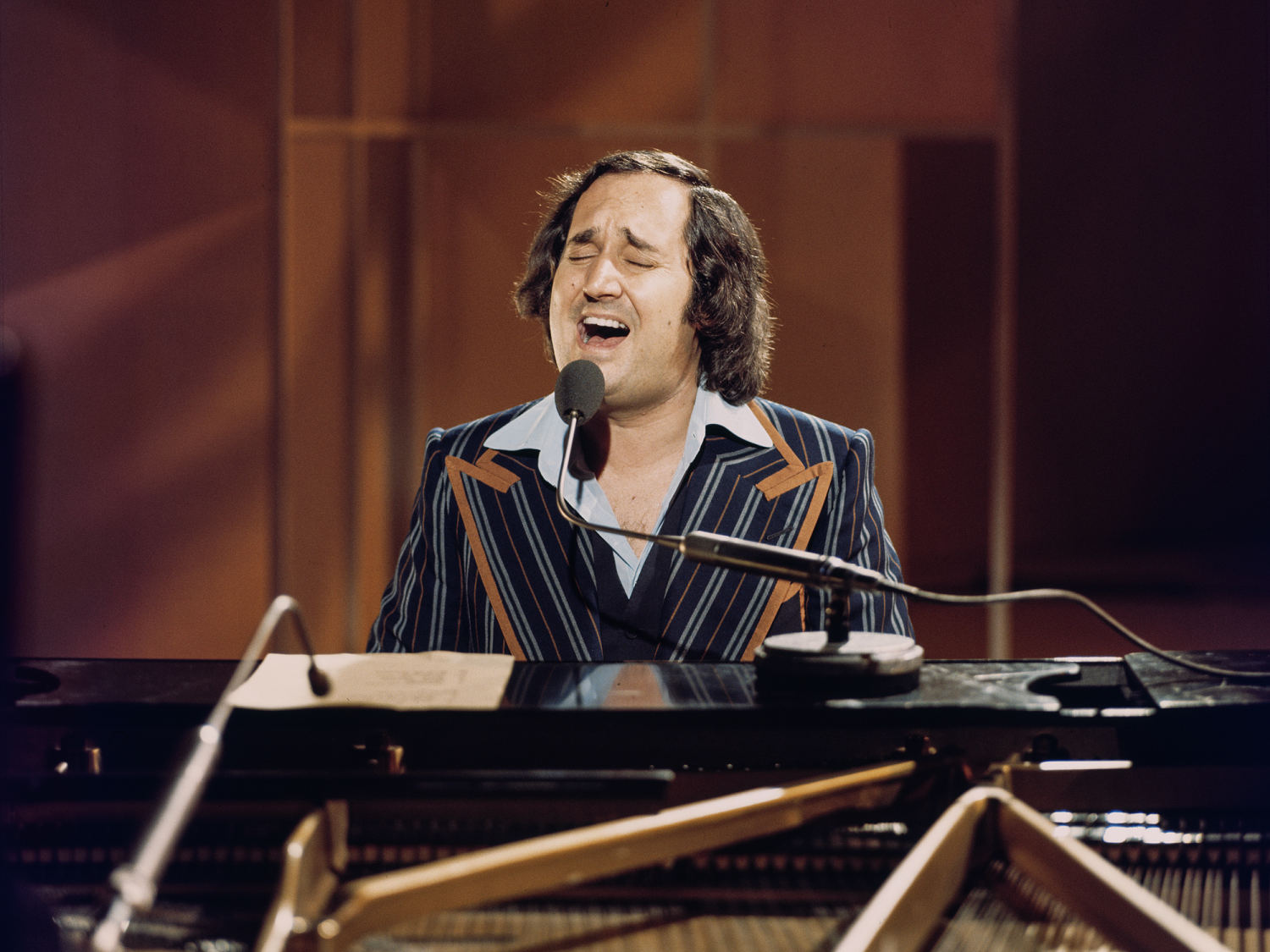
Neil Sedaka, the man who mathematically decoded the American pop song only to be discarded by the industry twice, has died at 86. He passed away Friday, February 27, 2026, at a Los Angeles hospital after a sudden medical emergency at his home. To the casual observer, Sedaka was the voice of high-pitched teenage yearning in the fifties and the smooth, bearded comeback king of the seventies. But to those who track the mechanics of the music business, he was something far more rare: a survivor who understood that in pop music, the song is a commodity, but the songwriter is a strategist.
His death marks the end of an era of professional polish that current chart-toppers often mimic but rarely master. Sedaka didn’t just write hits; he engineered them using a Juilliard-trained brain to bridge the gap between Tchaikovsky and the Brill Building. While his peers were often victims of the "British Invasion" or the shifting whims of FM radio, Sedaka was the only artist of his generation to claw his way back to the top of the mountain by treating his career not as a streak of luck, but as a series of calculated reinventions.
The Architecture of a Teen Idol
Before he was a face on a lunchbox, Sedaka was a classical piano prodigy. Selected by Arthur Rubinstein as one of New York’s best high school pianists, he was groomed for the concert hall. However, the isolation of the practice room couldn't compete with the social currency of rock and roll. Sedaka realized early on that while a Chopin nocturne earned respect from teachers, a three-chord progression earned the attention of the girls at Abraham Lincoln High School.
He teamed up with Howard Greenfield, a neighbor in his Brighton Beach apartment building, and established a grueling regimen. They wrote a song a day. Every day. This wasn't about waiting for a muse; it was about building a factory. They became the first duo signed to Aldon Music, the ground zero of the Brill Building sound.
The strategy was simple: write for others, then keep the best for yourself. Sedaka fueled the career of Connie Francis with "Stupid Cupid" before stepping into the spotlight with "The Diary" and "Oh! Carol." Between 1959 and 1963, Sedaka sold 40 million records. He was second only to Elvis Presley. He was a millionaire before he was 25, fueled by a boyish tenor that masked a sophisticated understanding of melodic hooks.
The 13 Year Wilderness
The crash was as sudden as a power failure. In 1964, the Beatles arrived, and the clean-cut, orchestrated pop of the Brill Building was instantly rendered prehistoric. RCA dropped Sedaka. The industry that had minted him a prince now viewed him as a relic of a naive past.
What followed was a decade of what Sedaka called "the wilderness." It is the part of the story that most industry analysts gloss over, but it is where his true grit was forged. Unlike his contemporaries who faded into the "oldies" circuit or descended into bitterness, Sedaka looked at the map and realized the United Kingdom still valued the craft of a well-written bridge.
He moved his family to London in the early seventies, playing small clubs and working with the musicians who would eventually become the art-rock band 10cc. He wasn't chasing the past; he was absorbing the new textures of the era. He grew a beard, traded the tuxedo for denim, and began writing "Laughter in the Rain."
The Elton John Gambit
The legendary 1974 comeback wasn't just about the music; it was a masterclass in industry networking. Elton John, then the biggest star on the planet, was a Sedaka obsessive. He saw the genius that American labels had forgotten. Elton signed Sedaka to his Rocket Records label and provided the one thing Sedaka lacked: cool.
When "Bad Blood" hit number one in 1975, with Elton John providing uncredited backing vocals, it wasn't just a hit—it was a vindication. Sedaka became the first artist to hit number one with two entirely different versions of the same song when he re-recorded "Breaking Up Is Hard to Do" as a slow, sultry torch song. He had proven that a great song wasn't a static object; it was a piece of architecture that could be remodeled for any era.
The Quiet Business of Immortality
While the public focused on his voice, the real power lay in his publishing. Sedaka’s songs were a Swiss Army knife for the industry. When the Captain & Tennille needed a career-defining smash, they turned to Sedaka’s "Love Will Keep Us Together." When Frank Sinatra needed a mid-career pivot, he recorded "The Hungry Years."
Sedaka understood the long game of royalties. He never stopped writing, and he never stopped performing. He treated the stage as a laboratory, testing new melodies on audiences until his final years. Even as his physical health declined in the 2020s, his fingers remained nimble, a testament to the classical foundation that never left him.
He is survived by Leba, his wife of 63 years, and their children, Marc and Dara. His departure leaves a void in the craftsmanship of pop—a reminder that beneath the glitz and the "boy next door" image was a cold-eyed professional who knew that while fame is fickle, a perfect melody is permanent.
Ask any songwriter today how to survive sixty years in a business designed to chew you up and spit you out. They will point to Sedaka. He didn't just play the game. He wrote the manual.